

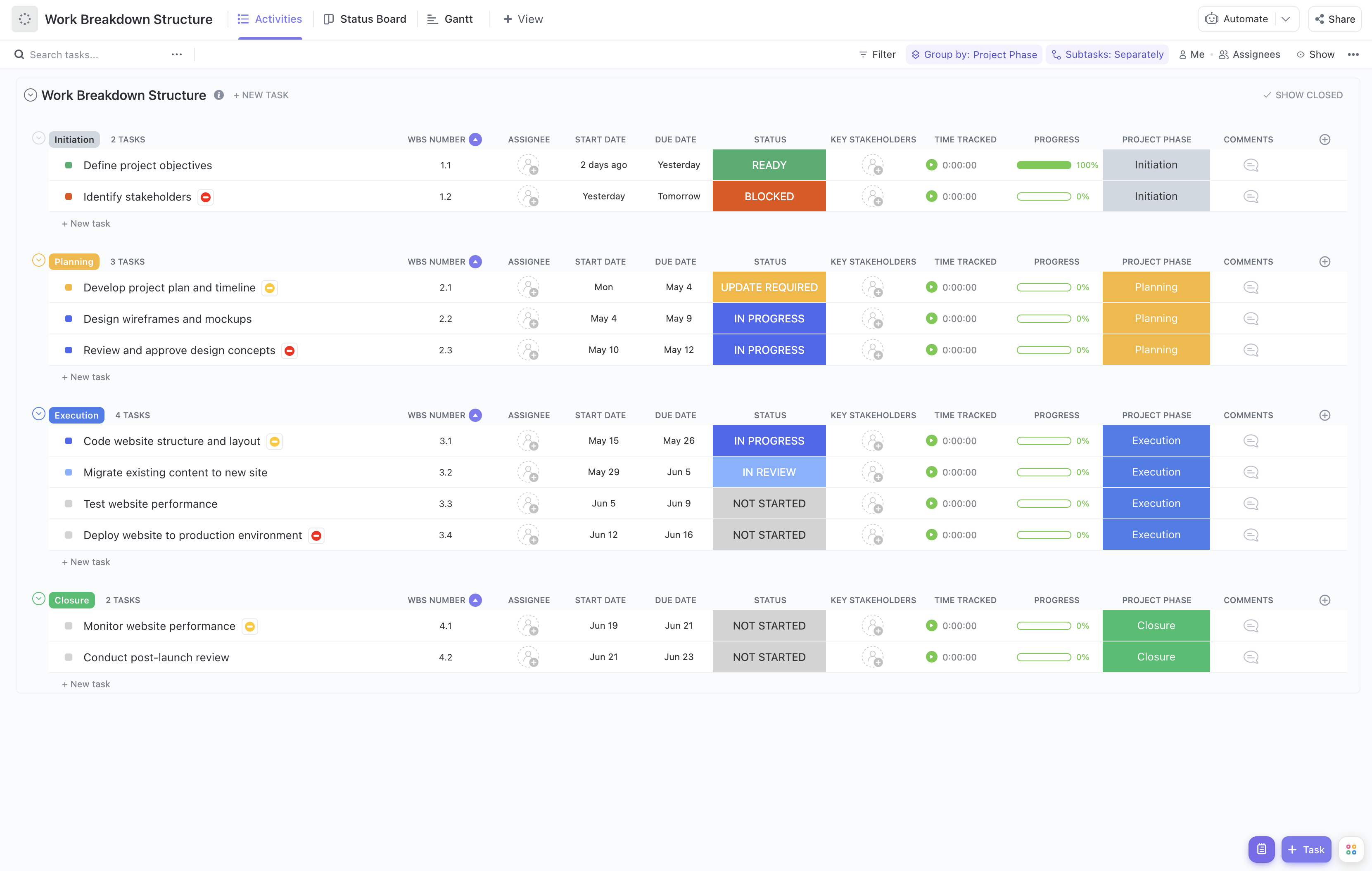


Conducting ground level inspections involves coordinating multiple detailed tasks, from initial site assessment to final reporting. Managing these activities effectively is crucial to maintaining safety standards and compliance. This Ground Level Inspection Work Breakdown Structure Template provides a structured approach to break down inspection projects into manageable components.
This specialized template helps you:
- Organize inspection tasks such as equipment checks, site walkthroughs, and hazard identification into clear, actionable segments
- Assign inspection roles to team members based on expertise and availability for efficient task allocation
- Monitor inspection progress with real-time updates to ensure timely completion and address any issues promptly
Best of all, this template requires no coding or complex software—just use ClickUp to get started and keep your inspection projects on track!
Benefits of a Ground Level Inspection Work Breakdown Structure Template
Utilizing a WBS template tailored for ground level inspections offers several advantages:
- Clearly defines and organizes inspection deliverables, such as safety assessments, equipment functionality checks, and compliance reports
- Provides transparency for inspection teams regarding their specific roles and responsibilities during each phase of the inspection
- Enhances communication between inspectors, supervisors, and stakeholders by providing a shared framework and status updates
- Improves overall inspection efficiency by allowing for better planning, resource allocation, and risk management
Main Elements of the Ground Level Inspection Work Breakdown Structure Template
This template is structured to guide you through the entire inspection process with the following key components:
- Inspection Planning: Define scope, schedule, and resource requirements for the inspection project.
- Site Preparation: Coordinate access permissions, safety equipment setup, and team briefings.
- Inspection Execution: Conduct detailed ground level inspections including visual checks, measurements, and hazard identification.
- Data Collection & Documentation: Record findings, capture photos, and compile inspection data systematically.
- Reporting & Follow-Up: Generate comprehensive inspection reports, communicate results to stakeholders, and plan corrective actions if needed.
By following this structured approach, your inspection team can ensure thorough coverage of all critical areas, maintain compliance with safety regulations, and deliver actionable insights for maintenance and risk mitigation.










