
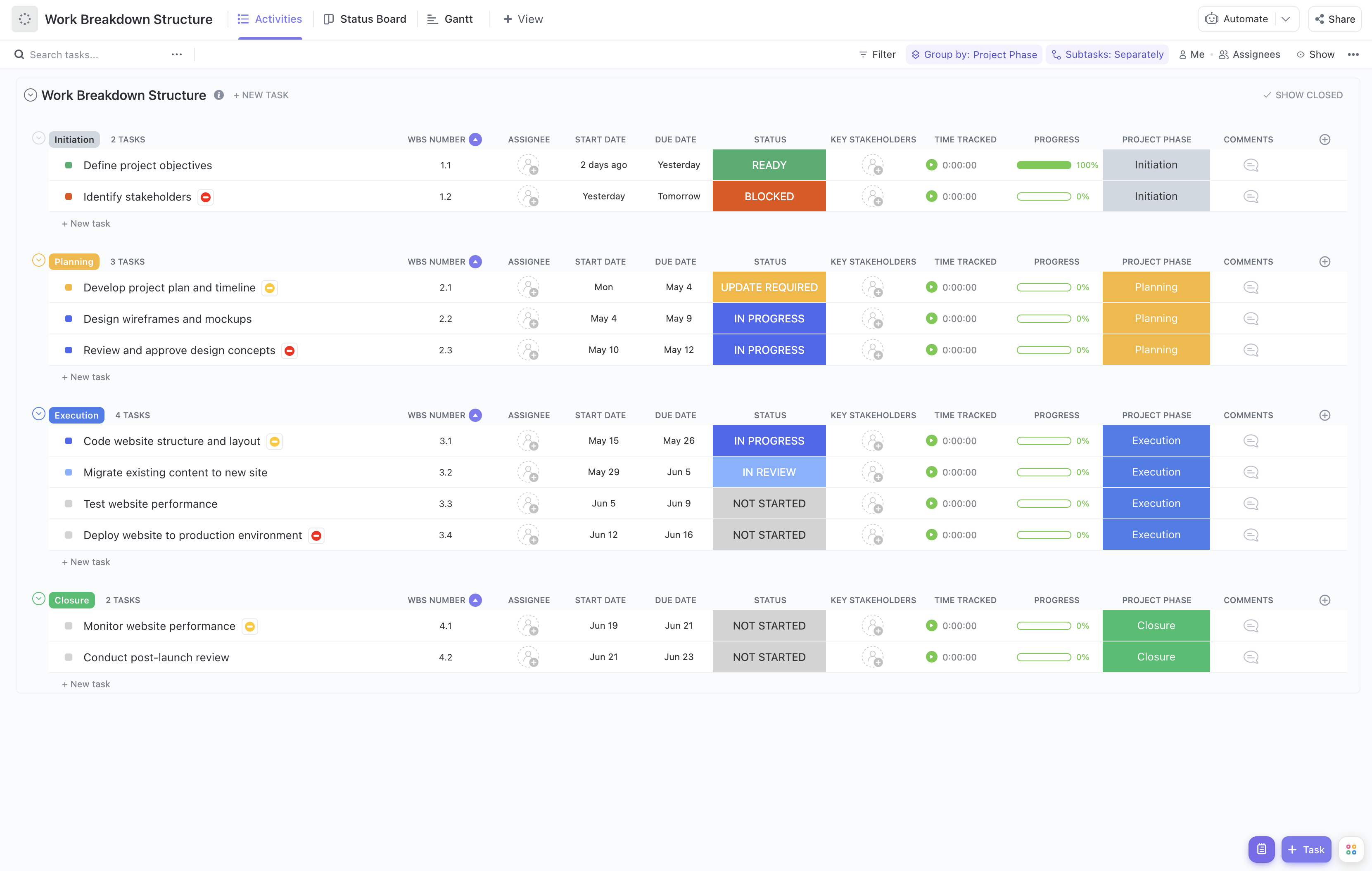


Effectively managing grievances is crucial for maintaining trust and transparency within any organization. However, coordinating the various stages of grievance redressal can be complex and challenging. That's where this Grievance Redressal System Work Breakdown Structure Template comes in!
This specialized template helps you:
- Organize grievance handling tasks into clear, actionable sections for better oversight
- Align grievance officers and stakeholders to their responsibilities quickly and efficiently
- Track the progress of grievance resolution with real-time updates and status indicators
The best part? You don't need any coding knowledge or special software to get started with this template. All you need is ClickUp—and you're ready to break down your grievance redressal process into success!
Benefits of a Grievance Redressal Work Breakdown Structure Template
This template serves as a powerful tool for grievance managers and organizational leaders. It provides a visual and structured representation of the grievance redressal workflow, helping ensure that each grievance is addressed promptly and effectively. Key benefits include:
- Helps to define and organize the grievance handling stages and deliverables clearly
- Provides clarity for grievance officers and stakeholders on their roles and responsibilities
- Enhances communication between grievance committees, management, and complainants
- Improves the overall efficiency and transparency of the grievance redressal process
Main Elements of the Grievance Redressal Work Breakdown Structure Template
This template is designed to help you break down the grievance redressal system into manageable components, including:
- Grievance Intake:
Capturing complaints through various channels such as email, hotline, or in-person submissions.
- Grievance Assessment:
Reviewing and categorizing grievances based on urgency, type, and impact.
- Investigation:
Assigning responsible officers to investigate the grievance thoroughly, gathering evidence and statements.
- Resolution Planning:
Developing action plans to address the grievance, including timelines and responsible parties.
- Communication:
Keeping complainants informed about the status and outcomes of their grievances.
- Closure and Feedback:
Finalizing the grievance case, documenting outcomes, and collecting feedback for process improvement.
Each element is broken down into detailed tasks with assigned roles, deadlines, and progress tracking to ensure accountability and transparency throughout the grievance redressal lifecycle.
By utilizing this template, organizations can foster a culture of responsiveness and trust, ensuring grievances are handled systematically and efficiently.












