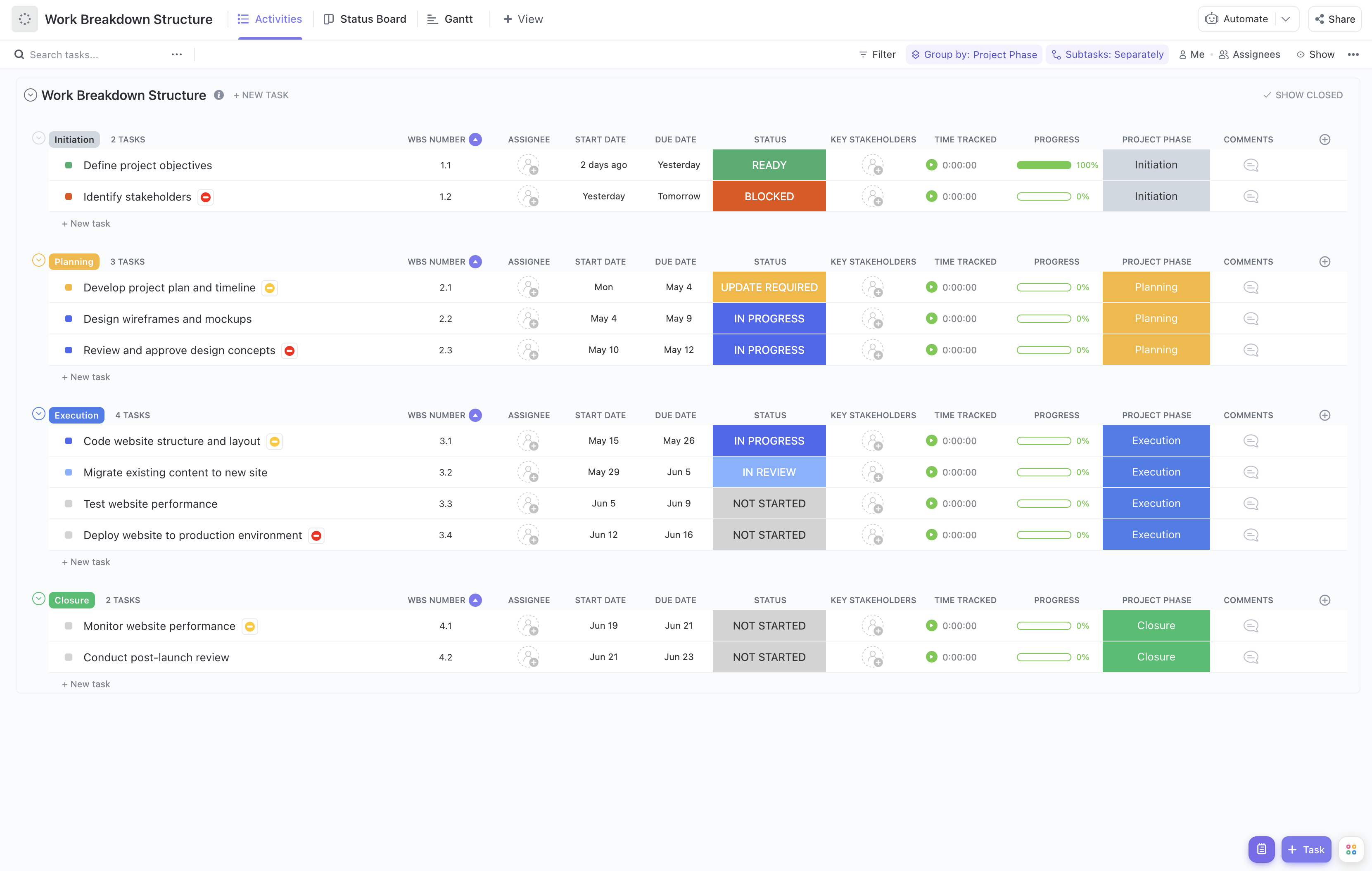
Implementing a comprehensive grievance handling system can be a complex endeavor involving multiple stakeholders, compliance requirements, and communication channels. This Grievance Handling Rollout Work Breakdown Structure (WBS) template is designed to help you systematically break down the rollout process into manageable tasks, ensuring clarity, accountability, and timely execution.
This specialized template enables you to:
- Segment the rollout into clear phases such as policy development, training, system setup, and communication
- Assign specific roles and responsibilities to HR personnel, legal advisors, and management
- Monitor progress with real-time updates to quickly address any bottlenecks or risks
Best of all, this template requires no coding or specialized software knowledge—just your organization's commitment and ClickUp to keep everything organized and on track.
Benefits of Using the Grievance Handling Rollout Work Breakdown Structure
Adopting this WBS template for your grievance handling rollout offers several key advantages:
- Clear Definition of Deliverables: Break down the rollout into tangible deliverables such as finalized policies, trained staff, and implemented reporting mechanisms.
- Role Clarity: Ensure every team member understands their responsibilities, from drafting procedures to conducting training sessions.
- Enhanced Communication: Facilitate transparent communication between HR, management, and employees to foster trust and compliance.
- Improved Efficiency: Streamline the rollout process by identifying dependencies and critical paths, reducing delays and resource conflicts.
Main Elements of the Grievance Handling Rollout Work Breakdown Structure
This template organizes the rollout into the following core components:
- Project Management: Planning, scheduling, and monitoring all rollout activities.
- Policy Development: Researching legal requirements, drafting grievance policies, and obtaining approvals.
- System Setup: Establishing reporting channels, documentation systems, and confidentiality protocols.
- Training and Awareness: Designing training materials, conducting sessions for HR and management, and launching employee awareness campaigns.
- Communication Plan: Developing internal communication strategies to inform employees about the grievance process.
- Monitoring and Feedback: Setting up mechanisms to track grievances, analyze trends, and continuously improve the system.
By leveraging this structured approach, your organization can confidently roll out an effective grievance handling system that meets compliance standards and supports a positive workplace culture.