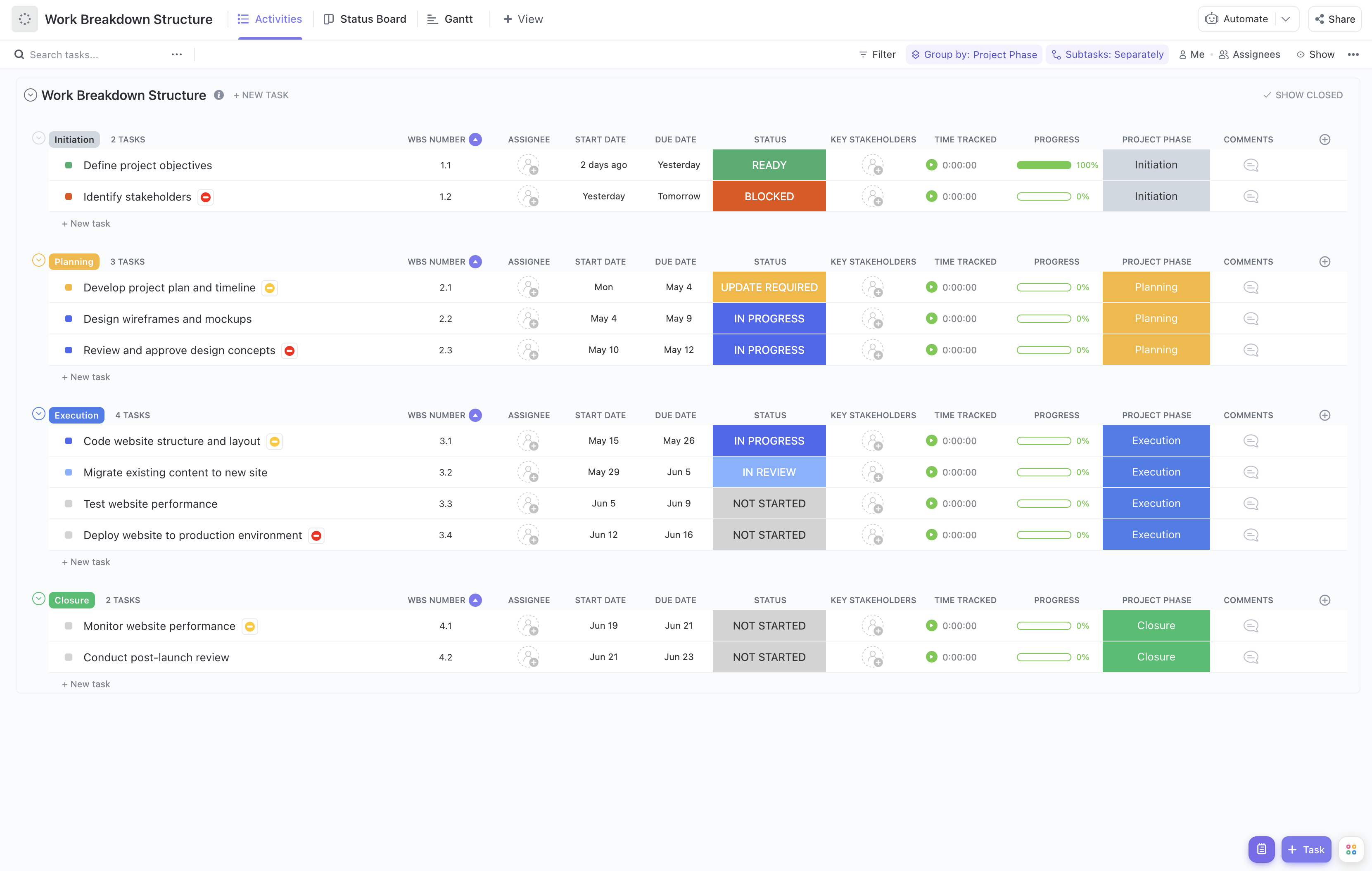
Managing government correspondence involves navigating strict protocols, multiple stakeholders, and tight deadlines. To effectively oversee this process, the Government Correspondence Execution Work Breakdown Structure (WBS) Template provides a clear framework to organize and track all related activities.
This specialized template helps you:
- Segment correspondence tasks into clear, actionable components for enhanced oversight
- Assign responsibilities to relevant departments and officials swiftly and transparently
- Monitor progress and compliance with government standards through real-time updates
Designed for ease of use, this template requires no technical expertise—simply use ClickUp to start managing your government correspondence projects efficiently.
Benefits of a Government Correspondence Execution WBS Template
Utilizing this WBS template offers significant advantages for government agencies managing official communications:
- Clarifies the scope and deliverables of correspondence projects, including drafting, review cycles, and dispatch
- Defines roles and responsibilities clearly among clerks, legal advisors, and department heads
- Enhances communication and coordination between departments and external stakeholders
- Improves adherence to regulatory requirements and internal policies, reducing errors and delays
Main Elements of the Government Correspondence Execution WBS Template
The template is structured to cover all critical stages of government correspondence execution:
- Initiation: Identification of correspondence objectives, stakeholders, and required approvals
- Drafting: Creation of initial drafts by designated officers with embedded version control
- Review and Approval: Multi-level review process involving legal, policy, and executive sign-offs with clear timelines
- Dispatch: Scheduling and sending correspondence through official channels, with tracking and confirmation
- Archiving and Reporting: Secure storage of correspondence records and generation of compliance reports for audits
By following this structured approach, government agencies can ensure that correspondence is executed efficiently, transparently, and in full compliance with applicable regulations.