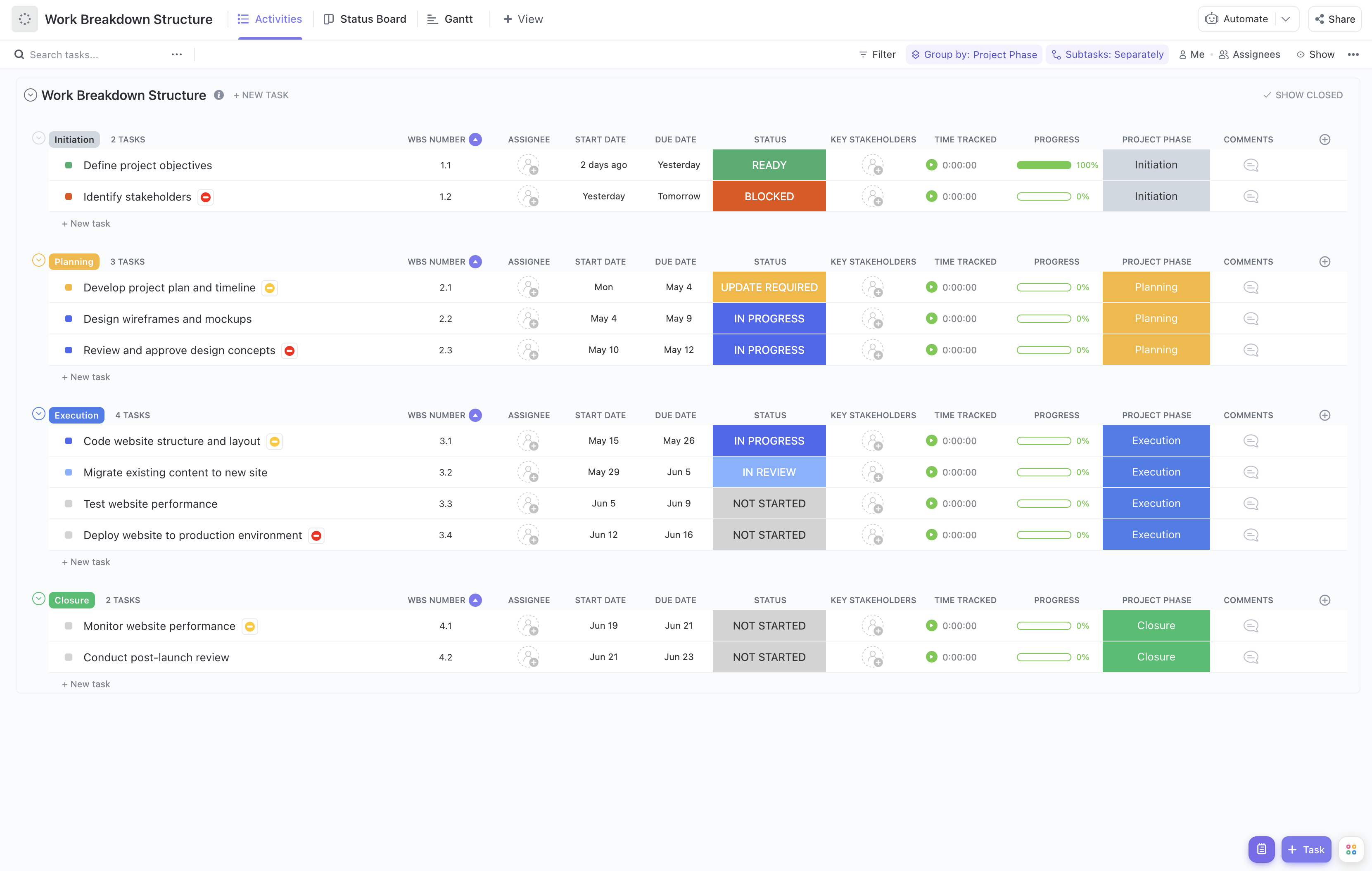
Rolling out a new feature involves coordinating multiple teams, tasks, and timelines to ensure a smooth and successful launch. The Feature Rollout Work Breakdown Structure Template is designed to help you decompose your rollout initiative into clear, actionable components.
This specialized template enables you to:
- Segment the rollout process into distinct phases such as planning, development, testing, deployment, and post-launch support for enhanced clarity
- Assign responsibilities to cross-functional team members including product owners, developers, QA testers, and marketing specialists
- Monitor real-time progress and identify potential bottlenecks to keep your rollout on schedule
Best of all, this template requires no coding skills or additional software—just ClickUp to get started organizing your feature rollout efficiently.
Benefits of Using This Feature Rollout Work Breakdown Structure Template
Implementing a structured WBS for your feature rollout initiative provides numerous advantages:
- Clearly defines deliverables such as feature specifications, test cases, deployment plans, and user training materials
- Clarifies team roles and responsibilities, ensuring accountability across development, QA, operations, and support teams
- Enhances communication between stakeholders, including product managers, engineers, marketing, and customer success teams, fostering alignment
- Improves efficiency by breaking down complex rollout activities into manageable tasks, reducing risks of delays or oversights
Main Elements of the Feature Rollout Work Breakdown Structure Template
This template is structured to cover all critical components of a feature rollout:
- Rollout Phases:
Planning, Development, Testing, Deployment, and Post-Launch Support
- Task Breakdown:
Detailed tasks such as requirement gathering, code development, integration testing, user acceptance testing, deployment scheduling, and training sessions
- Resource Assignment:
Assign team members and stakeholders to each task to ensure clear ownership
- Progress Tracking:
Utilize status indicators like Not Started, In Progress, In Review, Blocked, and Complete to monitor task completion
- Key Stakeholders Field:
Document involved parties such as product owners, QA leads, and marketing managers for transparency
- WBS Numbering:
Organize tasks hierarchically to maintain clarity and traceability throughout the rollout
By leveraging this template, your team can confidently manage the complexities of feature rollout initiatives, ensuring timely delivery and stakeholder satisfaction.