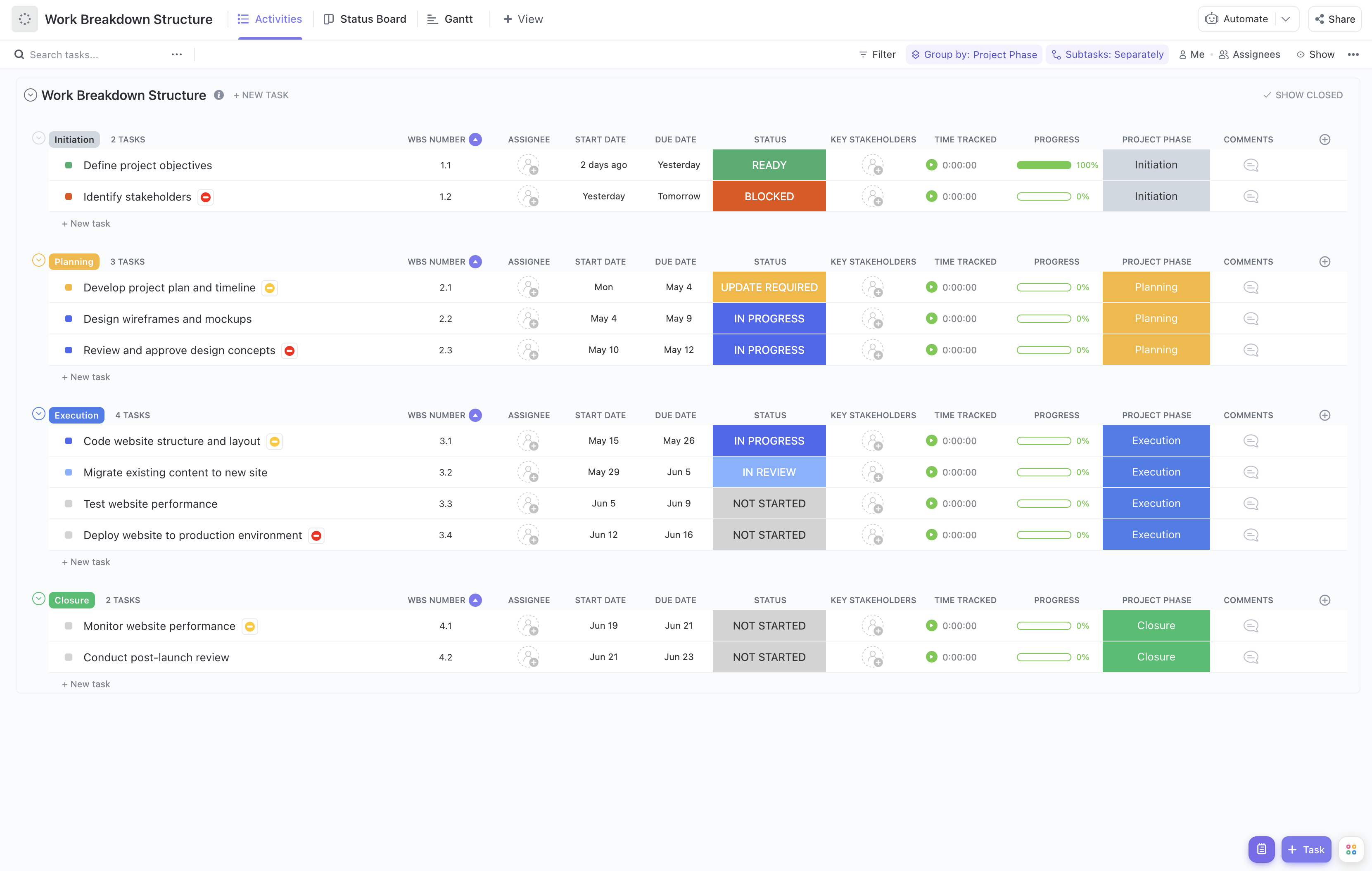
Coordinating faculty evaluations involves multiple steps, deadlines, and participants, making the process complex and prone to delays. This Faculty Evaluation Coordination Work Breakdown Structure (WBS) template is designed to simplify this process by breaking down the evaluation workflow into organized, actionable tasks.
This specialized template helps you:
- Structure the faculty evaluation process into clear phases such as self-assessment, peer review, and administrative approval
- Assign responsibilities to committee members, department chairs, and faculty members efficiently
- Monitor progress of evaluations with real-time updates to ensure deadlines are met
The best part? You can implement this template easily within ClickUp without any coding skills or additional software. Just customize it to your institution's evaluation criteria and start streamlining your faculty assessments!
Benefits of a Faculty Evaluation Coordination Work Breakdown Structure
Using this WBS template for faculty evaluations offers several advantages for academic institutions:
- Clearly defines each step of the evaluation process, from document submission to final review
- Clarifies roles and responsibilities for faculty, evaluators, and administrators, reducing confusion
- Enhances communication across departments and committees by providing a centralized task overview
- Improves efficiency by tracking progress and identifying bottlenecks early
Main Elements of the Faculty Evaluation Coordination WBS Template
This template is structured to cover all critical components of faculty evaluation coordination:
- Evaluation Planning: Establish timelines, criteria, and assign evaluation committees
- Data Collection: Gather self-assessments, peer reviews, student feedback, and teaching materials
- Review Process: Schedule evaluation meetings, compile reports, and provide feedback
- Finalization: Obtain approvals from department heads and administration, communicate results to faculty
- Documentation and Archiving: Store evaluation records securely for future reference and accreditation purposes
By following this structured approach, academic coordinators can ensure a transparent, fair, and efficient faculty evaluation process that supports professional development and institutional goals.