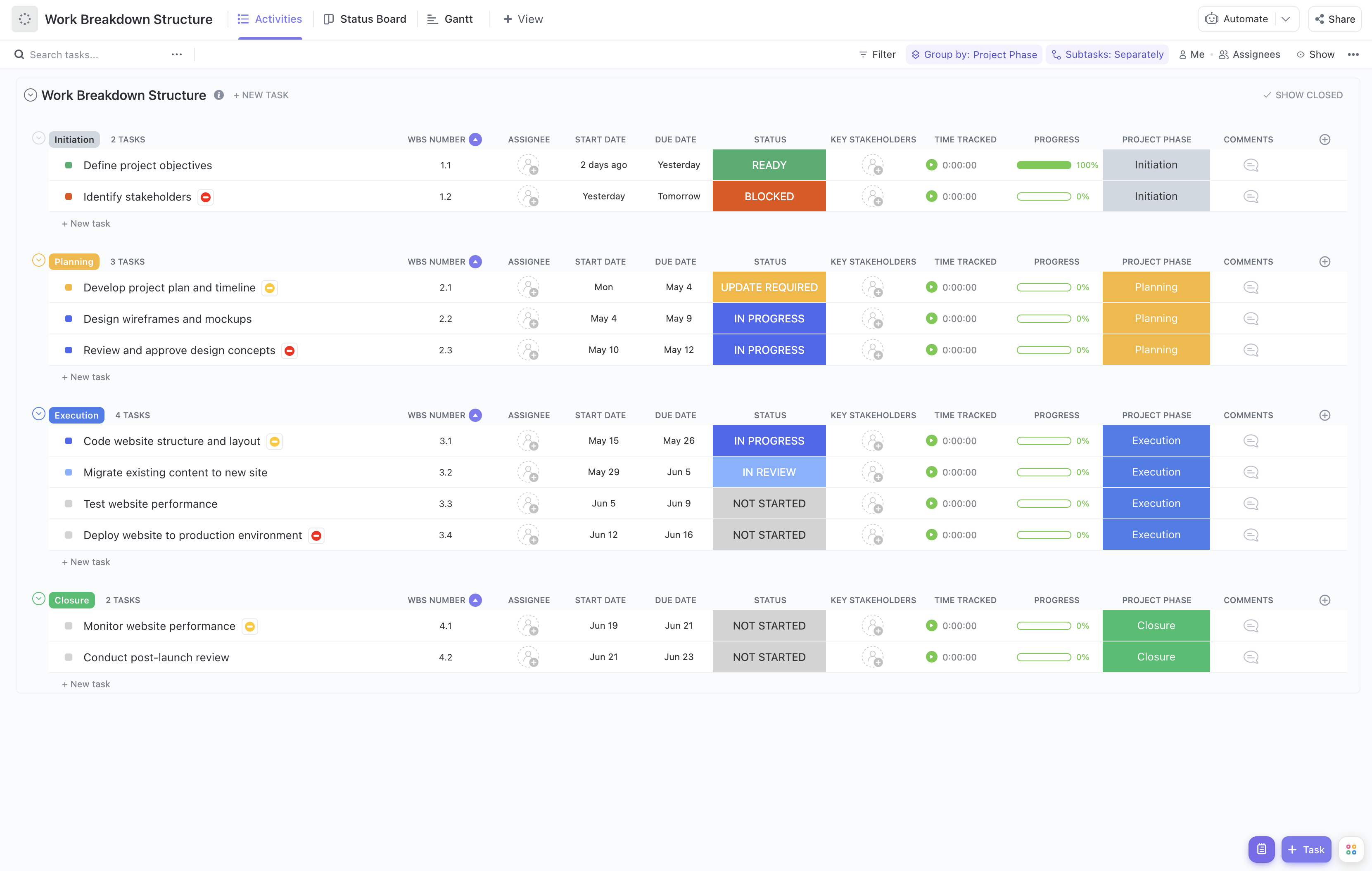
Coordinating an external audit involves managing multiple complex tasks, deadlines, and stakeholders. To ensure a smooth and successful audit, it's essential to break down the audit process into manageable components. This External Audit Coordination Work Breakdown Structure (WBS) template provides a structured approach to organizing all audit-related activities.
This template helps you:
- Segment the audit process into clear phases such as planning, fieldwork, reporting, and follow-up
- Assign specific responsibilities to team members and external auditors for each task
- Monitor progress in real-time to identify bottlenecks and keep the audit on schedule
With this template, no special software or coding skills are required—just use ClickUp to efficiently coordinate your external audit activities.
Benefits of Using the External Audit Coordination WBS Template
Utilizing this tailored WBS template offers several advantages for audit managers and teams:
- Clearly defines audit deliverables and milestones, ensuring all requirements are met
- Clarifies roles and responsibilities among internal staff and external auditors, reducing confusion
- Enhances communication between audit teams, management, and external parties through transparent task tracking
- Improves efficiency by identifying dependencies and streamlining audit workflows
Main Elements of the External Audit Coordination WBS Template
This template organizes the audit coordination process into key components:
- Audit Planning:
Includes tasks such as defining audit scope, scheduling meetings, and gathering preliminary documents.
- Fieldwork Coordination:
Covers on-site audit activities, data collection, and communication of findings.
- Reporting:
Encompasses drafting audit reports, reviewing findings with stakeholders, and finalizing documentation.
- Follow-Up:
Tracks implementation of audit recommendations and closure of outstanding issues.
Each task is assigned to responsible individuals with due dates and progress tracking, facilitating seamless collaboration and accountability throughout the audit process.
By leveraging this structured approach, organizations can ensure their external audits are well-coordinated, transparent, and completed efficiently, ultimately supporting compliance and continuous improvement.