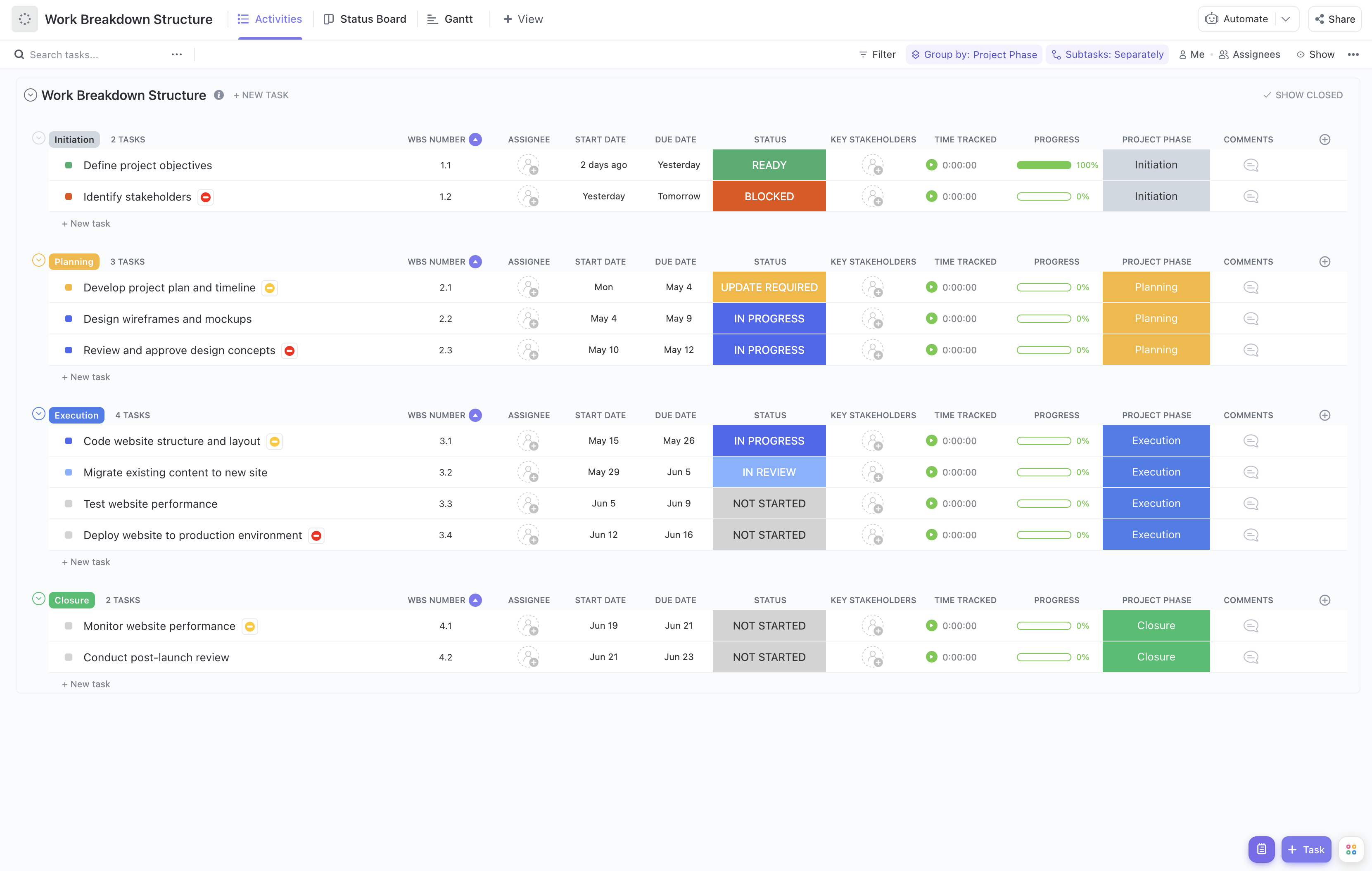
Launching an experimentation program involves coordinating multiple tests, hypotheses, and data analyses, which can quickly become overwhelming. To ensure your experimentation efforts are structured and productive, this specialized Work Breakdown Structure (WBS) Template is your go-to solution!
This template empowers you to:
- Break down your experimentation program into distinct phases such as hypothesis generation, test design, execution, and analysis for enhanced clarity
- Assign responsibilities to team members including data scientists, engineers, and product managers to ensure accountability and smooth collaboration
- Track the status of each experiment and related tasks with real-time updates to stay on schedule and adapt quickly
Best of all, you don't need any technical expertise or specialized software—just use ClickUp to streamline your experimentation workflow and drive impactful results.
Benefits of a Work Breakdown Structure Template for Experimentation Programs
Utilizing a WBS template tailored for experimentation programs offers numerous advantages:
- Clearly defines and organizes the objectives and deliverables of each experiment and the overall program
- Provides transparency on roles and responsibilities, ensuring each team member understands their tasks within the experimental process
- Enhances communication between cross-functional teams and stakeholders by providing a shared framework and progress visibility
- Improves efficiency by identifying dependencies and potential bottlenecks early, enabling proactive management
Main Elements of the Experimentation Program Work Breakdown Structure Template
This template is structured to cover all critical components of an experimentation program:
- Program Overview: High-level goals, key metrics, and success criteria for the experimentation initiative
- Hypothesis Development: Documenting test ideas, assumptions, and expected outcomes
- Experiment Design: Detailing methodologies, sample sizes, control groups, and tools required
- Execution Phase: Scheduling test runs, data collection processes, and monitoring protocols
- Data Analysis: Assigning analysis tasks, defining statistical methods, and interpreting results
- Reporting & Decision Making: Summarizing findings, stakeholder reviews, and action plans based on insights
By following this structured approach, your experimentation program will be well-organized, transparent, and positioned for success in driving innovation and informed decisions.