

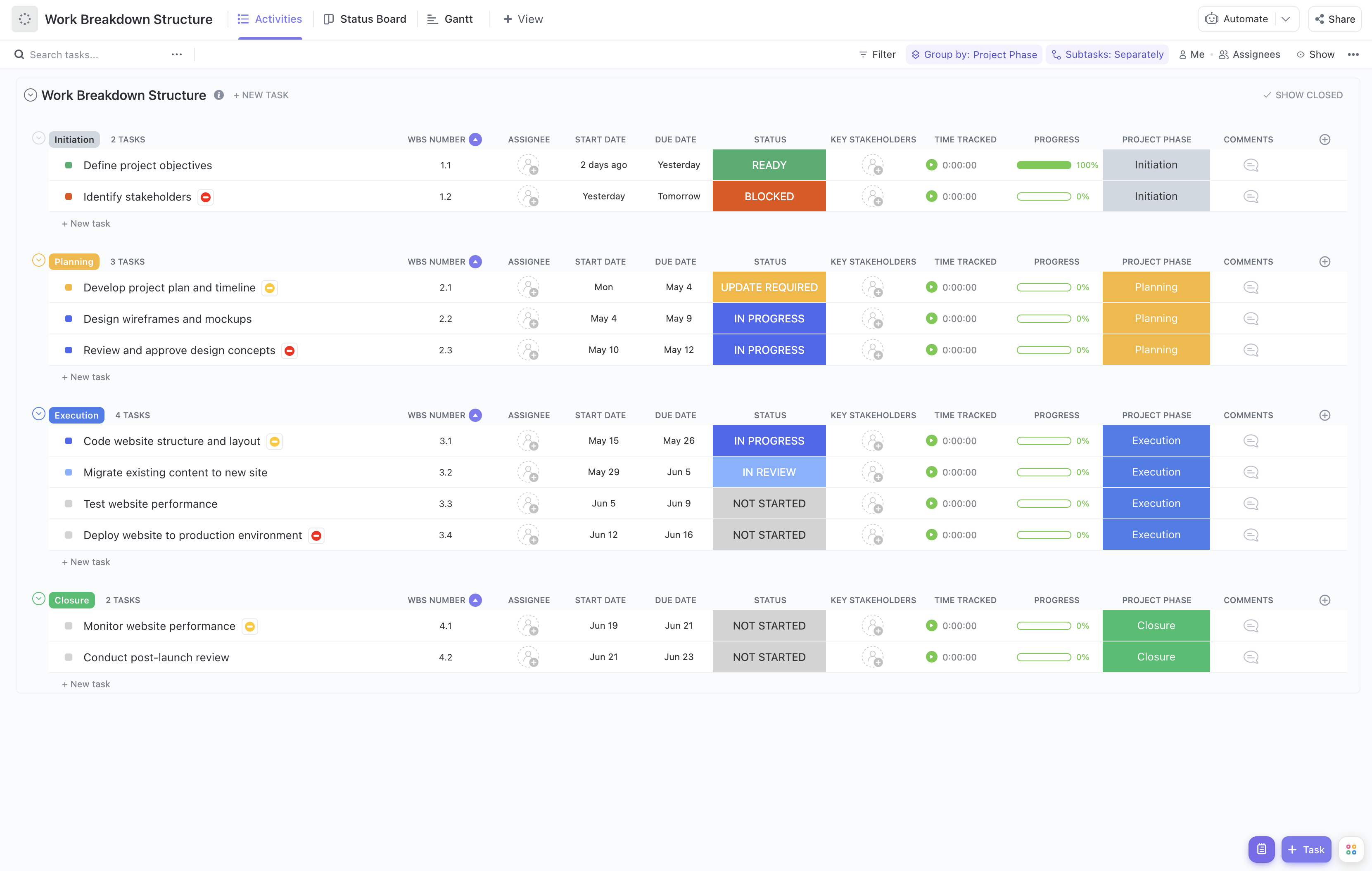


Implementing a comprehensive evidence handling rollout requires meticulous planning and coordination across multiple teams and departments. Managing this complex initiative can be challenging, but with the Evidence Handling Rollout Work Breakdown Structure Template, you can streamline the process effectively.
This specialized template helps you:
- Organize the rollout tasks into clear, manageable sections such as policy development, training, equipment procurement, and compliance auditing
- Align team members including legal, forensic, and security personnel to their specific responsibilities quickly and efficiently
- Track progress and milestones with real-time updates to ensure timely completion and adherence to regulatory standards
Best of all, no specialized software or coding skills are needed—just use ClickUp to get started and maintain full control over your evidence handling rollout.
Benefits of an Evidence Handling Rollout Work Breakdown Structure Template
Using this WBS template tailored for evidence handling rollout offers several advantages for project managers and teams involved in forensic and legal operations:
- Clearly defines and organizes the rollout's deliverables such as updated protocols, training sessions, and equipment deployment
- Provides clarity on roles and responsibilities for each stakeholder, minimizing confusion and overlap
- Enhances communication between departments like legal, forensic labs, and security to ensure cohesive execution
- Improves overall efficiency by breaking down complex tasks into actionable steps with measurable outcomes
Main Elements of the Evidence Handling Rollout Work Breakdown Structure Template
This template is structured to cover all critical components of an evidence handling rollout:
- Project Initiation: Define objectives, secure approvals, and identify key stakeholders including legal advisors and forensic experts.
- Policy Development: Draft and review updated evidence handling policies aligned with legal standards and best practices.
- Training and Awareness: Develop training materials, schedule sessions for staff, and assess competency post-training.
- Equipment and Infrastructure: Procure necessary evidence storage and tracking equipment, and set up secure facilities.
- Compliance and Auditing: Establish audit schedules, conduct compliance checks, and implement corrective actions as needed.
- Rollout Execution and Monitoring: Coordinate task assignments, monitor progress, and report status to stakeholders regularly.
By leveraging this detailed WBS template, your organization can ensure a smooth, compliant, and efficient rollout of evidence handling procedures, reducing risk and enhancing accountability across all involved teams.










