

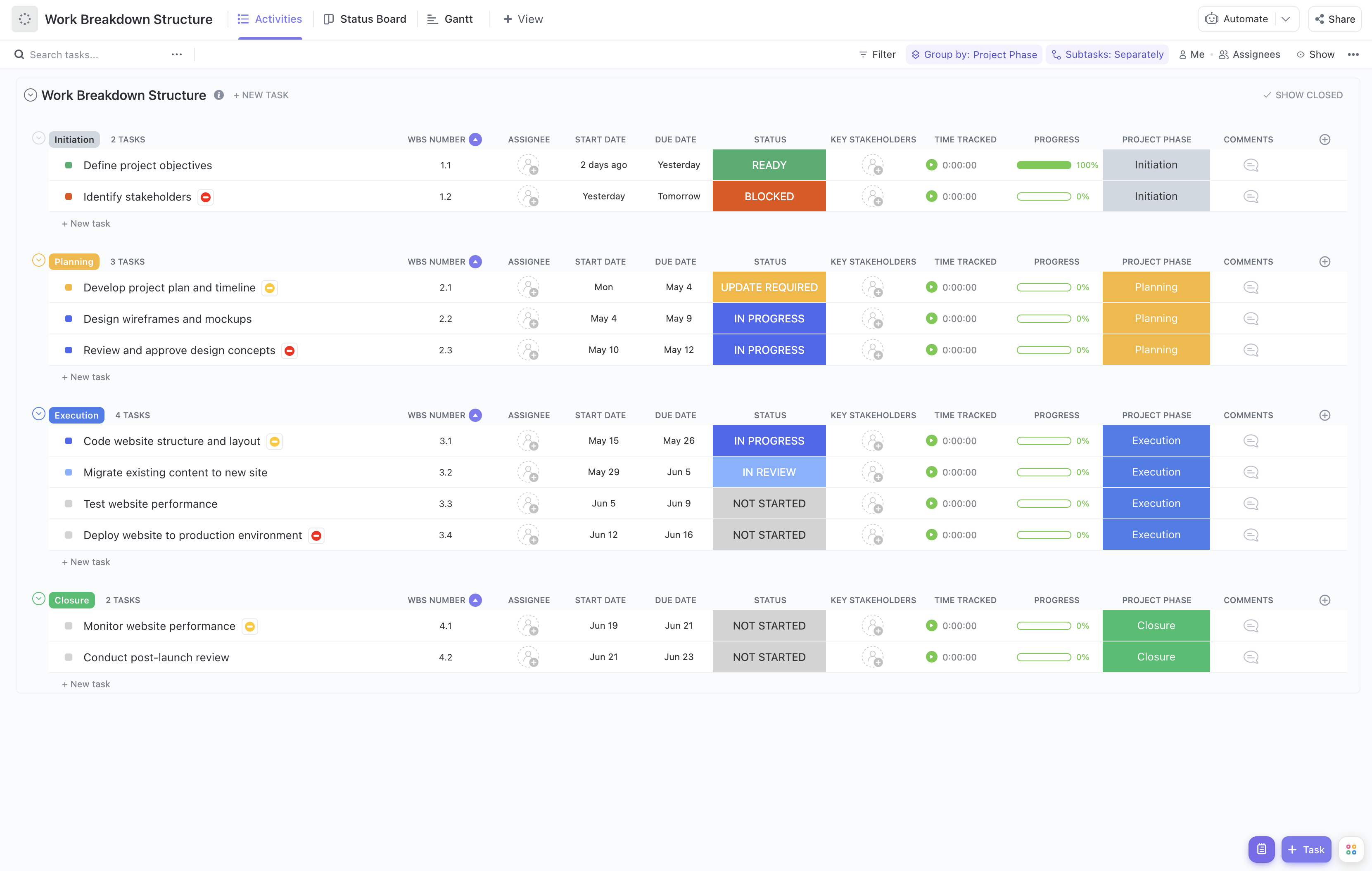


Managing emergency services requires swift coordination and clear task delineation to respond effectively to critical situations. This Emergency Services Execution Work Breakdown Structure Template is crafted to help emergency response teams break down complex emergency operations into manageable, prioritized tasks.
With this template, you can:
- Segment emergency response activities into clear phases such as assessment, mobilization, on-site operations, and recovery
- Assign roles and responsibilities to specialized teams including medical, fire, law enforcement, and logistics
- Track real-time progress of critical tasks like evacuation, triage, and resource deployment
Best of all, no specialized software or coding skills are needed—just ClickUp to streamline your emergency response workflows.
Benefits of an Emergency Services Execution Work Breakdown Structure Template
Utilizing a WBS template specifically designed for emergency services enhances operational clarity and coordination during high-pressure incidents. Key benefits include:
- Clearly defines and organizes emergency response deliverables, ensuring no critical task is overlooked
- Provides responders with precise roles and responsibilities, reducing confusion during chaotic situations
- Improves communication between incident command, field teams, and support units for synchronized efforts
- Enhances efficiency by enabling rapid task prioritization and resource allocation
Main Elements of the Emergency Services Execution Work Breakdown Structure Template
This template breaks down emergency response projects into structured components such as:
- Incident Assessment: Initial evaluation of the emergency scope, hazards, and resource needs
- Resource Mobilization: Deployment of personnel, equipment, and supplies to the incident site
- On-Site Operations: Execution of response activities including rescue, medical aid, fire suppression, and security
- Communication & Coordination: Maintaining information flow between command centers and field teams
- Recovery & Demobilization: Transitioning from active response to recovery, including site cleanup and resource release
Each element includes detailed tasks, timelines, and assigned teams to facilitate seamless emergency management. This structured approach empowers emergency services to respond swiftly and effectively, ultimately saving lives and minimizing damage.










