
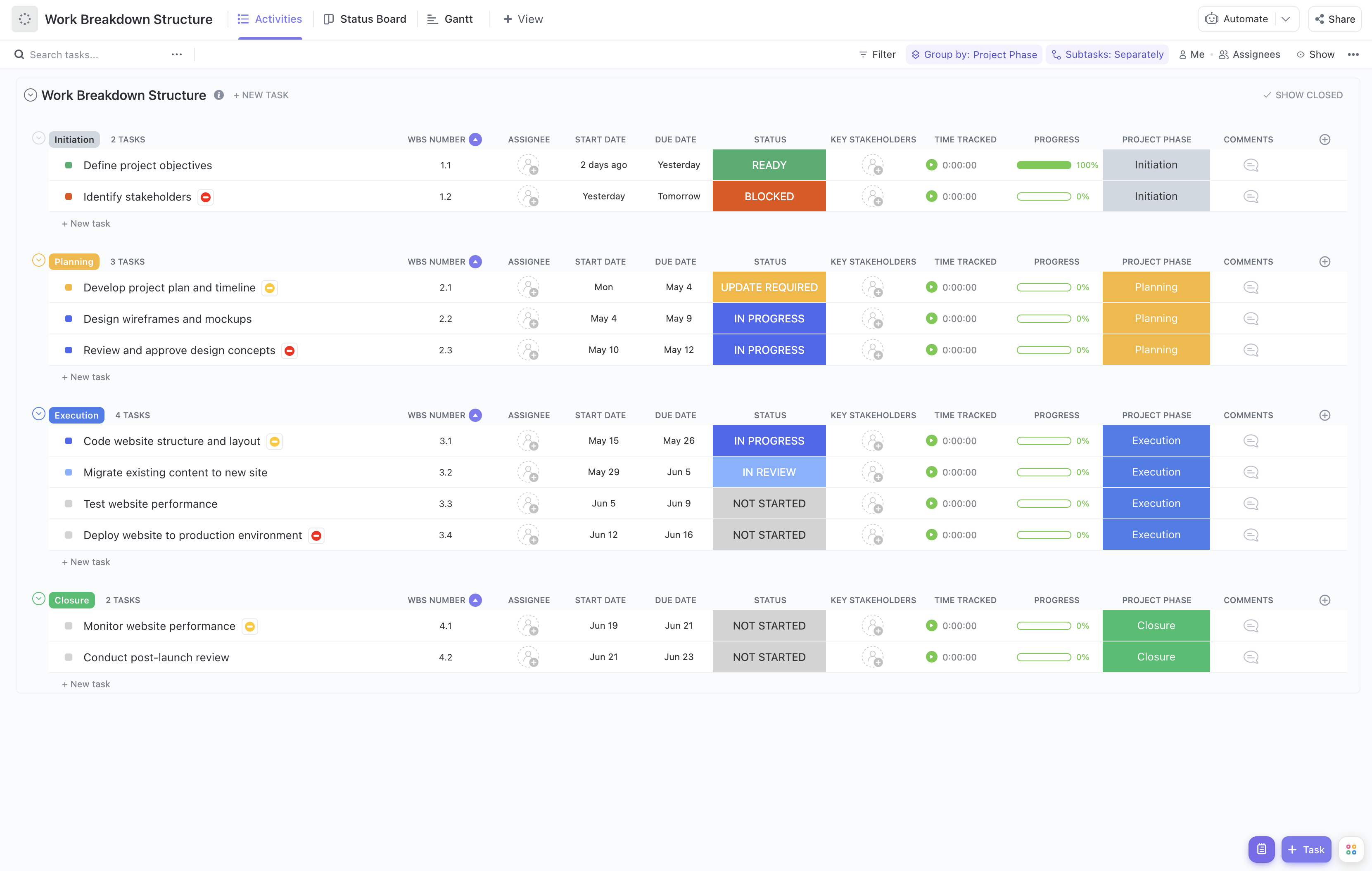


Ensuring high education quality requires meticulous planning and execution across various departments and stakeholders. Managing these multifaceted tasks can be challenging without a clear structure. That's where the Education Quality Execution Work Breakdown Structure Template comes in!
This tailored template helps you:
- Organize education quality improvement initiatives into clear, manageable sections for enhanced oversight
- Align educators, administrators, and quality assurance personnel to their specific responsibilities efficiently
- Monitor progress on accreditation standards, curriculum updates, and assessment improvements with real-time tracking
Best of all, this template requires no specialized technical skills—just use ClickUp to start structuring your education quality projects effectively.
Benefits of an Education Quality Execution Work Breakdown Structure Template
Implementing a work breakdown structure specifically for education quality initiatives offers numerous advantages. It provides a visual and organized framework to ensure all quality standards and improvement actions are addressed thoroughly and timely. Key benefits include:
- Clearly defines and organizes deliverables such as curriculum revisions, faculty training, and student assessment enhancements
- Clarifies roles and responsibilities among academic staff, quality assurance teams, and administrative units
- Enhances communication and collaboration between educators, accreditation bodies, and stakeholders
- Improves efficiency by identifying dependencies and prioritizing critical quality tasks
Main Elements of the Education Quality Execution Work Breakdown Structure Template
This template is structured to cover all essential components of education quality management:
- Quality Standards Compliance:
Tasks related to meeting accreditation requirements, regulatory compliance, and institutional policies.
- Curriculum Development:
Breakdown of curriculum review cycles, content updates, and integration of new teaching methodologies.
- Faculty and Staff Development:
Planning and execution of training programs, workshops, and performance evaluations to enhance teaching quality.
- Student Assessment and Feedback:
Designing assessment tools, collecting feedback, and analyzing results to inform continuous improvement.
- Resource Management:
Allocation and monitoring of educational materials, technology, and facilities supporting quality initiatives.
- Communication and Reporting:
Regular updates, stakeholder meetings, and documentation to maintain transparency and accountability.
By leveraging this structured approach, education institutions can systematically execute quality initiatives, track progress, and achieve their educational excellence goals efficiently.










