

Managing disciplinary processes can be complex and sensitive, requiring meticulous attention to detail and adherence to organizational policies. This Disciplinary Process Execution Work Breakdown Structure Template helps HR teams and managers systematically oversee each phase of the disciplinary procedure to ensure fairness and compliance.
This specialized template enables you to:
- Decompose the disciplinary process into clear, actionable steps for better oversight
- Assign responsibilities to HR personnel, managers, and legal advisors efficiently
- Monitor progress and deadlines with real-time updates to avoid delays
Best of all, this template requires no coding skills or additional software—just ClickUp to get started managing your disciplinary cases effectively.
Benefits of a Disciplinary Process Execution WBS Template
Utilizing a WBS template tailored for disciplinary actions provides significant advantages for organizations aiming to uphold standards and ensure procedural fairness:
- Clarifies each stage of the disciplinary procedure, from initial investigation to final resolution
- Defines roles and responsibilities clearly among HR, management, and legal teams
- Enhances communication and documentation, reducing risks of misunderstandings or non-compliance
- Improves efficiency by tracking case progress and ensuring timely completion of all steps
Main Elements of the Disciplinary Process Execution WBS Template
This template breaks down the disciplinary process into key components, including:
- Case Initiation: Receipt of complaint, preliminary assessment, and case logging
- Investigation Phase: Evidence gathering, witness interviews, and documentation
- Review and Decision: Evaluation of findings, consultation with legal advisors, and decision-making
- Communication: Notifying involved parties of outcomes and next steps
- Implementation: Execution of disciplinary actions, monitoring compliance, and follow-up
- Closure: Final documentation, case closure, and lessons learned for process improvement
Each task includes assigned stakeholders, deadlines, and status tracking to maintain transparency and accountability throughout the disciplinary process.
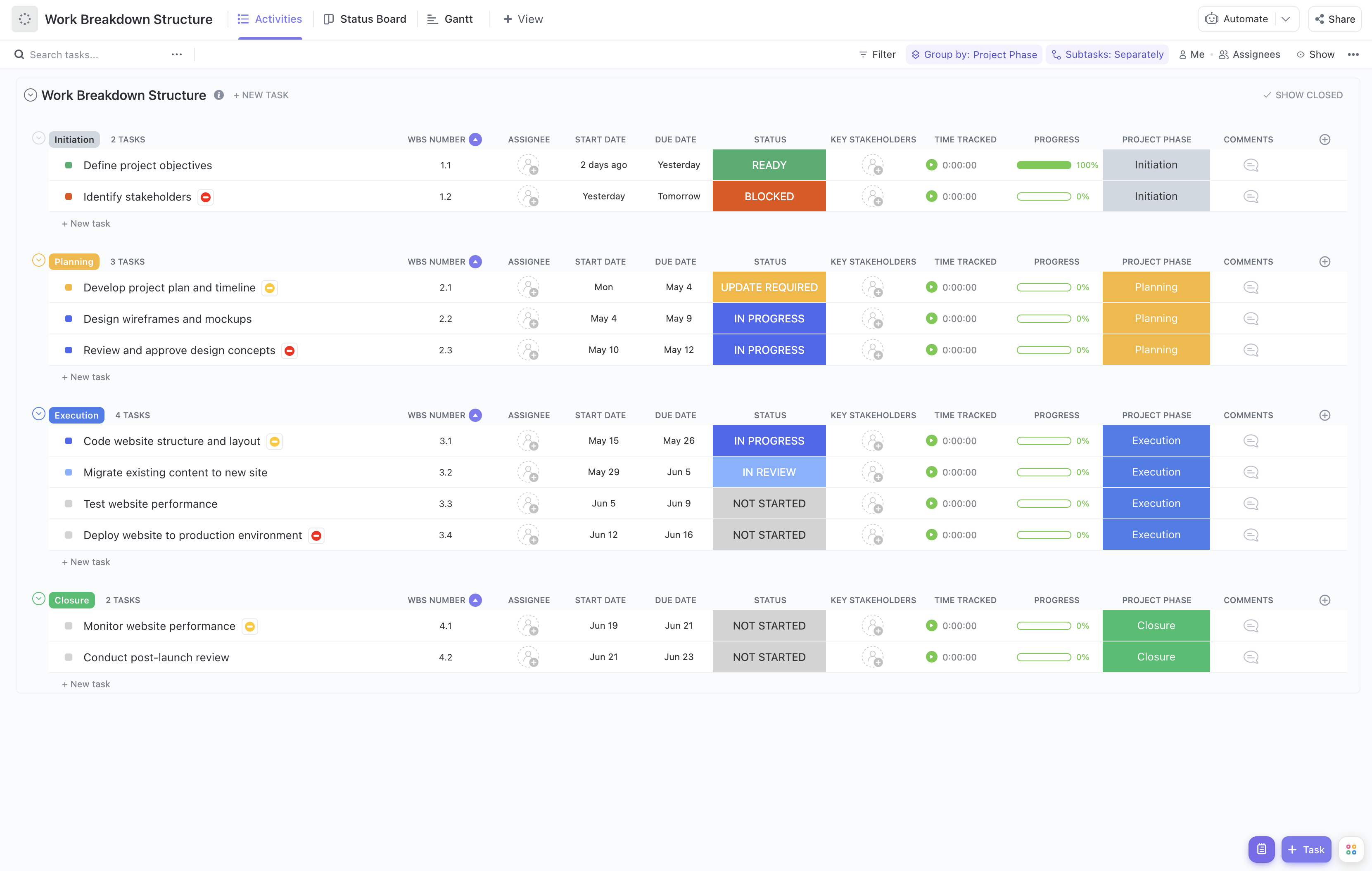


By leveraging this template, organizations can ensure that disciplinary cases are handled systematically, transparently, and in alignment with company policies and legal requirements.










