

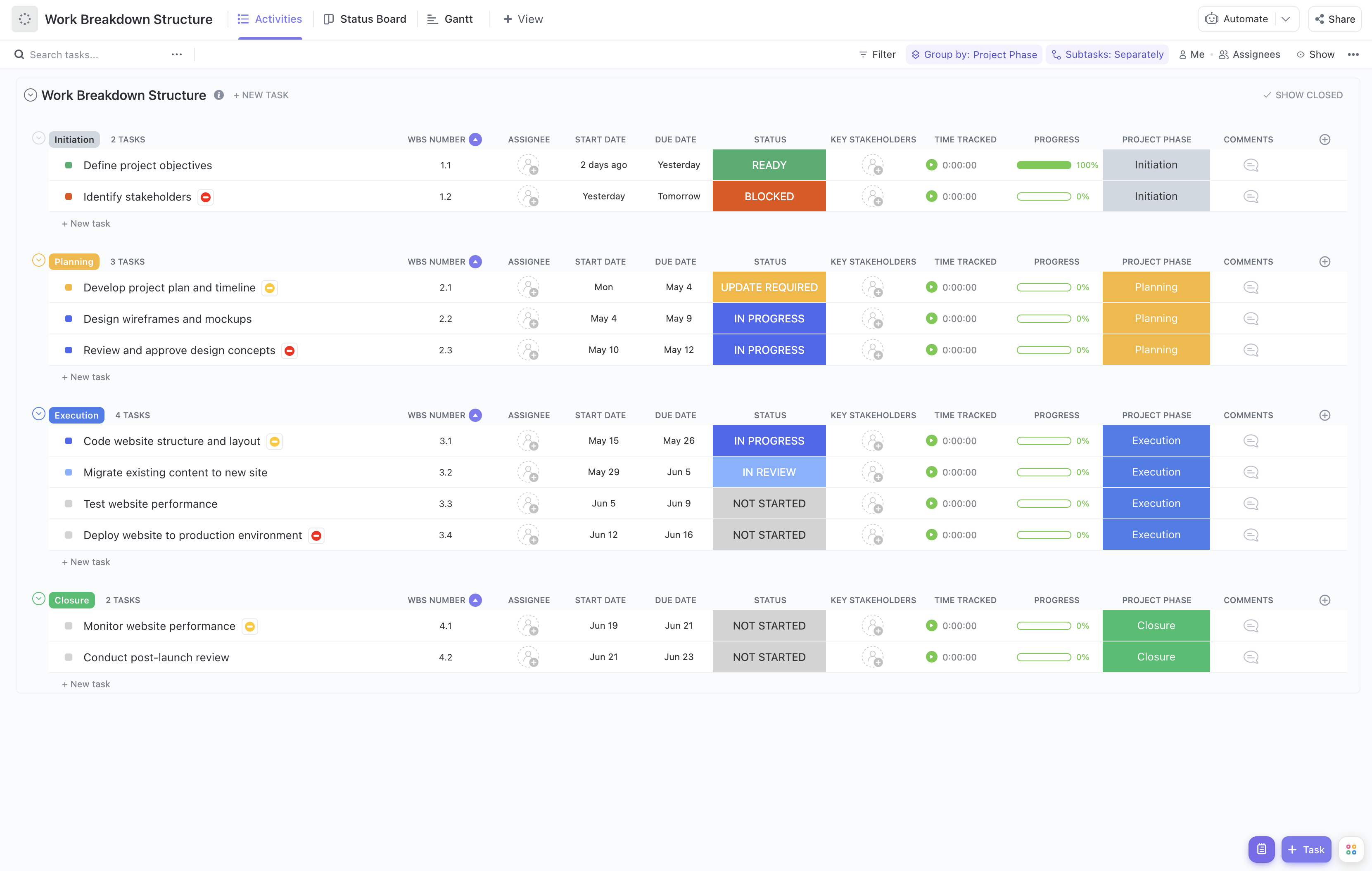


Coordinating disaster response involves managing numerous urgent tasks across multiple teams under high-pressure conditions. This Disaster Response Coordination Work Breakdown Structure Template is tailored to help emergency management professionals break down complex response operations into clear, actionable components.
This template enables you to:
- Segment disaster response activities into manageable, prioritized tasks for enhanced clarity
- Assign responsibilities swiftly to specialized teams such as medical aid, logistics, communications, and shelter management
- Monitor real-time progress of critical response phases to adapt quickly to evolving situations
Best of all, no advanced technical skills are required to implement this template—just use ClickUp to streamline your disaster coordination efforts effectively.
Benefits of a Disaster Response Work Breakdown Structure Template
Utilizing a WBS template specifically designed for disaster response offers numerous advantages:
- Clearly defines and organizes essential deliverables such as evacuation, resource distribution, and public communication
- Clarifies roles and responsibilities among first responders, volunteers, and support agencies to prevent overlap and gaps
- Enhances communication channels between field teams, command centers, and stakeholders for timely information sharing
- Improves overall efficiency and accountability during high-stakes emergency operations
Main Elements of the Disaster Response Work Breakdown Structure Template
This template is structured to cover the critical phases and components of disaster response, including:
- Assessment and Activation: Initial damage assessment, activation of emergency protocols, and resource mobilization
- Evacuation and Rescue Operations: Coordinating evacuation routes, search and rescue teams, and safe shelter identification
- Medical and Health Services: Deployment of medical teams, triage centers, and mental health support
- Logistics and Supply Chain: Management of supplies, transportation, and distribution of relief materials
- Communication and Public Information: Dissemination of alerts, media coordination, and community engagement
- Recovery and Demobilization: Damage repair planning, resource deactivation, and after-action reviews
By breaking down disaster response into these focused areas, teams can operate with greater coordination and clarity, ensuring that critical tasks are completed efficiently and effectively.
Implement this template in ClickUp to gain a comprehensive overview of your disaster response plan, assign tasks with clear accountability, and track progress through each phase of the operation.










