

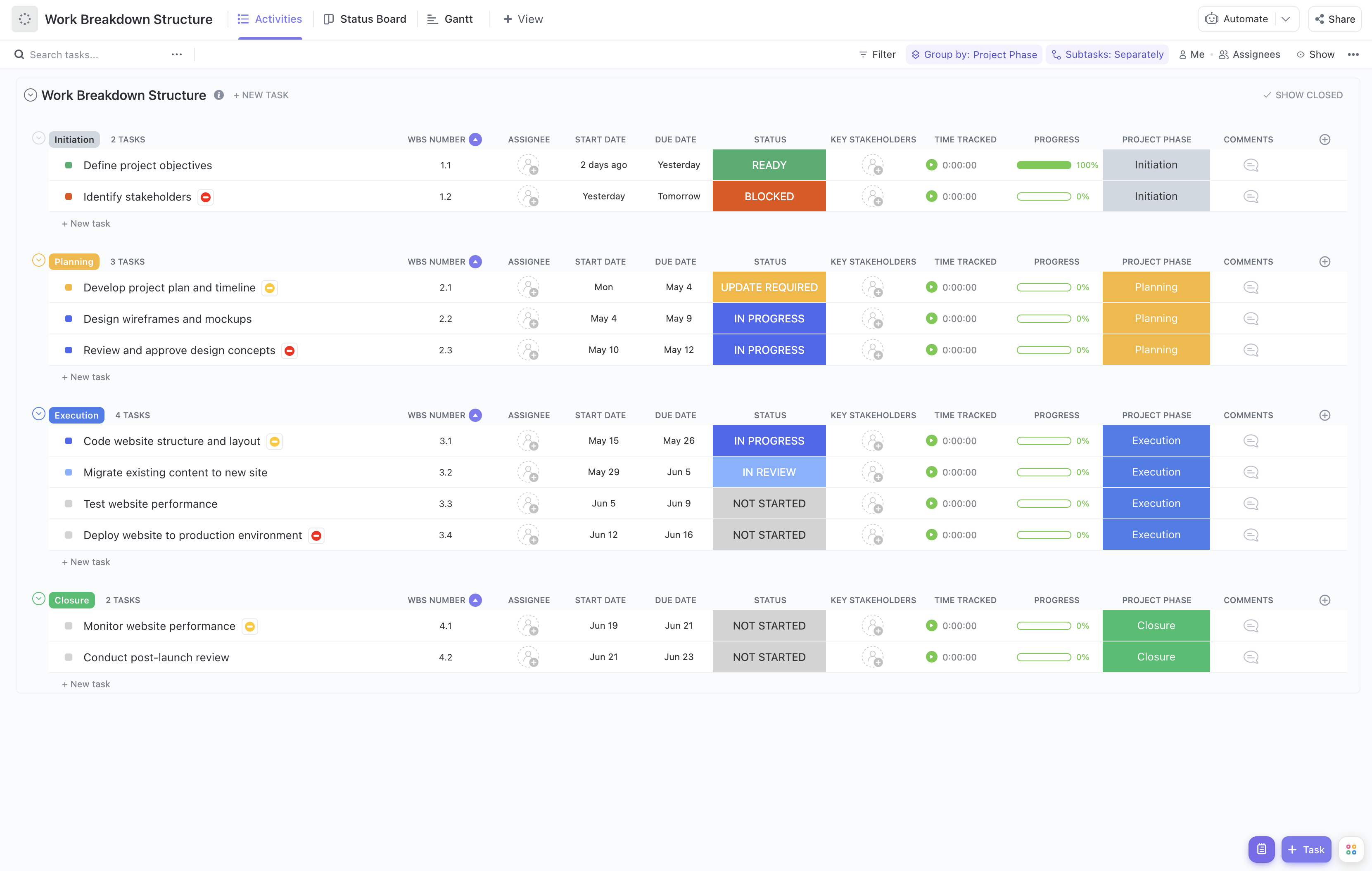


Disaster recovery management requires meticulous planning and coordination to restore operations swiftly and efficiently after an incident. This Disaster Recovery Management Work Breakdown Structure Template empowers your team to break down complex recovery processes into manageable, actionable tasks.
With this template, you can:
- Segment disaster recovery efforts into clear, structured phases such as assessment, restoration, and validation
- Assign responsibilities to appropriate recovery teams and stakeholders to ensure accountability
- Monitor recovery progress in real-time to identify bottlenecks and adjust plans promptly
Best of all, this template requires no specialized software or coding expertise—simply use ClickUp to streamline your disaster recovery planning and execution.
Benefits of a Disaster Recovery Work Breakdown Structure Template
Implementing a structured WBS for disaster recovery offers significant advantages, including:
- Clear definition and organization of recovery deliverables, from data restoration to infrastructure repair
- Enhanced clarity on roles and responsibilities among IT, facilities, and management teams
- Improved communication channels between recovery teams and stakeholders, facilitating faster decision-making
- Increased efficiency in recovery operations, reducing downtime and mitigating business impact
Main Elements of the Disaster Recovery Work Breakdown Structure Template
This template is structured around key components essential for comprehensive disaster recovery management:
- Risk Assessment and Impact Analysis: Identify potential threats and assess their impact on business functions.
- Recovery Strategy Development: Define recovery objectives, prioritize systems, and establish recovery procedures.
- Resource Allocation: Assign personnel, equipment, and budget necessary for recovery tasks.
- Implementation Tasks: Detailed steps for data backup restoration, system repairs, and facility recovery.
- Testing and Validation: Conduct drills and tests to ensure recovery plans are effective and up to date.
- Communication Plan: Outline protocols for internal and external communications during recovery.
By leveraging this template, your organization can maintain a clear, actionable roadmap for disaster recovery, ensuring all critical tasks are accounted for and executed efficiently to restore normal operations as quickly as possible.










