

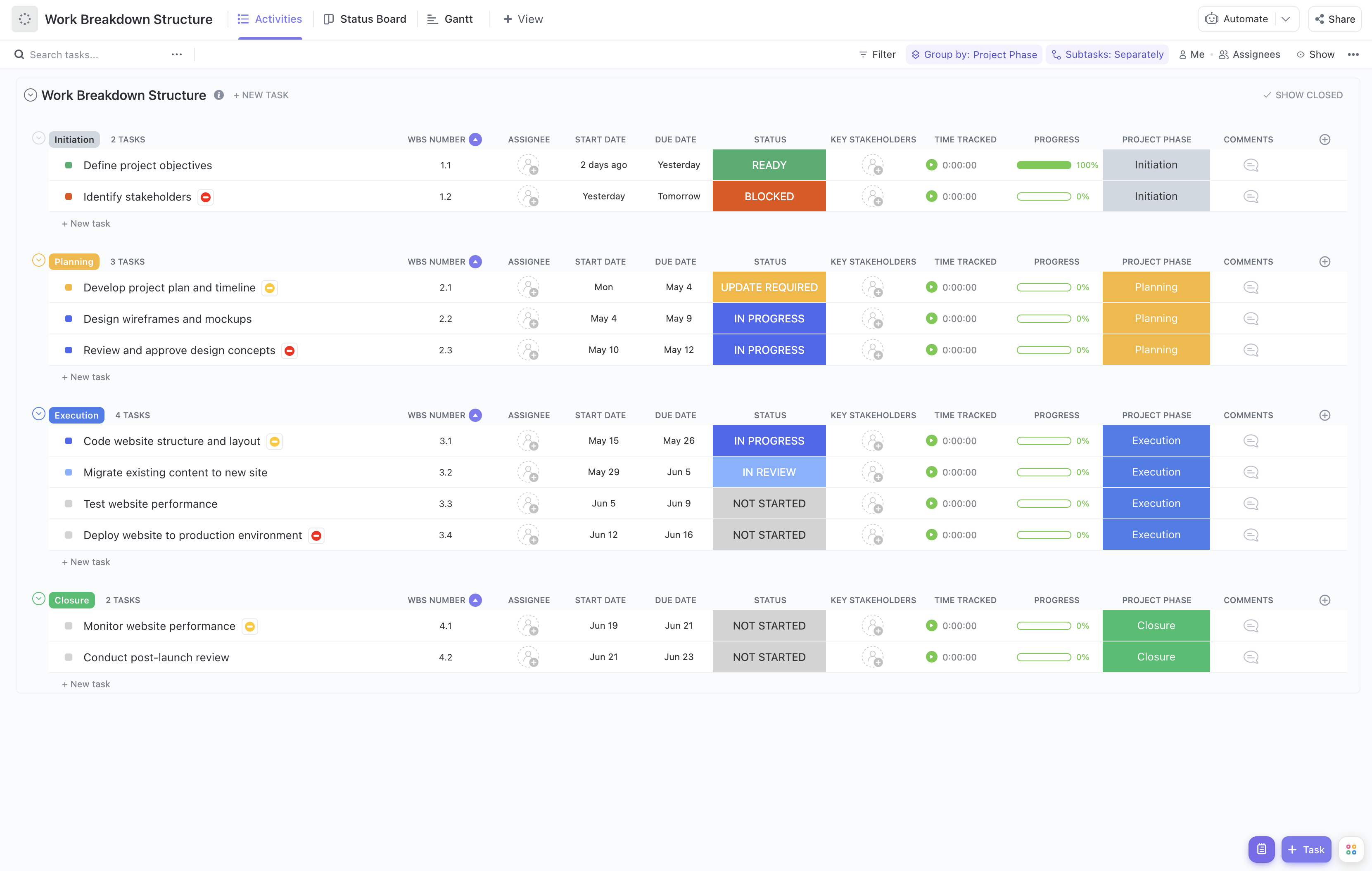


Coordinating course schedules involves juggling numerous tasks, deadlines, and stakeholders. To streamline this complexity, our Course Scheduling Work Breakdown Structure Template provides a clear framework to organize and execute every step of the scheduling process.
This specialized template enables you to:
- Segment the course scheduling project into detailed, manageable tasks such as curriculum review, faculty availability, room assignments, and timetable creation
- Assign responsibilities to academic staff, registrars, and IT support teams efficiently
- Monitor progress in real-time to ensure deadlines for course offerings, registration periods, and publication are met
Best of all, no advanced technical skills are required—just use ClickUp to get started and keep your course scheduling on track!
Benefits of Using a Course Scheduling Work Breakdown Structure Template
Implementing a WBS for course scheduling offers numerous advantages for educational institutions:
- Clearly defines all deliverables, from course catalog updates to final timetable publication
- Clarifies roles and responsibilities among departments such as academic affairs, scheduling coordinators, and IT services
- Enhances communication between faculty, administration, and students by providing transparency into scheduling progress
- Improves efficiency by identifying dependencies and potential bottlenecks early in the process
Main Elements of the Course Scheduling Work Breakdown Structure Template
This template is structured to cover all critical phases of course scheduling:
- Planning: Define scheduling goals, review academic calendar constraints, and gather stakeholder input
- Course Data Collection: Compile course offerings, prerequisites, and faculty availability
- Scheduling Development: Assign courses to time slots and rooms, resolve conflicts, and finalize draft schedules
- Review and Approval: Circulate schedules for feedback, make adjustments, and obtain necessary approvals
- Publication and Communication: Publish final schedules, update registration systems, and inform students and faculty
- Monitoring and Adjustments: Track registration trends, manage waitlists, and make schedule changes as needed
By following this structured approach, your team can confidently manage the complexities of course scheduling, ensuring a smooth and successful academic term.










