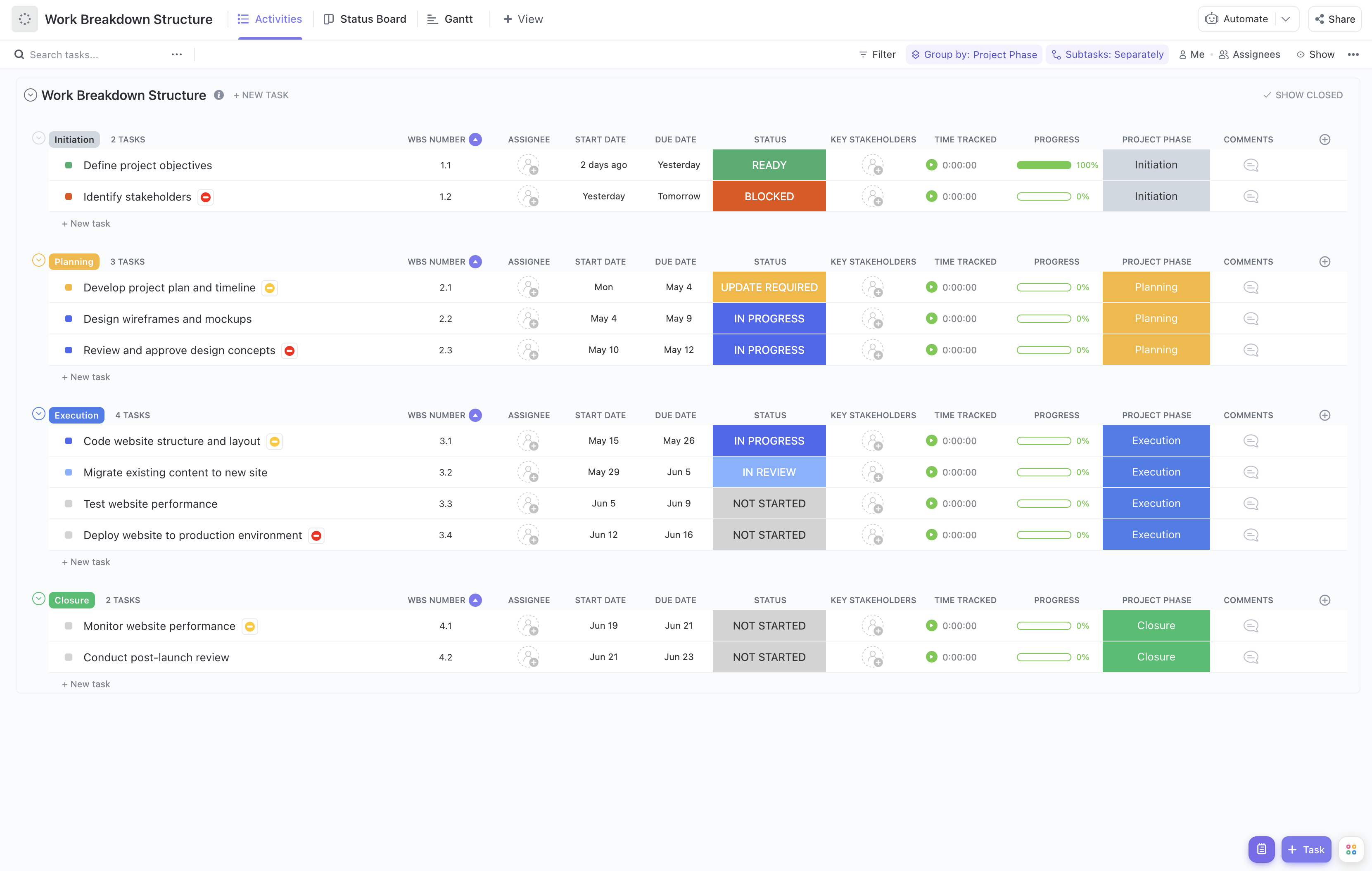
Managing a content migration program involves coordinating numerous tasks, stakeholders, and technical considerations to ensure content is accurately and efficiently transferred to a new system. This Content Migration Program Work Breakdown Structure Template provides a structured approach to break down the migration into manageable components, allowing teams to focus on each critical phase with clarity and precision.
This specialized template helps you:
- Segment the migration process into distinct phases such as content audit, mapping, extraction, transformation, loading, and validation
- Assign responsibilities to content owners, IT specialists, and quality assurance teams for seamless collaboration
- Monitor progress in real-time to identify bottlenecks and keep the migration on schedule
Best of all, no advanced technical skills are required to utilize this template. Simply use ClickUp to organize your migration tasks and keep your team aligned from start to finish.
Benefits of a Content Migration Work Breakdown Structure Template
Utilizing a WBS template tailored for content migration offers numerous advantages to project managers and teams, including:
- Clearly defining and organizing all deliverables such as content inventory, migration scripts, and validation reports
- Providing transparency on roles and responsibilities, ensuring content owners, developers, and testers understand their tasks
- Enhancing communication among stakeholders by offering a shared view of migration progress and challenges
- Improving efficiency by breaking down complex migration activities into actionable and trackable tasks
Main Elements of the Content Migration Work Breakdown Structure Template
This template is structured to cover all essential components of a content migration program, including:
- Project Initiation:
Define scope, objectives, and identify key stakeholders involved in the migration.
- Content Audit and Analysis:
Inventory existing content, assess quality, and determine migration readiness.
- Mapping and Planning:
Develop content mapping strategies, migration workflows, and schedule timelines.
- Extraction and Transformation:
Extract content from legacy systems and transform it to fit the new platform's requirements.
- Loading and Integration:
Import content into the target system and integrate with existing workflows.
- Testing and Validation:
Verify content accuracy, functionality, and user experience post-migration.
- Training and Support:
Prepare teams for new system usage and provide ongoing support.
- Project Closure:
Finalize documentation, gather feedback, and formally close the migration project.
By following this structured approach, your content migration program will be well-organized, transparent, and positioned for success.