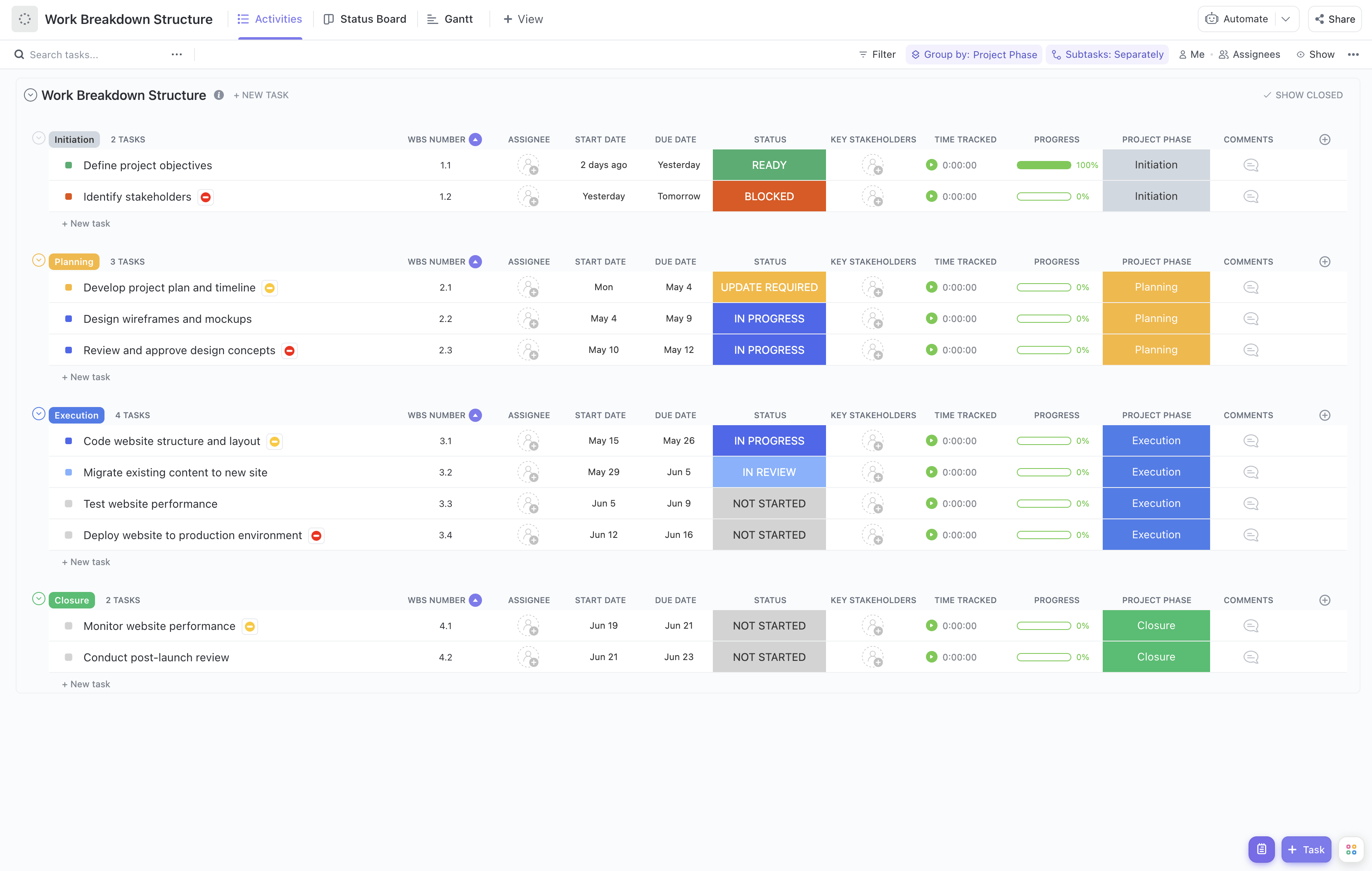
Managing civic requests involves coordinating multiple departments, tracking diverse tasks, and ensuring community needs are addressed promptly. This Civic Request Coordination Work Breakdown Structure Template is crafted to help municipal teams organize and oversee these efforts effectively.
This specialized template enables you to:
- Segment civic requests into clear, manageable tasks categorized by request type and urgency
- Assign responsibilities to appropriate departments and personnel swiftly to enhance accountability
- Monitor progress with real-time updates to ensure timely resolution and community satisfaction
With no need for complex software or coding skills, this template integrates seamlessly with ClickUp, empowering your team to focus on delivering quality public services.
Benefits of a Civic Request Coordination Work Breakdown Structure
Utilizing this tailored WBS template provides municipal teams with a structured approach to managing civic requests, offering benefits such as:
- Clear definition and organization of various civic service requests, from infrastructure repairs to community event planning
- Transparent assignment of roles and responsibilities, reducing overlap and improving interdepartmental collaboration
- Enhanced communication channels between city officials, field teams, and residents, fostering trust and responsiveness
- Improved efficiency in tracking request statuses, deadlines, and resource allocation, leading to better service delivery
Main Elements of the Civic Request Coordination Work Breakdown Structure
This template breaks down civic request coordination into key components:
- Request Intake and Categorization: Logging incoming requests with details such as location, type, and priority to ensure accurate processing.
- Task Assignment: Delegating specific tasks to relevant departments like public works, parks and recreation, or emergency services.
- Progress Tracking: Monitoring each task's status with updates on completion stages, obstacles, and estimated resolution times.
- Stakeholder Communication: Maintaining clear communication with residents and internal teams through notifications and status reports.
- Resource Management: Allocating personnel, equipment, and budget effectively to meet request demands.
By implementing this structured approach, your civic request coordination becomes more transparent, efficient, and responsive, ultimately enhancing community satisfaction and operational effectiveness.