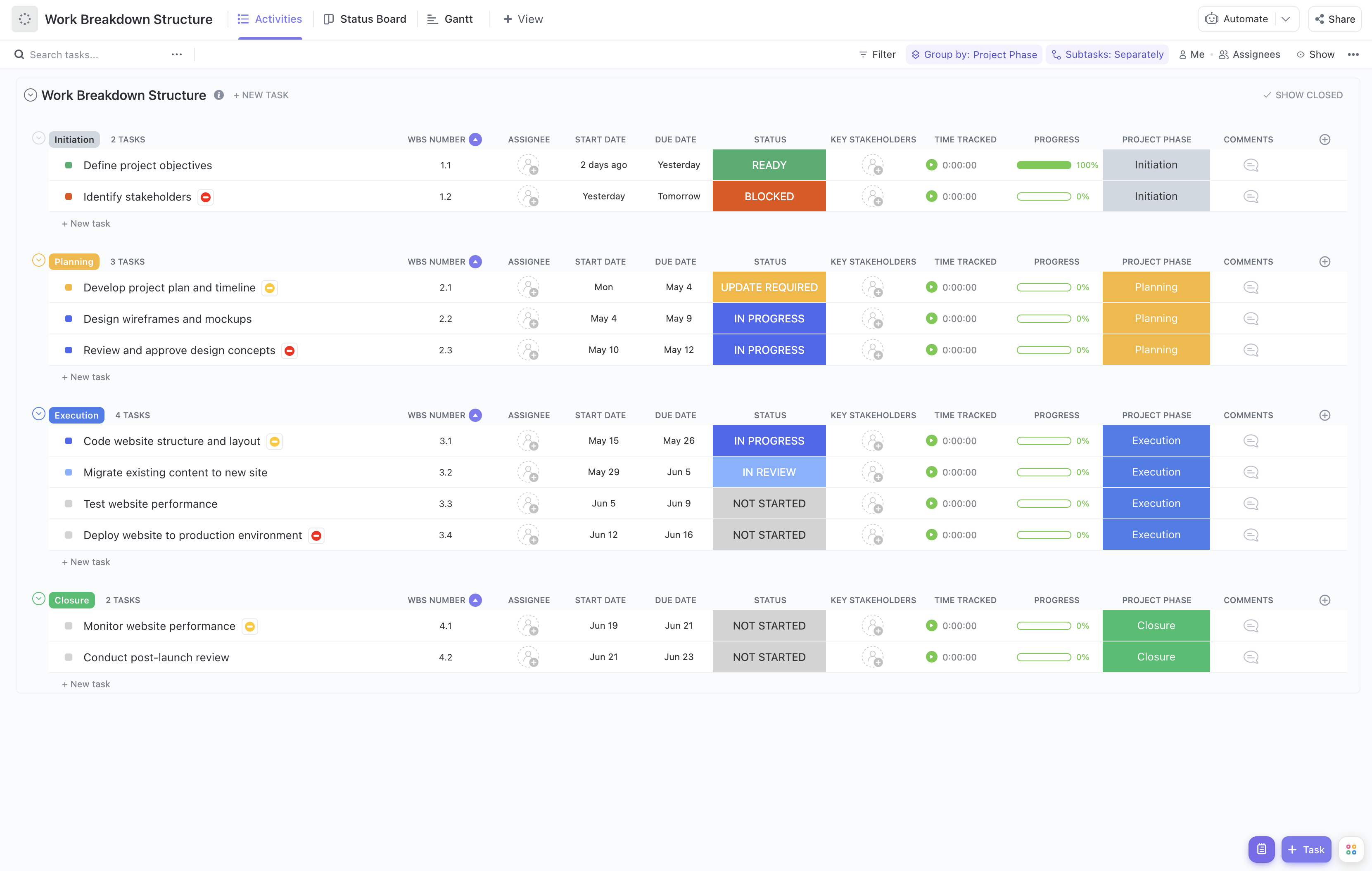
Achieving certification compliance involves navigating a complex landscape of standards, documentation, audits, and corrective actions. Managing these multifaceted tasks across departments can be daunting. That's where our Certification Compliance Execution Work Breakdown Structure Template comes in!
This tailored template helps you:
- Organize certification requirements and related tasks into clear, manageable sections for enhanced oversight
- Assign responsibilities to compliance officers, quality managers, and team members with precision
- Monitor audit schedules, documentation updates, and corrective actions with real-time progress tracking
Best of all, no specialized software or coding skills are needed—just use ClickUp to break down your certification compliance projects into achievable milestones and tasks.
Benefits of a Certification Compliance Execution Work Breakdown Structure
Utilizing a work breakdown structure specifically for certification compliance projects offers numerous advantages. It visually maps out all deliverables and activities necessary to meet certification standards, ensuring nothing is overlooked. Key benefits include:
- Clearly defining and organizing certification requirements, audit preparations, and follow-up actions
- Providing transparency on roles and responsibilities for compliance team members and stakeholders
- Enhancing communication between departments, auditors, and management through structured task alignment
- Improving efficiency by identifying dependencies and streamlining workflows to meet certification deadlines
Main Elements of the Certification Compliance Execution Work Breakdown Structure Template
This template breaks down certification compliance projects into hierarchical components, including:
- Certification Scope: Define the specific certification(s) targeted, such as ISO 9001, HIPAA, or GDPR compliance.
- Documentation Management: Tasks related to creating, reviewing, and updating policies, procedures, and records required for certification.
- Audit Preparation: Scheduling internal audits, training staff, and preparing evidence for external auditors.
- Corrective Actions: Identifying non-conformities, assigning remediation tasks, and verifying resolution.
- Stakeholder Engagement: Assigning roles to compliance officers, quality assurance teams, and executive sponsors for accountability.
- Progress Tracking: Using real-time dashboards and status updates to monitor milestones and ensure timely completion.
By leveraging this structured approach, organizations can confidently navigate certification processes, reduce risks of non-compliance, and achieve their certification goals efficiently.