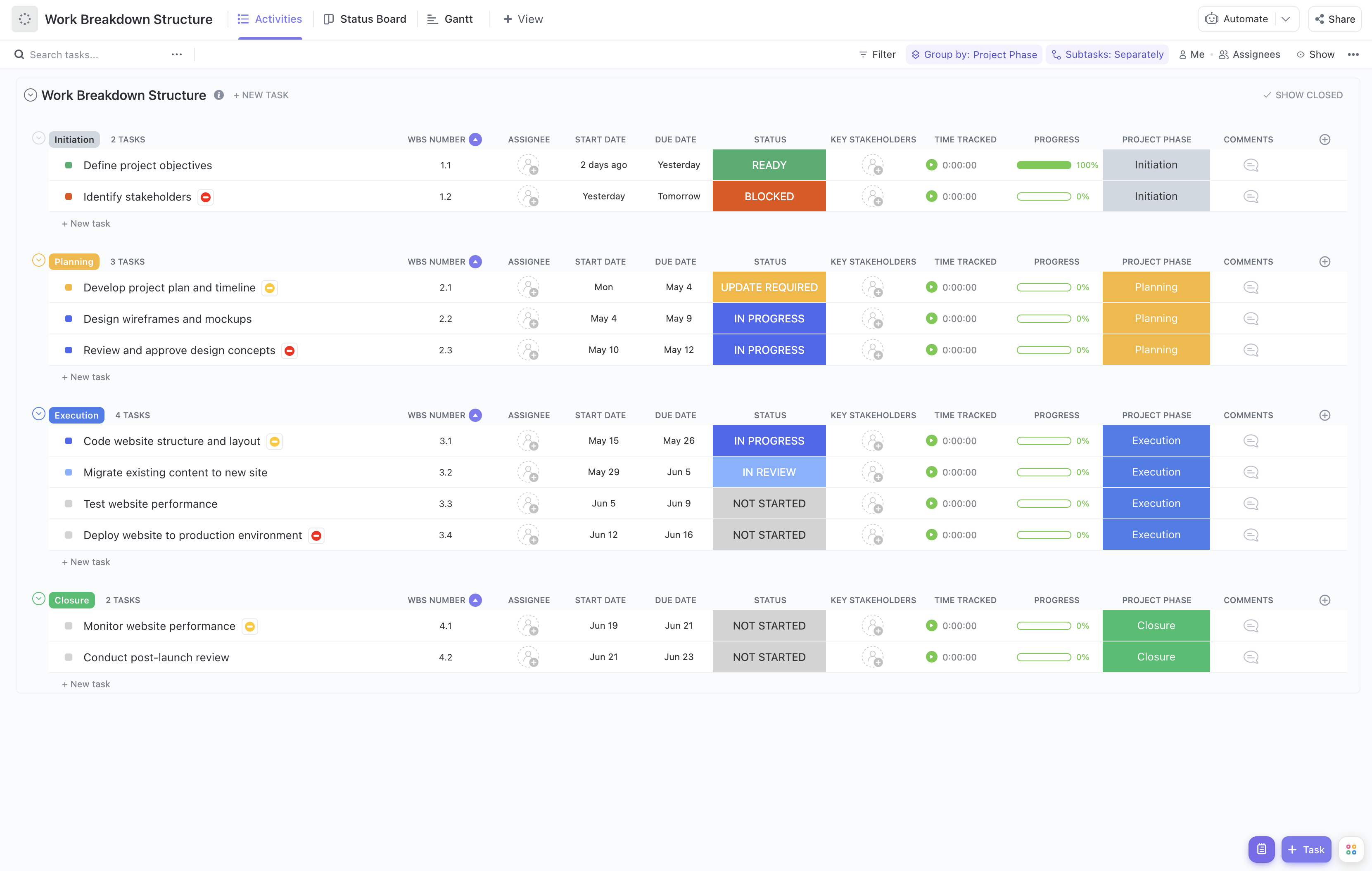
Closing a case involves multiple detailed steps that require careful coordination and tracking to ensure compliance, documentation, and stakeholder communication are all handled effectively. This Case Closure Execution Work Breakdown Structure Template is designed to help you systematically manage every aspect of your case closure process.
This specialized template enables you to:
- Break down the case closure process into clear, manageable tasks and subtasks for better oversight
- Assign responsibilities to team members such as legal counsel, compliance officers, and administrative staff to ensure accountability
- Monitor progress with real-time updates to keep the closure on schedule and identify any bottlenecks
Best of all, no advanced technical skills are required to use this template—just your ClickUp workspace and your team’s commitment to thorough case management.
Benefits of a Case Closure Execution Work Breakdown Structure Template
Utilizing a WBS template specifically for case closure brings clarity and structure to what can often be a complex and multi-faceted process. Key benefits include:
- Clearly defining all deliverables required to formally close a case, including documentation, approvals, and notifications
- Providing transparency on roles and responsibilities so each team member understands their tasks and deadlines
- Enhancing communication between legal teams, project managers, clients, and stakeholders to ensure alignment and reduce errors
- Improving efficiency by identifying dependencies and streamlining workflows to avoid delays in case closure
Main Elements of a Case Closure Execution Work Breakdown Structure Template
This template breaks down the case closure process into several key components:
- Case Review: Conduct final assessments, verify all case facts, and ensure all prior actions are complete.
- Documentation Preparation: Compile final reports, legal documents, and closure summaries required for records and compliance.
- Stakeholder Approvals: Obtain necessary sign-offs from legal counsel, clients, and management to authorize closure.
- Communication: Notify all relevant parties of case closure status and provide any final updates or instructions.
- Archiving: Securely store case files and documentation according to organizational policies and legal requirements.
- Post-Closure Review: Conduct lessons learned sessions and update process documentation to improve future case closures.
By following this structured approach, your team can ensure that every case is closed thoroughly, compliantly, and efficiently, minimizing risks and maximizing organizational learning.