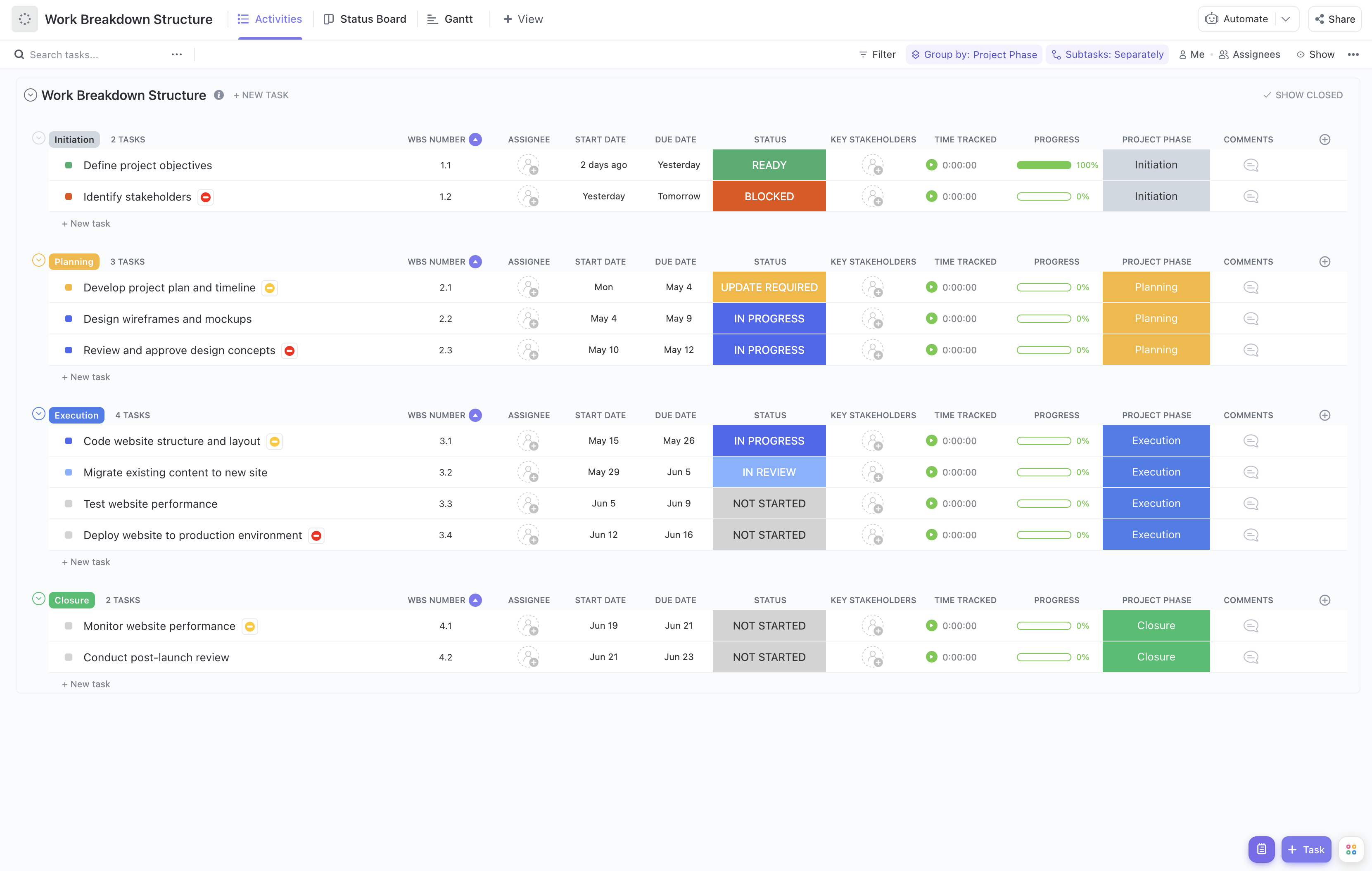
Addressing climate change through carbon reduction programs requires meticulous planning and coordination. Breaking down these complex initiatives into manageable components is essential for success. This Carbon Reduction Program Work Breakdown Structure Template empowers your team to organize, execute, and monitor carbon reduction efforts effectively.
With this template, you can:
- Segment your carbon reduction program into clear, actionable tasks such as energy audits, emission tracking, and renewable energy implementation
- Assign responsibilities to sustainability officers, facility managers, and external consultants for streamlined collaboration
- Monitor milestones like baseline carbon footprint assessment, reduction target setting, and progress reporting with real-time updates
Best of all, no specialized software or coding skills are needed—just use ClickUp to start structuring your carbon reduction projects for maximum impact!
Benefits of a Carbon Reduction Program Work Breakdown Structure Template
Utilizing a work breakdown structure tailored for carbon reduction initiatives offers numerous advantages:
- Clearly defines program deliverables such as carbon audits, policy development, and stakeholder engagement plans
- Clarifies roles and responsibilities across departments and external partners, ensuring accountability
- Enhances communication between sustainability teams, executives, and regulatory bodies through transparent task tracking
- Improves efficiency by identifying dependencies and potential bottlenecks in emission reduction activities
Main Elements of the Carbon Reduction Program Work Breakdown Structure Template
This template includes key structural components to support your carbon reduction efforts:
- Program Phases: Initiation, Planning, Implementation, Monitoring, and Closure
- Task Hierarchy: Breakdown of high-level goals into detailed tasks such as energy consumption analysis, renewable energy sourcing, and waste reduction strategies
- Stakeholder Assignments: Identification of responsible parties including sustainability managers, procurement teams, and external consultants
- Progress Tracking: Real-time status updates, milestones, and key performance indicators (KPIs) related to carbon footprint reduction targets
- Documentation and Reporting: Centralized repository for audit reports, compliance documentation, and communication materials
By leveraging this structured approach, your organization can systematically reduce its carbon footprint, meet regulatory requirements, and demonstrate leadership in sustainability.