

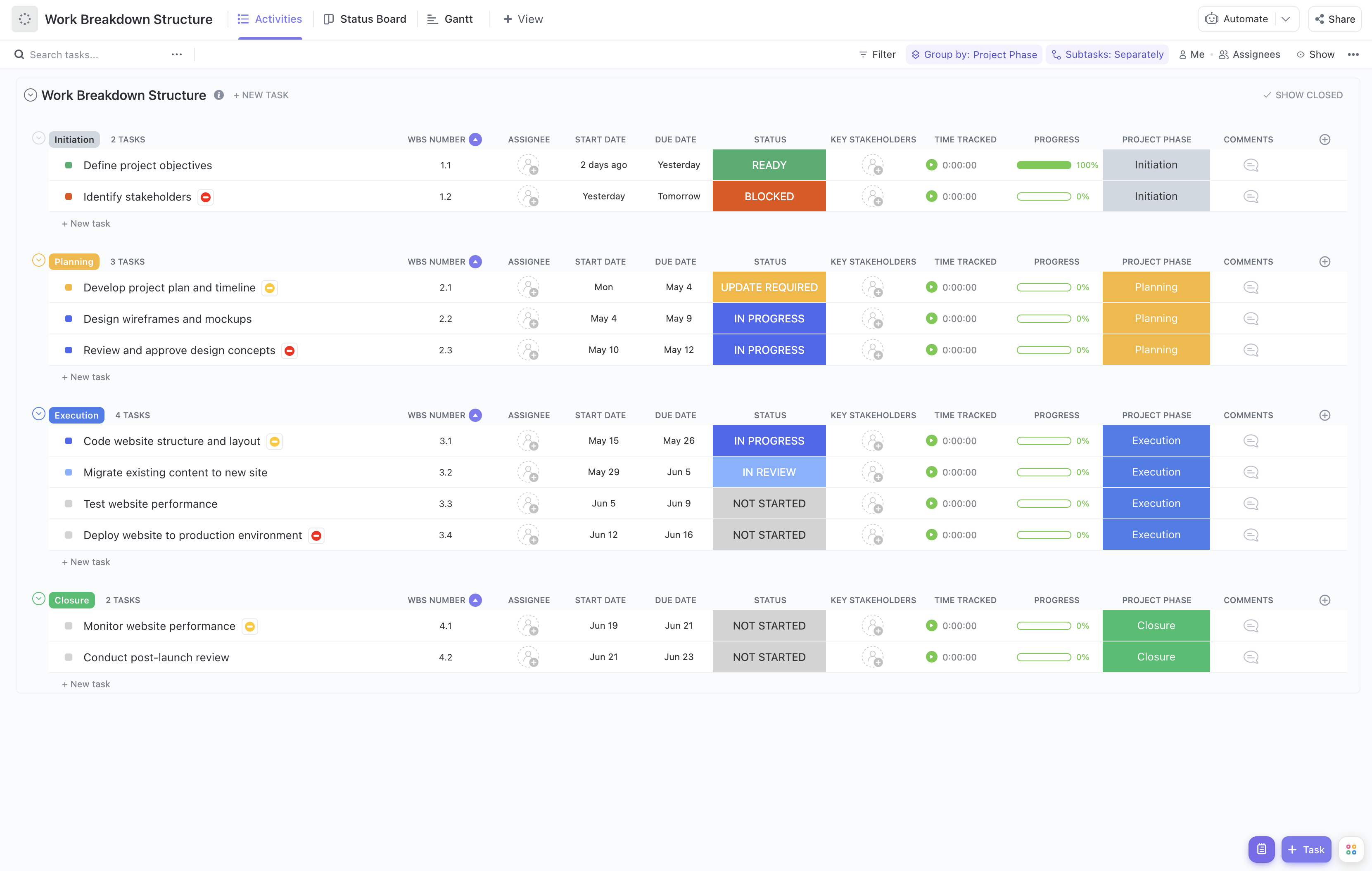


Executing business operations efficiently requires a clear breakdown of complex processes into actionable tasks. Managing multiple departments, workflows, and deadlines can be challenging without a structured approach. That's where this Business Operations Execution Work Breakdown Structure Template comes in!
This tailored template helps you:
- Decompose operational projects into clear, manageable activities for enhanced oversight
- Assign tasks to the appropriate operational teams swiftly and accurately
- Monitor execution progress with real-time updates to keep operations on track
Best of all, you can implement this template easily within ClickUp without any coding or special software knowledge. Just plug in your operational details and start managing your business execution with confidence!
Benefits of a Business Operations Execution Work Breakdown Structure
Utilizing a work breakdown structure specifically for business operations execution offers numerous advantages. It provides a visual and organized representation of operational tasks, ensuring that every step is accounted for and executed timely. Key benefits include:
- Clarifies operational deliverables and key performance indicators across departments
- Defines roles and responsibilities clearly to improve accountability among operational teams
- Enhances communication flow between stakeholders and operational staff, reducing bottlenecks
- Improves efficiency by identifying dependencies and optimizing resource allocation
Main Elements of the Business Operations Execution Work Breakdown Structure
This template breaks down your business operations into hierarchical levels, starting from overarching operational goals to detailed task assignments. The main components include:
- Operational Objectives: High-level goals aligned with business strategy, such as improving customer service or streamlining supply chain processes.
- Major Operational Deliverables: Key projects or initiatives that contribute to achieving objectives, like implementing a new inventory system or launching a customer feedback program.
- Sub-tasks and Activities: Specific actions required to complete each deliverable, including process mapping, staff training, and system testing.
- Assigned Teams and Stakeholders: Clear designation of responsible departments and individuals to ensure accountability.
- Progress Tracking: Real-time status updates and milestones to monitor execution and identify risks early.
By leveraging this structured approach, your business operations teams can coordinate effectively, reduce operational risks, and drive successful execution of complex initiatives.










