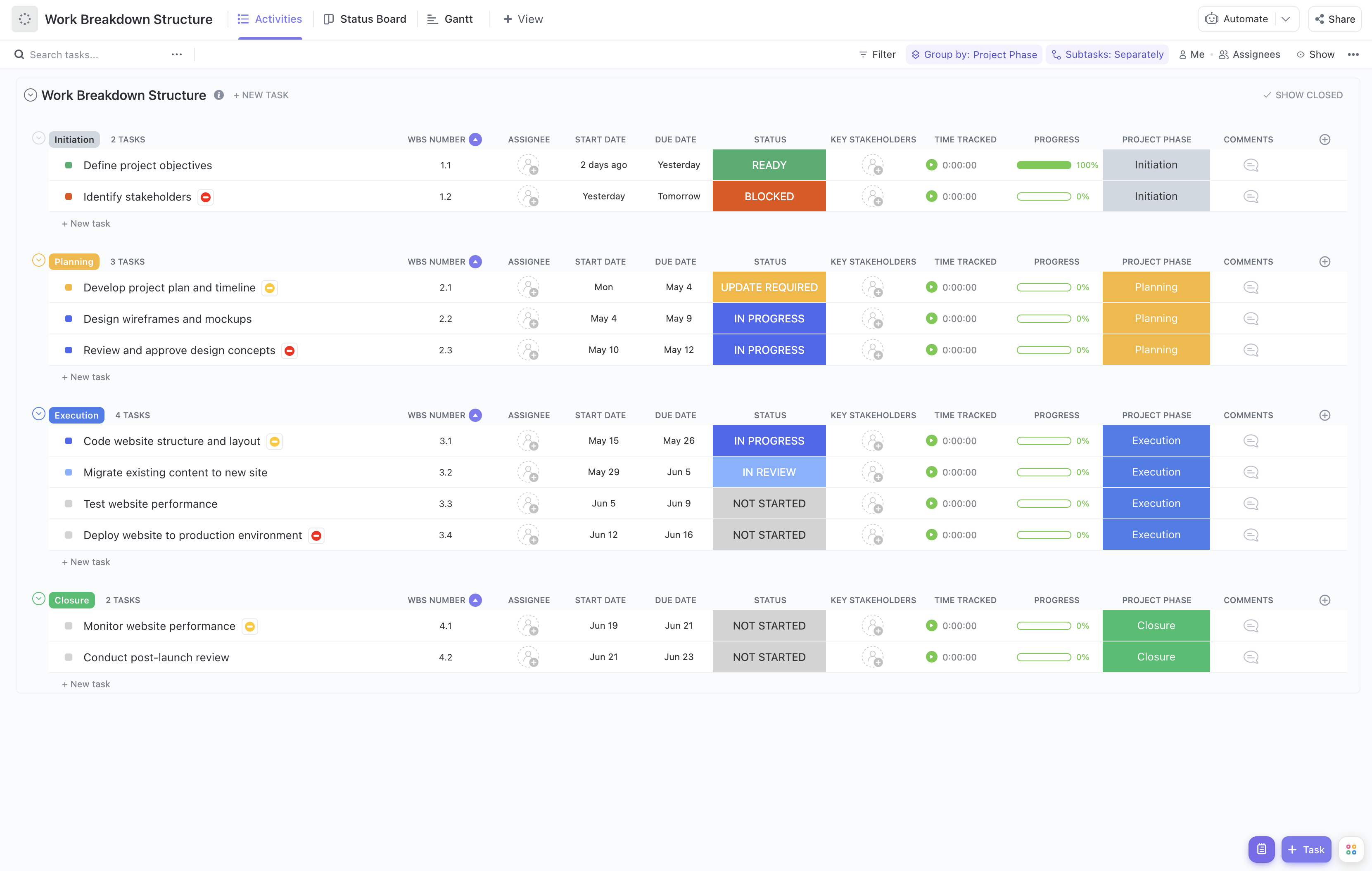
Implementing an audit trail system is critical for maintaining data integrity, ensuring compliance, and enhancing security across organizational processes. However, managing the multifaceted tasks involved can be challenging without a structured approach. That's where the Audit Trail Implementation Work Breakdown Structure Template comes in!
This specialized template helps you:
- Organize audit trail implementation tasks into clear, manageable sections for better oversight
- Assign responsibilities to the appropriate team members quickly and efficiently
- Monitor progress and milestones in real-time to ensure timely delivery
Best of all, no coding expertise or specialized software is required to get started—just ClickUp, and you're ready to structure your audit trail implementation project for success!
Benefits of an Audit Trail Implementation Work Breakdown Structure Template
Utilizing a work breakdown structure (WBS) tailored for audit trail implementation offers numerous advantages for project managers and compliance officers alike. Key benefits include:
- Clearly defining and organizing all deliverables related to audit trail deployment, such as system design, configuration, testing, and documentation
- Providing transparency to team members about their specific roles and responsibilities in the implementation process
- Enhancing communication among IT, compliance, and audit teams to align objectives and resolve issues promptly
- Improving overall project efficiency by breaking down complex tasks into actionable steps with measurable outcomes
Main Elements of an Audit Trail Implementation Work Breakdown Structure Template
This template is structured to cover all critical phases of audit trail implementation, including:
- Project Initiation: Defining scope, identifying stakeholders, and establishing compliance requirements
- System Design and Planning: Mapping data sources, selecting audit trail tools, and designing logging frameworks
- Development and Configuration: Setting up audit trail mechanisms, integrating with existing systems, and configuring alerts
- Testing and Validation: Conducting functional and security tests to ensure audit trails capture required events accurately
- Deployment and Training: Rolling out the audit trail system and training end-users and administrators
- Monitoring and Maintenance: Establishing ongoing review processes, updating configurations, and ensuring compliance adherence
By following this structured approach, your team can systematically implement audit trails that meet organizational policies and regulatory standards, while maintaining clear visibility and control over the project’s progress.