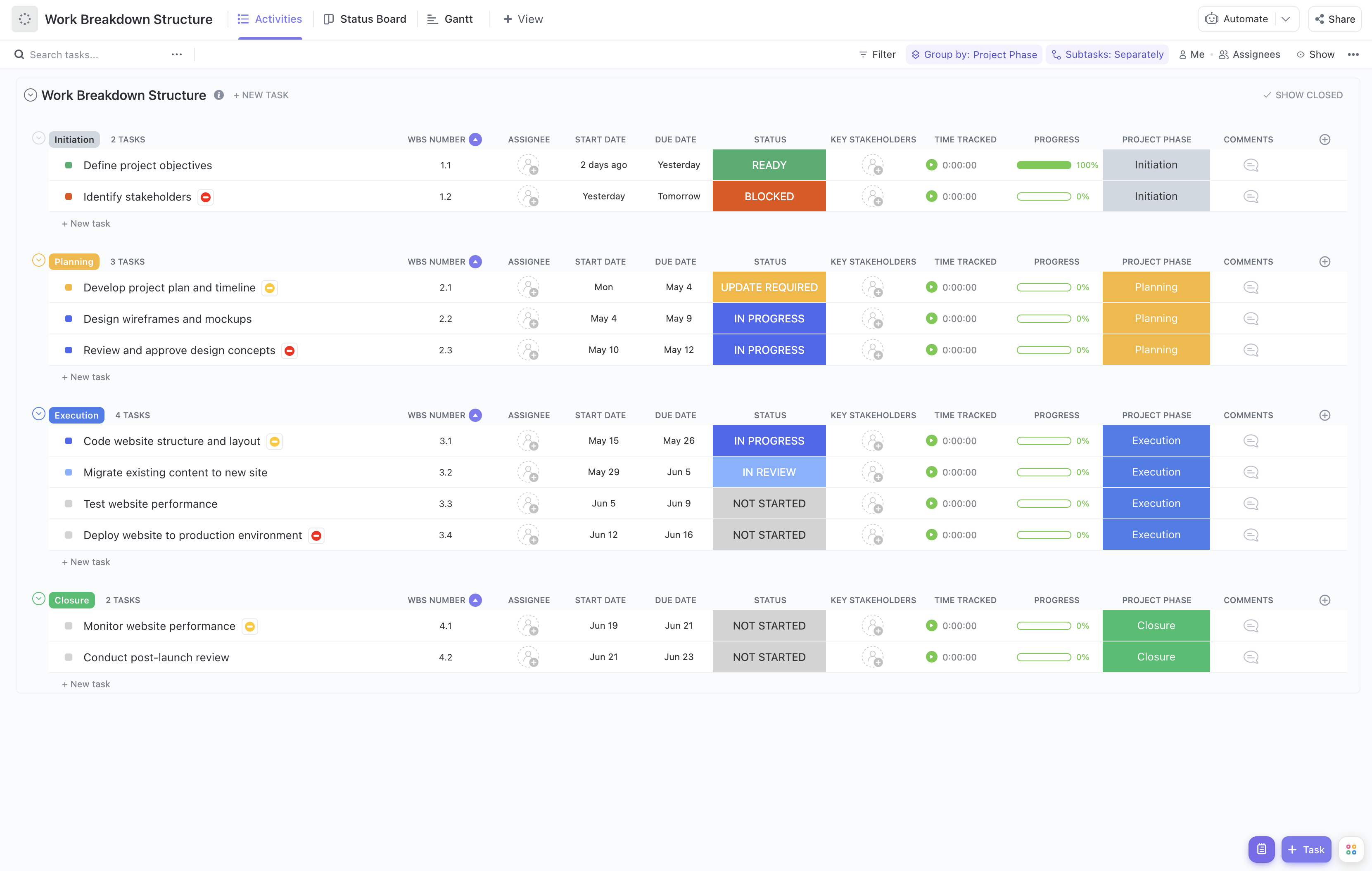
Executing application patches is a critical process that requires meticulous planning and coordination to maintain system stability and security. Managing the numerous tasks involved—from assessment to deployment and verification—can be complex. That's where this Application Patch Execution Work Breakdown Structure Template comes in!
This specialized template helps you:
- Organize patching tasks into clear, manageable sections for enhanced visibility and control
- Align IT team members and stakeholders to specific responsibilities quickly and efficiently
- Track progress and milestones with real-time updates to ensure timely completion
The best part? No coding knowledge or special software is needed to get started. Simply use ClickUp to break down your patch execution projects into actionable steps and drive success!
Benefits of an Application Patch Execution Work Breakdown Structure Template
This template offers a structured approach to managing the patching lifecycle, which is essential for minimizing downtime and avoiding security vulnerabilities. Key benefits include:
- Clearly defines and organizes patch deployment deliverables and goals, such as patch assessment, testing, deployment, and validation
- Provides clarity for IT team members on their specific roles and responsibilities, from system administrators to QA testers
- Enhances communication between technical teams and stakeholders, facilitating coordination and timely issue resolution
- Improves overall efficiency by breaking down complex patching activities into manageable tasks with assigned owners and deadlines
Main Elements of the Application Patch Execution Work Breakdown Structure Template
This template is structured to cover all critical phases of patch execution, including:
- Patch Assessment:
Identify affected systems, evaluate patch criticality, and plan deployment windows.
- Preparation:
Backup systems, notify stakeholders, and prepare rollback plans.
- Testing:
Deploy patches in a controlled environment, perform regression testing, and document results.
- Deployment:
Schedule and execute patch installation across production systems with minimal disruption.
- Verification:
Confirm successful patch application, monitor system performance, and address any issues.
- Documentation and Reporting:
Record patch details, update asset inventories, and generate compliance reports.
By leveraging this template, your IT team can systematically manage application patch execution projects, reduce risks, and maintain system integrity with confidence.