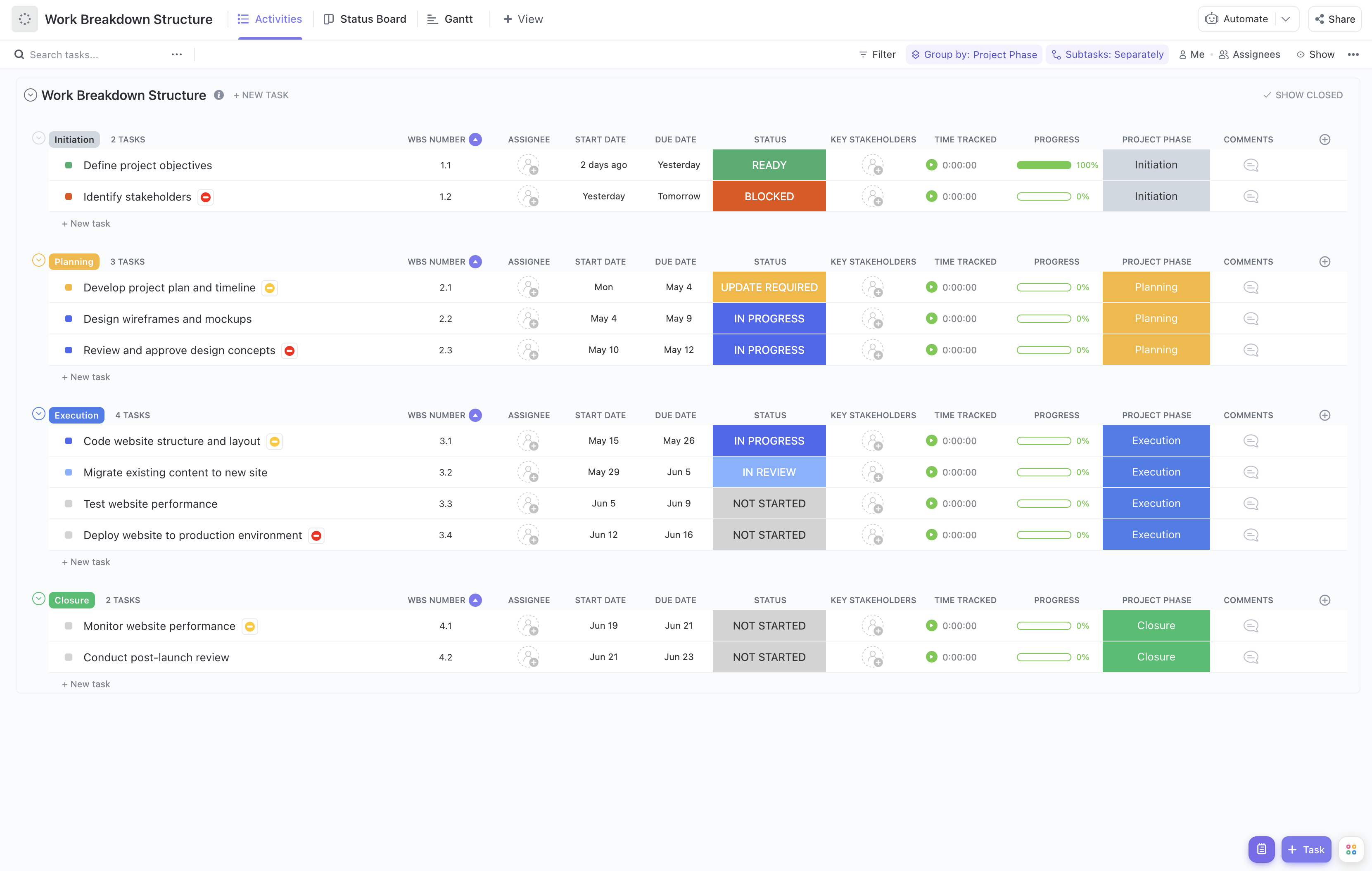
Managing application operations involves coordinating numerous tasks such as deployment, monitoring, incident management, and maintenance. Breaking down these operational activities into clear, manageable segments is essential for seamless execution and minimizing downtime. That's where this Application Operations Execution Work Breakdown Structure Template comes in!
This specialized template helps you:
- Organize application operations tasks into structured sections for improved clarity and control
- Assign responsibilities swiftly to the appropriate operations team members
- Monitor progress and operational metrics with real-time updates to ensure SLA compliance
Best of all, you don't need any specialized coding skills or complex software to get started. Simply use ClickUp to break down your application operations into actionable tasks and drive operational excellence!
Benefits of an Application Operations Work Breakdown Structure Template
This template is an invaluable tool for application operations managers and teams. It visually maps out all operational activities, helping to ensure timely execution and continuous service availability. Key benefits include:
- Clearly defines and organizes operational deliverables such as deployments, patching, and monitoring
- Provides transparency on team roles and responsibilities, reducing overlap and gaps
- Enhances communication between operations staff, developers, and stakeholders for faster issue resolution
- Improves overall operational efficiency and reduces risks associated with application downtime
Main Elements of the Application Operations Execution Work Breakdown Structure Template
This template is structured to cover all critical facets of application operations execution:
- Operational Phases: Categorize tasks into phases such as Deployment, Monitoring, Incident Response, Maintenance, and Optimization.
- Task Breakdown: Decompose each phase into detailed tasks like environment setup, log analysis, patch application, and performance tuning.
- Role Assignments: Assign tasks to specific team members or roles such as DevOps engineers, system administrators, and support analysts.
- Progress Tracking: Utilize status indicators to monitor task completion, in-progress activities, and any blockers.
- Stakeholder Communication: Integrate communication channels and update logs to keep stakeholders informed of operational status and incidents.
By leveraging this template, your application operations team can systematically execute complex operational workflows, maintain high service levels, and foster collaboration across teams.