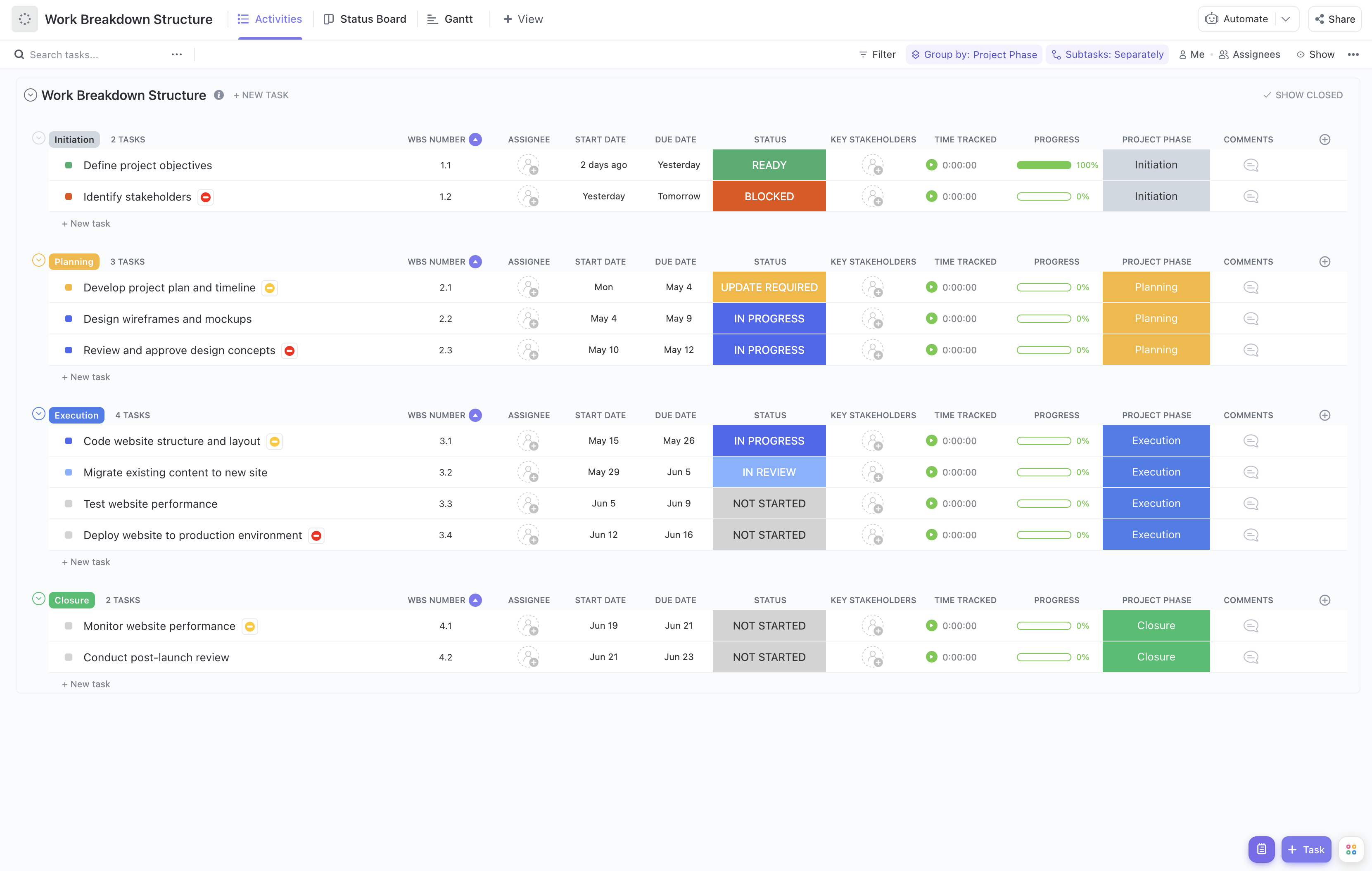
Managing the execution of an application lifecycle involves coordinating multiple phases, tasks, and teams to deliver a high-quality software product. Breaking down these complex processes into manageable components is essential for success. That's where ClickUp's Application Lifecycle Execution Work Breakdown Structure Template comes in!
This specialized template helps you:
- Organize application development, testing, deployment, and maintenance tasks into clear, manageable sections for improved visibility
- Align development, QA, operations, and support teams to their specific responsibilities quickly and efficiently
- Track progress and milestones with real-time updates to ensure timely delivery and quality assurance
The best part? You don't need any coding knowledge or special software to get started with this template. All you need is ClickUp—and you're ready to break down your application lifecycle execution into actionable success!
Benefits of an Application Lifecycle Execution Work Breakdown Structure Template
This WBS template is a powerful tool for software project managers and IT leaders overseeing application lifecycles. It provides a clear visual and organizational framework that helps ensure each phase is executed efficiently and effectively. Key benefits include:
- Defines and organizes deliverables across all lifecycle stages, including requirements gathering, design, development, testing, deployment, and maintenance
- Clarifies roles and responsibilities among cross-functional teams such as developers, testers, DevOps engineers, and support staff
- Enhances communication and collaboration between stakeholders, ensuring alignment on goals and timelines
- Improves overall efficiency by identifying dependencies, potential bottlenecks, and resource allocation needs early in the process
Main Elements of the Application Lifecycle Execution Work Breakdown Structure Template
This template is structured to cover all critical components of application lifecycle execution:
- Project Phases: Clearly defined stages such as Planning, Development, Testing, Deployment, and Maintenance, each broken down into specific tasks and deliverables.
- Task Hierarchy: Tasks are organized hierarchically to reflect dependencies and workflow sequences, enabling easy tracking of progress and identification of critical paths.
- Roles and Responsibilities: Assignments for each task are specified to ensure accountability among team members, including developers, QA testers, DevOps, and project managers.
- Progress Tracking: Real-time status updates and progress indicators allow teams to monitor task completion, identify delays, and adjust plans proactively.
- Integration Points: Incorporates collaboration tools and communication channels to facilitate seamless coordination among distributed teams.
By leveraging this Application Lifecycle Execution Work Breakdown Structure Template, organizations can streamline their software delivery processes, reduce risks, and enhance product quality through structured planning and execution.