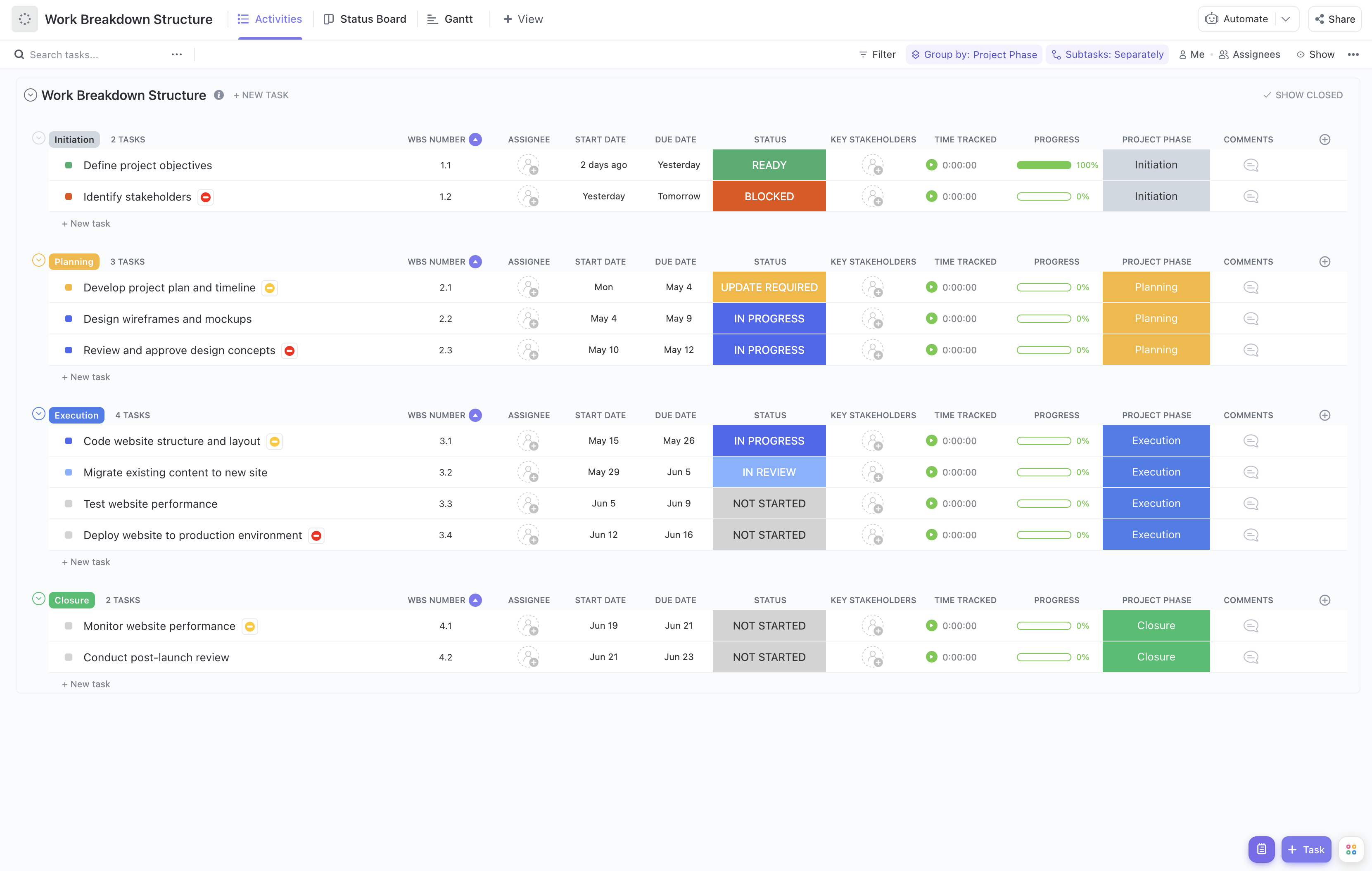
Consolidating academic records from various departments and sources can be a complex and detail-oriented task. Managing multiple data streams, ensuring data accuracy, and aligning stakeholders require a structured approach. That's where the Academic Records Consolidation Work Breakdown Structure Template comes in!
This specialized template helps you:
- Organize the consolidation process into clear, manageable phases such as data collection, verification, integration, and reporting
- Assign responsibilities to administrative staff, IT personnel, and academic coordinators efficiently
- Monitor progress with real-time updates to ensure timely completion and compliance with institutional policies
The best part? You don't need any specialized software knowledge to get started. All you need is ClickUp—and you're ready to streamline your academic records consolidation project!
Benefits of an Academic Records Consolidation Work Breakdown Structure
Using a work breakdown structure tailored for academic records consolidation brings clarity and control to a complex administrative project. Benefits include:
- Clearly defining and organizing the deliverables such as data acquisition, validation, integration, and archival
- Providing transparency for team members and stakeholders on their specific roles and deadlines
- Enhancing communication between departments like registrar offices, IT, and academic affairs to prevent data silos
- Improving overall efficiency by identifying dependencies and potential bottlenecks early in the process
Main Elements of the Academic Records Consolidation Work Breakdown Structure
This template breaks down the project into key components:
- Data Collection: Gathering academic records from various sources including departments, external institutions, and digital repositories.
- Data Verification: Ensuring the accuracy and completeness of records through cross-checks and validation protocols.
- Data Integration: Consolidating verified records into a centralized database or system, resolving duplicates and inconsistencies.
- Reporting and Compliance: Generating reports for accreditation bodies, internal audits, and ensuring adherence to privacy regulations.
- Stakeholder Coordination: Assigning tasks and maintaining communication among registrars, IT staff, and academic administrators.
By following this structured approach, your institution can confidently manage the consolidation of academic records, reduce errors, and maintain compliance with educational standards.