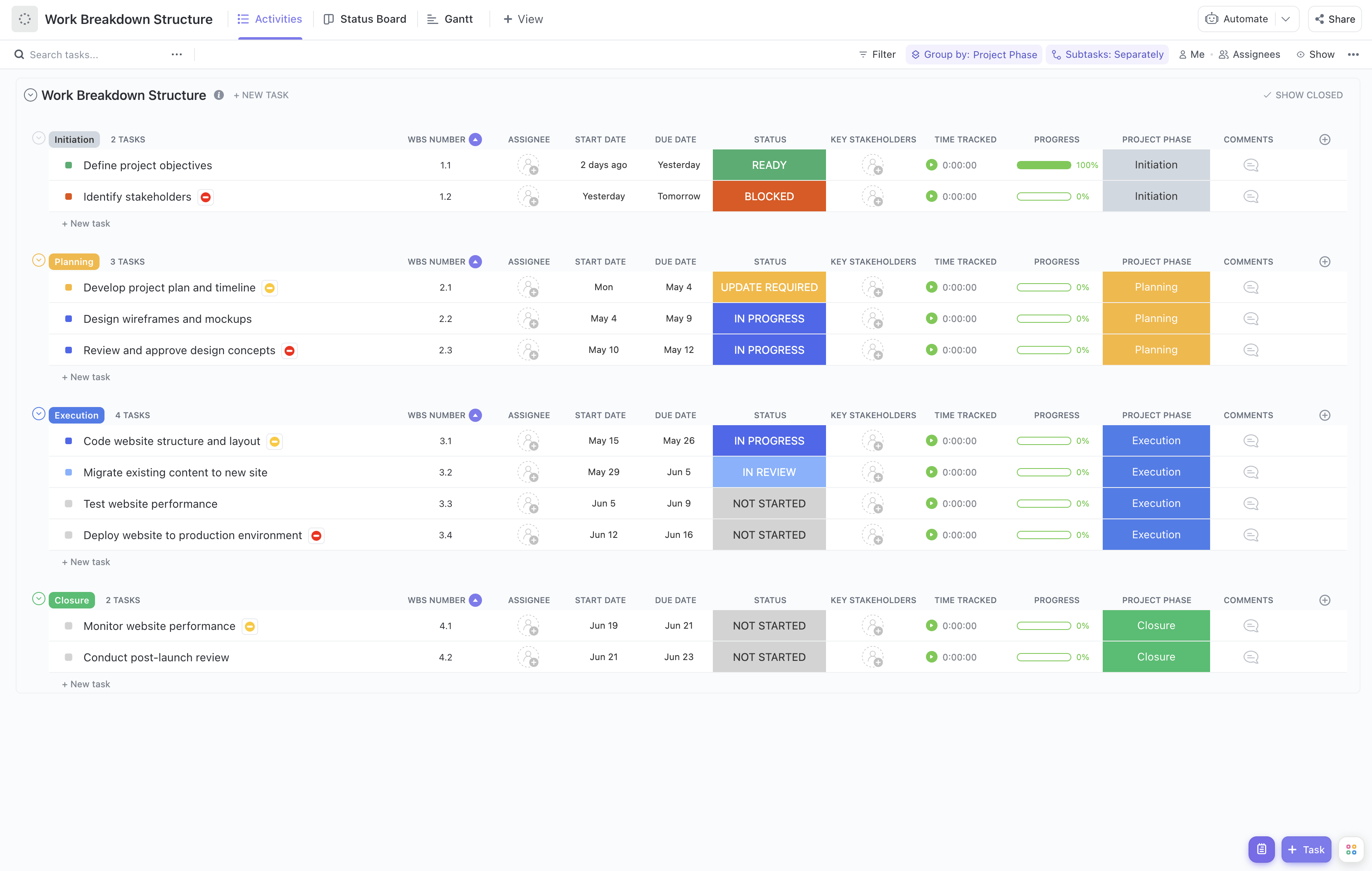
Implementing academic policies involves coordinating multiple departments, stakeholders, and tasks to ensure smooth execution and compliance. Managing these complex processes can be challenging without a clear structure. That's where our Academic Policy Execution Work Breakdown Structure Template comes in!
This specialized template helps you:
- Break down academic policy implementation into clear, manageable phases and tasks for better oversight
- Assign responsibilities to faculty, administration, and support staff efficiently
- Monitor progress and milestones in real-time to keep policy execution on track
Best of all, no technical expertise is required to use this template—just your commitment to effective academic governance and ClickUp's intuitive platform.
Benefits of an Academic Policy Execution Work Breakdown Structure Template
Using a work breakdown structure tailored for academic policy execution provides numerous advantages for educational institutions. It offers a clear roadmap for policy rollout, ensuring all necessary steps are accounted for and assigned appropriately. Key benefits include:
- Clarifies the scope and deliverables of the policy implementation project, including timelines and compliance requirements
- Defines roles and responsibilities for academic committees, administrative staff, and other stakeholders
- Enhances communication and collaboration between departments such as faculty affairs, student services, and legal counsel
- Improves efficiency by identifying dependencies and potential bottlenecks early in the process
Main Elements of the Academic Policy Execution Work Breakdown Structure Template
This template is structured to facilitate comprehensive academic policy execution through the following components:
- Policy Analysis and Planning: Tasks include reviewing policy objectives, legal considerations, and stakeholder impact assessments.
- Stakeholder Engagement: Activities involve scheduling consultations with faculty, student representatives, and administrative units to gather feedback and build consensus.
- Communication Strategy: Develop and disseminate communication plans to inform the academic community about policy changes and implementation timelines.
- Training and Support: Organize workshops, create resource materials, and provide support channels to facilitate smooth adoption.
- Monitoring and Evaluation: Establish metrics and reporting mechanisms to track compliance and effectiveness post-implementation.
By following this structured approach, academic institutions can ensure thorough, transparent, and efficient policy execution that aligns with their educational goals and regulatory requirements.