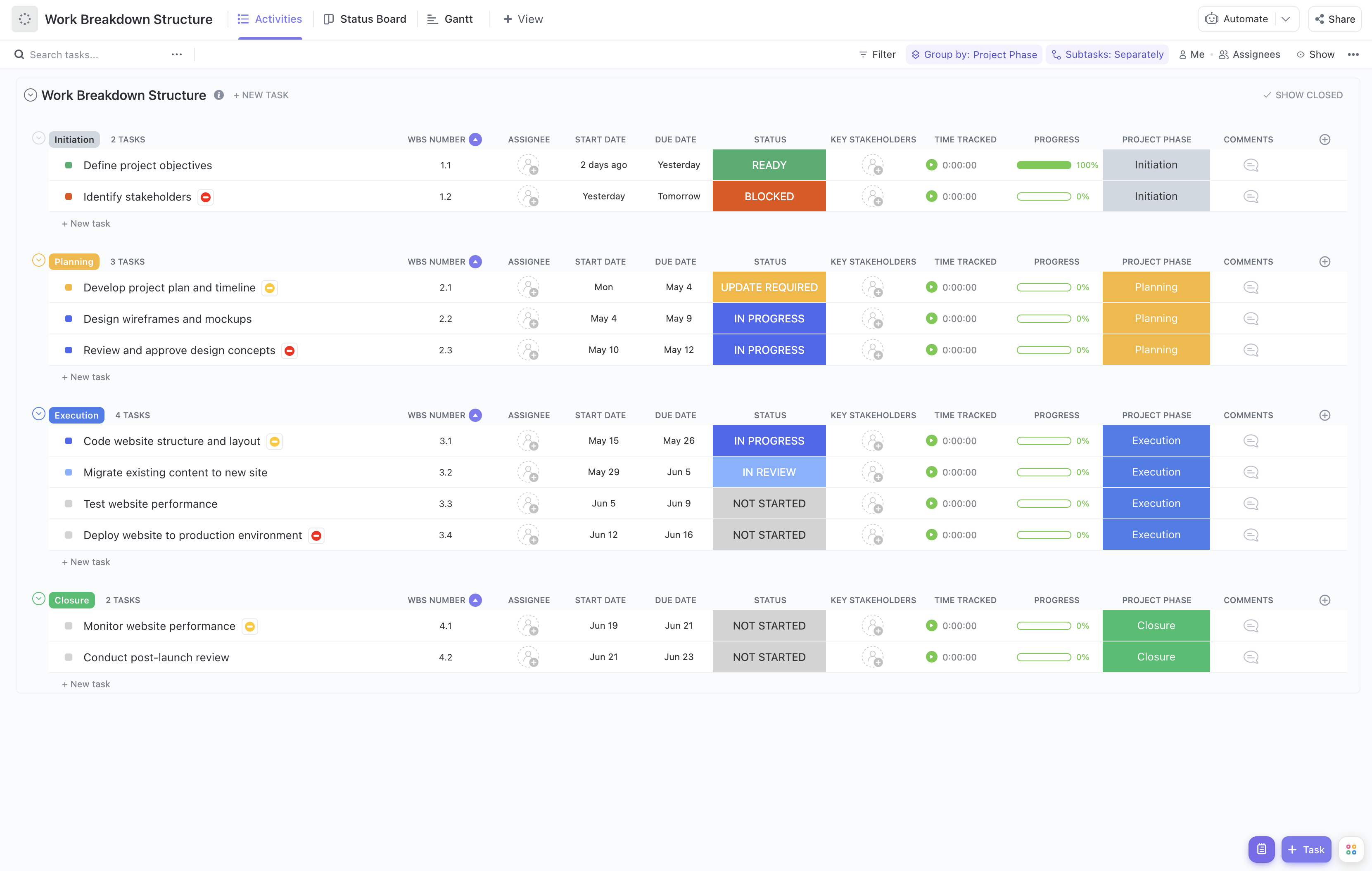
Managing an academic governance program involves coordinating multiple committees, policy reviews, stakeholder consultations, and implementation phases. Breaking down these complex governance activities into manageable components is essential for transparency and efficiency. Our Academic Governance Program Work Breakdown Structure Template is crafted to help educational institutions navigate this complexity with clarity and control.
This specialized template enables you to:
- Segment governance initiatives into distinct work packages such as policy drafting, committee reviews, stakeholder engagement, and compliance monitoring
- Assign responsibilities to faculty members, administrative staff, and governance bodies to ensure accountability and timely execution
- Monitor progress with real-time updates on milestones like policy approvals, feedback incorporation, and implementation status
Best of all, this template requires no technical expertise—just your commitment to enhancing academic governance through structured project management.
Benefits of an Academic Governance Work Breakdown Structure Template
Utilizing a work breakdown structure tailored for academic governance programs offers numerous advantages:
- Clarifies the scope and deliverables of governance initiatives, from curriculum revisions to accreditation processes
- Defines clear roles and responsibilities among committees, faculty senate, and administrative units, reducing overlap and confusion
- Facilitates effective communication between stakeholders, including academic leadership, faculty, and external bodies
- Improves efficiency by enabling proactive identification of bottlenecks and timely resolution of governance challenges
Main Elements of the Academic Governance Work Breakdown Structure Template
This template is structured to encompass the key components of academic governance projects:
- Governance Framework Development: Establishing policies, charters, and guidelines that define governance structures and processes
- Committee Coordination: Scheduling meetings, preparing agendas, documenting minutes, and tracking action items across various governance bodies
- Policy Review and Approval: Managing the lifecycle of academic policies, including drafting, consultation, revision, and formal approval stages
- Stakeholder Engagement: Facilitating input from faculty, students, and external partners through surveys, forums, and feedback mechanisms
- Compliance and Reporting: Monitoring adherence to accreditation standards, regulatory requirements, and institutional mandates with regular reporting
By leveraging this comprehensive template, academic institutions can ensure their governance programs are well-organized, transparent, and aligned with strategic objectives.