
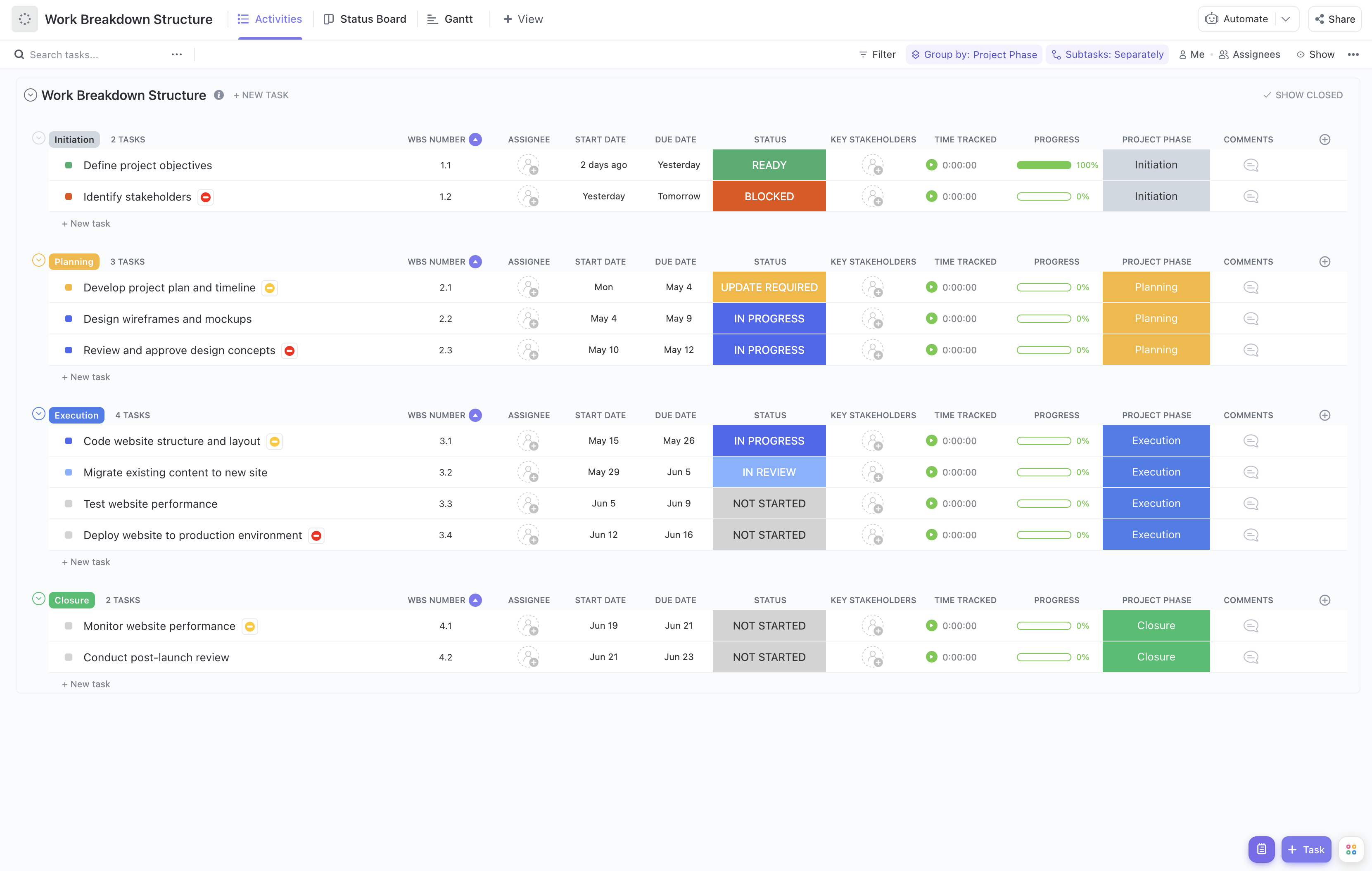


Managing academic appeals can be complex and time-sensitive. This Academic Appeals Execution Work Breakdown Structure Template provides a structured approach to navigate the appeals process efficiently.
This specialized template helps you:
- Organize the appeals process into clear, actionable steps for better oversight
- Assign responsibilities to academic staff, advisors, and students to ensure accountability
- Track the progress of each appeal with real-time updates to meet institutional deadlines
Best of all, no specialized software or coding skills are needed—just use ClickUp to streamline your academic appeals workflow!
Benefits of an Academic Appeals Execution Work Breakdown Structure Template
Using this template offers numerous advantages for managing academic appeals effectively:
- Clearly defines each stage of the appeals process, from submission to final decision
- Clarifies roles and responsibilities for students, faculty, and administrative staff
- Enhances communication between all stakeholders, reducing misunderstandings and delays
- Improves efficiency by tracking deadlines, required documentation, and follow-up actions
Main Elements of the Academic Appeals Execution Work Breakdown Structure Template
This template breaks down the appeals process into key components:
- Appeal Submission:
Collecting and verifying appeal forms and supporting documents from students
- Initial Review:
Academic advisors or committees assess the validity and completeness of the appeal
- Investigation:
Gathering additional information, interviewing involved parties, and reviewing academic records
- Decision Making:
Formal evaluation by the appeals committee and drafting of the decision report
- Communication:
Notifying the student of the outcome and providing guidance on next steps
- Follow-up Actions:
Implementing decisions, such as grade changes or policy updates, and documenting the process for compliance
By following this structured approach, academic institutions can ensure appeals are handled fairly, transparently, and efficiently, fostering trust and upholding academic integrity.










