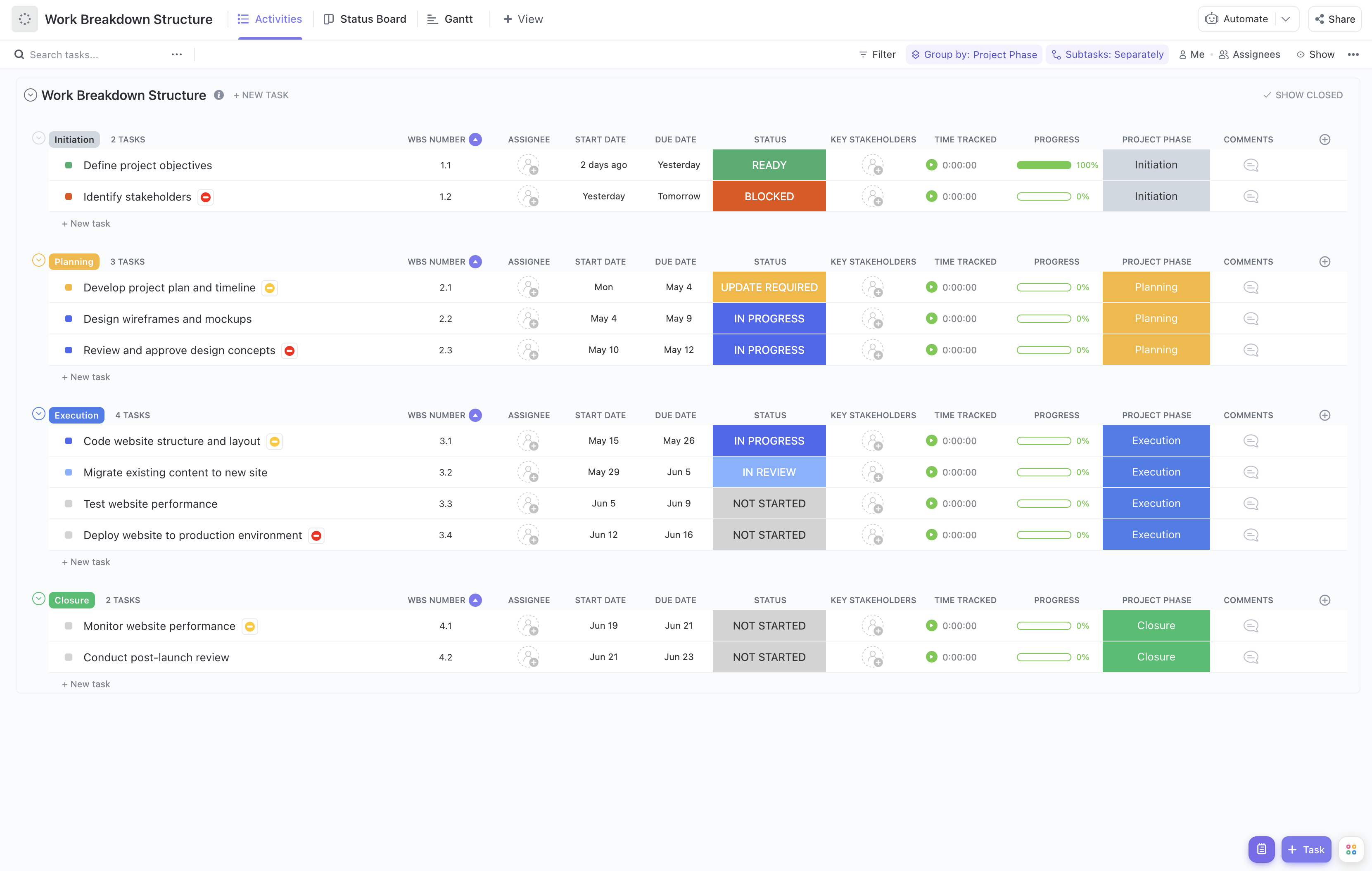
Developing an online reservation system involves multiple interconnected components and teams, from front-end design to backend integration and testing. Breaking down this complex project into manageable pieces is essential for success. Our specialized Work Breakdown Structure Template for Online Reservation System Development provides a structured approach to organizing tasks, assigning responsibilities, and monitoring progress.
This template helps you:
- Segment the project into clear phases such as requirements gathering, UI/UX design, backend development, payment gateway integration, testing, and deployment.
- Assign specific tasks to development, QA, and operations teams to ensure accountability and efficient collaboration.
- Track milestones like prototype completion, beta release, and final launch with real-time updates to keep stakeholders informed.
Best of all, this template requires no coding skills or special software—just ClickUp to get started and keep your online reservation system project on track.
Benefits of a Work Breakdown Structure Template for Online Reservation Systems
Using this WBS template tailored for online reservation system development offers several advantages:
- Clearly defines and organizes deliverables such as user registration modules, booking calendars, payment processing, and notification systems.
- Provides transparency on team roles, clarifying who is responsible for front-end development, API integration, database management, and quality assurance.
- Enhances communication between developers, designers, product managers, and stakeholders, reducing misunderstandings and delays.
- Improves project efficiency by enabling early identification of bottlenecks and resource allocation adjustments.
Main Elements of the Online Reservation System Work Breakdown Structure
This template breaks down the project into the following key components:
- Project Initiation:
Define project scope, objectives, and key stakeholders.
- Requirements Analysis:
Gather and document functional and non-functional requirements, including user roles and reservation policies.
- Design Phase:
Create wireframes, UI mockups, and system architecture diagrams.
- Development Phase:
Implement front-end interfaces, backend logic, database schemas, and third-party integrations like payment gateways.
- Testing Phase:
Conduct unit, integration, system, and user acceptance testing to ensure quality and reliability.
- Deployment:
Prepare production environment, deploy application, and configure monitoring tools.
- Maintenance and Support:
Plan for ongoing updates, bug fixes, and customer support processes.
By following this structured approach, your team can efficiently manage the complexities of developing an online reservation system, ensuring timely delivery and high-quality results.