


Executing a system shutdown involves multiple complex steps that require precise coordination and clear task allocation. Managing these tasks effectively is critical to minimize downtime and prevent data loss or system damage. The System Shutdown Execution Work Breakdown Structure (WBS) Template provides a structured approach to decompose the shutdown process into actionable components.
This specialized template helps you:
- Organize shutdown tasks into clear phases such as preparation, execution, and post-shutdown verification
- Assign responsibilities to IT personnel, system administrators, and support teams efficiently
- Monitor progress in real-time to ensure timely completion and address any issues promptly
Best of all, no advanced technical skills are required to use this template—just your ClickUp workspace and a commitment to thorough planning.
Benefits of a System Shutdown Execution Work Breakdown Structure
Utilizing this WBS template for system shutdowns offers several advantages:
- Clearly defines all deliverables and milestones involved in the shutdown process, reducing ambiguity
- Clarifies roles and responsibilities, ensuring every team member knows their tasks and deadlines
- Enhances communication across IT teams and stakeholders, facilitating swift issue resolution
- Improves overall shutdown efficiency, minimizing downtime and operational risks
Main Elements of the System Shutdown Execution WBS Template
The template is structured to cover all critical components of a system shutdown, including:
- Pre-Shutdown Planning:
Risk assessment, stakeholder notifications, backup verification, and resource allocation
- Shutdown Execution:
Step-by-step task breakdown such as service stoppage, hardware power-down, and network disconnection
- Post-Shutdown Verification:
Confirming system status, documenting shutdown completion, and preparing for maintenance or restart
- Communication and Reporting:
Real-time updates, issue tracking, and final reporting to stakeholders
This comprehensive structure ensures no critical task is overlooked, facilitating a controlled and successful system shutdown.
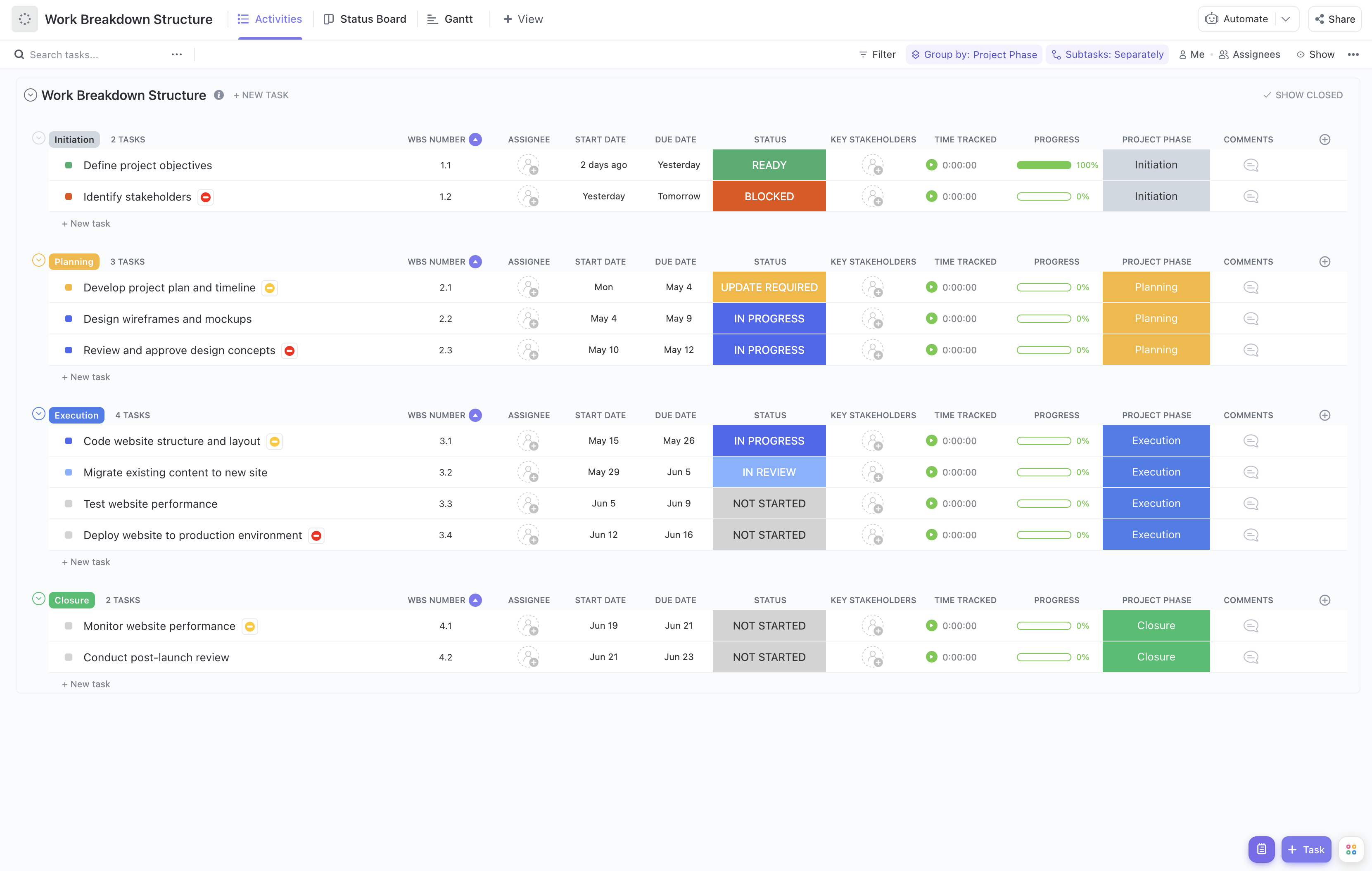
By adopting this template, your team can confidently manage system shutdowns, reduce operational risks, and maintain business continuity with minimal disruption.












