


Executing a system provisioning project involves coordinating multiple technical tasks, teams, and resources to deploy IT systems efficiently. Managing these activities can be complex and challenging. That's where this System Provisioning Execution Work Breakdown Structure Template comes in!
This specialized template helps you:
- Organize provisioning tasks into clear, manageable sections for improved oversight
- Align system administrators, network engineers, and support staff to their specific responsibilities quickly and efficiently
- Track progress and milestones with real-time updates to ensure on-time system deployment
The best part? You don’t need advanced project management software or coding skills to get started. All you need is ClickUp—and you’re ready to break down your system provisioning projects into actionable steps!
Benefits of a System Provisioning Execution Work Breakdown Structure
Utilizing a work breakdown structure (WBS) tailored for system provisioning execution offers significant advantages for IT project teams. It provides a clear visual framework of all provisioning activities, ensuring that every task is accounted for and assigned appropriately. Key benefits include:
- Defines and organizes all deliverables such as hardware setup, software installation, network configuration, and testing phases
- Clarifies roles and responsibilities among IT staff, reducing overlaps and gaps in task ownership
- Enhances communication between system engineers, project managers, and stakeholders to promptly address issues
- Improves overall efficiency by enabling proactive tracking and management of provisioning workflows
Main Elements of the System Provisioning Execution Work Breakdown Structure
This template is structured to encompass all critical components of system provisioning execution:
- Project Initiation:
Includes requirements gathering, resource allocation, and kickoff meetings to set clear objectives.
- Hardware Provisioning:
Covers procurement, inventory management, physical installation, and hardware testing.
- Software Deployment:
Encompasses OS installation, application setup, configuration, and licensing management.
- Network Configuration:
Involves IP addressing, firewall setup, VPN configuration, and connectivity testing.
- System Integration and Testing:
Focuses on validating system interoperability, performance testing, and user acceptance testing.
- Documentation and Training:
Includes creating user manuals, training sessions, and knowledge transfer to support teams.
- Project Closure:
Entails final reviews, sign-offs, and post-deployment support planning.
By following this structured approach, your team can systematically execute system provisioning projects with greater control and visibility, reducing risks and ensuring successful deployments.
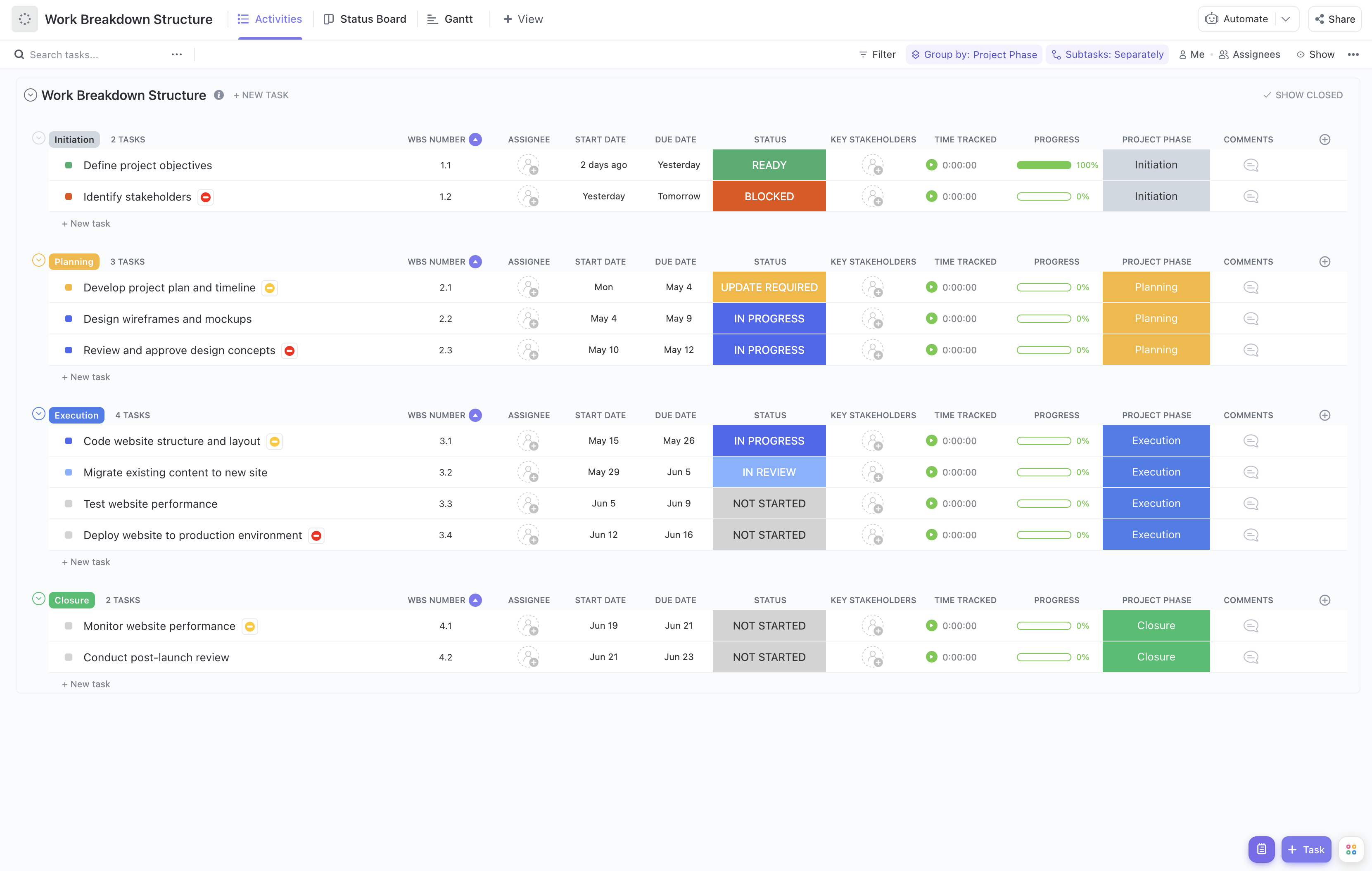
Implementing this template in ClickUp allows you to customize task statuses, assign key stakeholders, and monitor progress through integrated views such as Gantt charts and status boards, ensuring your system provisioning execution stays on track from start to finish.












