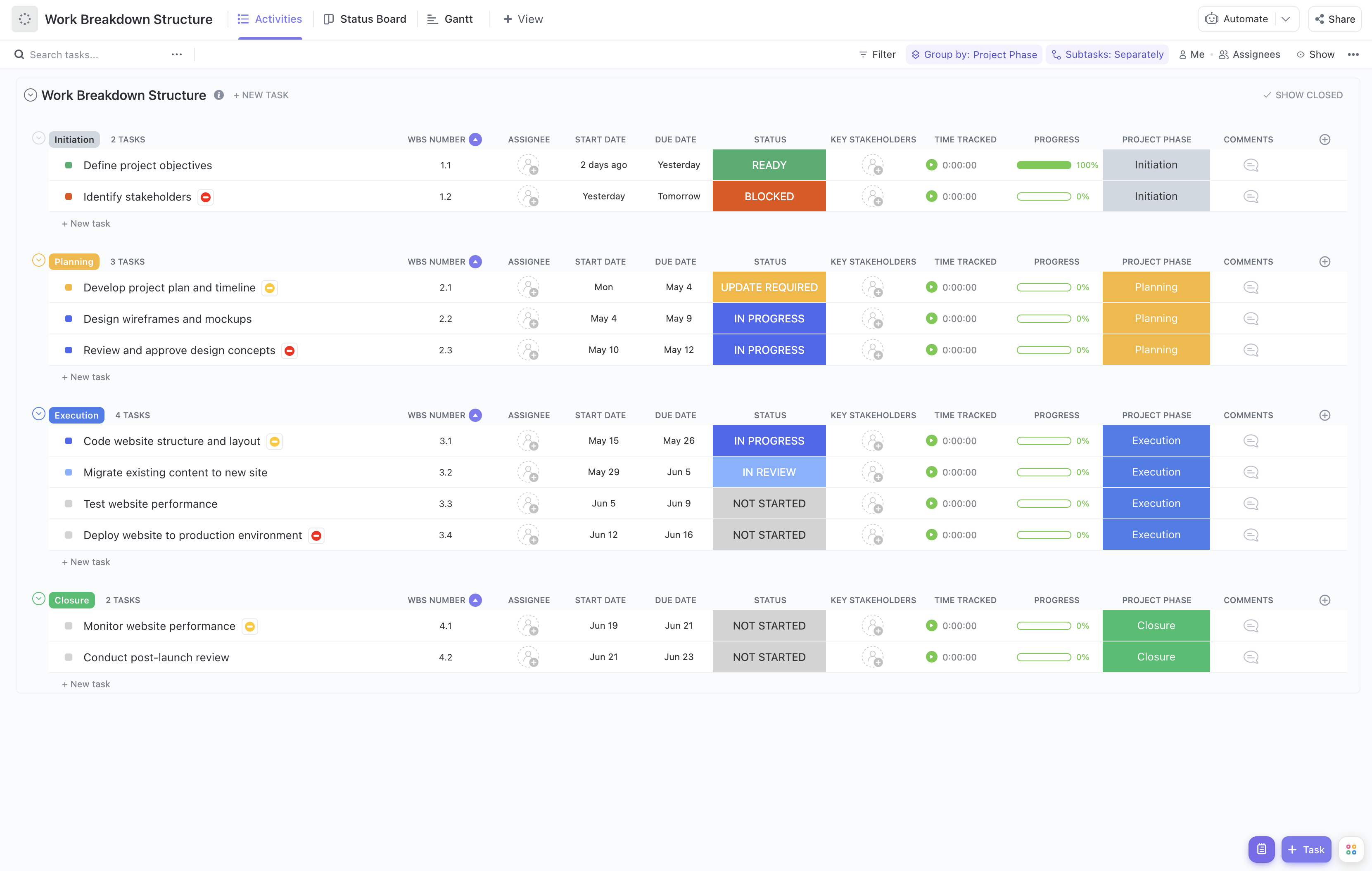
Managing system capacity execution projects requires meticulous planning and coordination to ensure that infrastructure meets current and future demands. This specialized Work Breakdown Structure Template is crafted to help IT managers, system architects, and project teams systematically organize and execute capacity-related tasks.
With this template, you can:
- Decompose system capacity projects into clear, actionable tasks for better oversight
- Assign responsibilities to technical teams swiftly, ensuring alignment with capacity goals
- Monitor progress with real-time updates to proactively address potential bottlenecks
Best of all, no advanced technical skills are needed to utilize this template—just ClickUp and your project data to start structuring your system capacity execution efficiently.
Benefits of a System Capacity Execution Work Breakdown Structure Template
Implementing a WBS tailored for system capacity execution offers numerous advantages:
- Clearly defines and organizes capacity planning deliverables, such as load analysis, hardware upgrades, and scalability testing
- Provides transparency to team members on their specific roles, from network engineers to database administrators
- Enhances communication between IT teams and stakeholders, facilitating timely decisions and resource adjustments
- Improves project efficiency by identifying dependencies and critical path activities in capacity scaling efforts
Main Elements of the System Capacity Execution Work Breakdown Structure Template
This template breaks down system capacity execution into structured components including:
- Capacity Assessment:
Tasks related to analyzing current system performance and forecasting future needs.
- Resource Planning:
Defining hardware, software, and personnel requirements to meet capacity goals.
- Implementation:
Executing upgrades, deploying new infrastructure, and configuring systems for enhanced capacity.
- Testing and Validation:
Conducting load testing, stress testing, and performance validation to ensure system reliability.
- Monitoring and Reporting:
Setting up monitoring tools and generating reports to track capacity utilization post-implementation.
By following this structured approach, your team can efficiently manage system capacity projects, minimize risks, and ensure that your infrastructure scales seamlessly with organizational demands.