
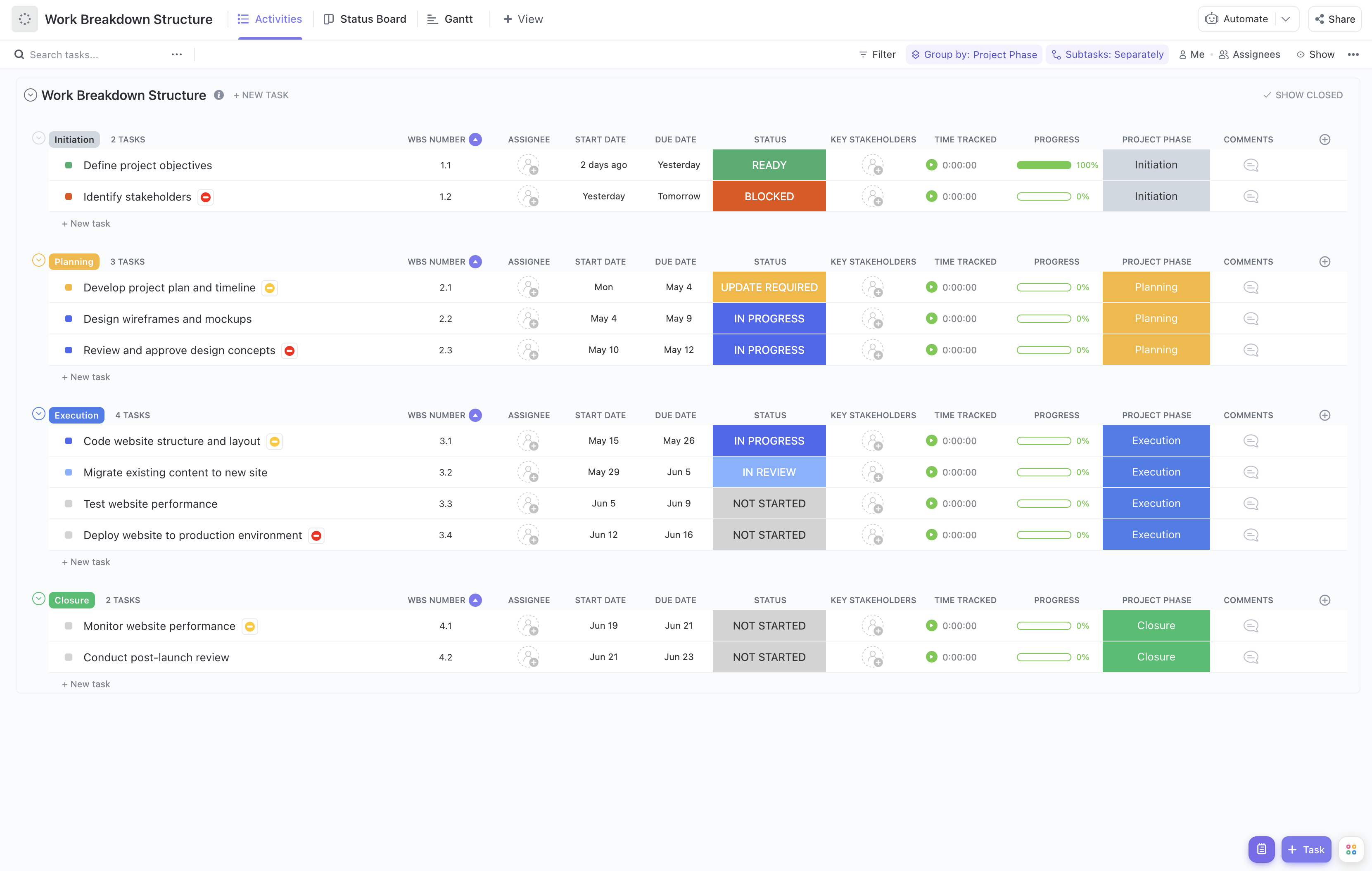


Addressing student grievances requires a structured and transparent approach to ensure fairness and maintain trust within educational institutions. This Student Grievance Handling Work Breakdown Structure Template breaks down the entire grievance process into manageable components, enabling administrators and staff to track progress, assign responsibilities, and communicate effectively.
With this template, you can:
- Organize grievance handling tasks into clear phases such as receipt, investigation, resolution, and follow-up
- Assign roles to relevant stakeholders including student affairs officers, faculty members, and grievance committees
- Monitor progress in real-time to ensure timely responses and adherence to institutional policies
Best of all, no specialized software or coding skills are needed—just use ClickUp to streamline your grievance management process.
Benefits of a Student Grievance Handling Work Breakdown Structure Template
This template offers a visual and systematic approach to managing student grievances, which helps institutions:
- Clearly define each step in the grievance process, from initial complaint to final resolution
- Clarify roles and responsibilities for all team members involved in grievance handling
- Enhance communication between students, staff, and committees to foster transparency
- Improve efficiency by tracking tasks and deadlines to prevent delays in grievance resolution
Main Elements of the Student Grievance Handling Work Breakdown Structure Template
The template is structured into key components to guide the grievance handling workflow:
- Grievance Intake:
Logging complaints, verifying details, and acknowledging receipt to students.
- Preliminary Assessment:
Determining the nature and severity of the grievance to assign appropriate resources.
- Investigation:
Gathering evidence, interviewing involved parties, and documenting findings.
- Resolution Planning:
Developing action plans, consulting with relevant authorities, and preparing responses.
- Communication:
Informing students of progress and outcomes, providing support resources.
- Follow-Up and Closure:
Ensuring implementation of resolutions, monitoring for recurrence, and formally closing the case.
By using this template, educational institutions can ensure a consistent, fair, and efficient approach to student grievance handling, fostering a positive campus environment and upholding institutional integrity.












