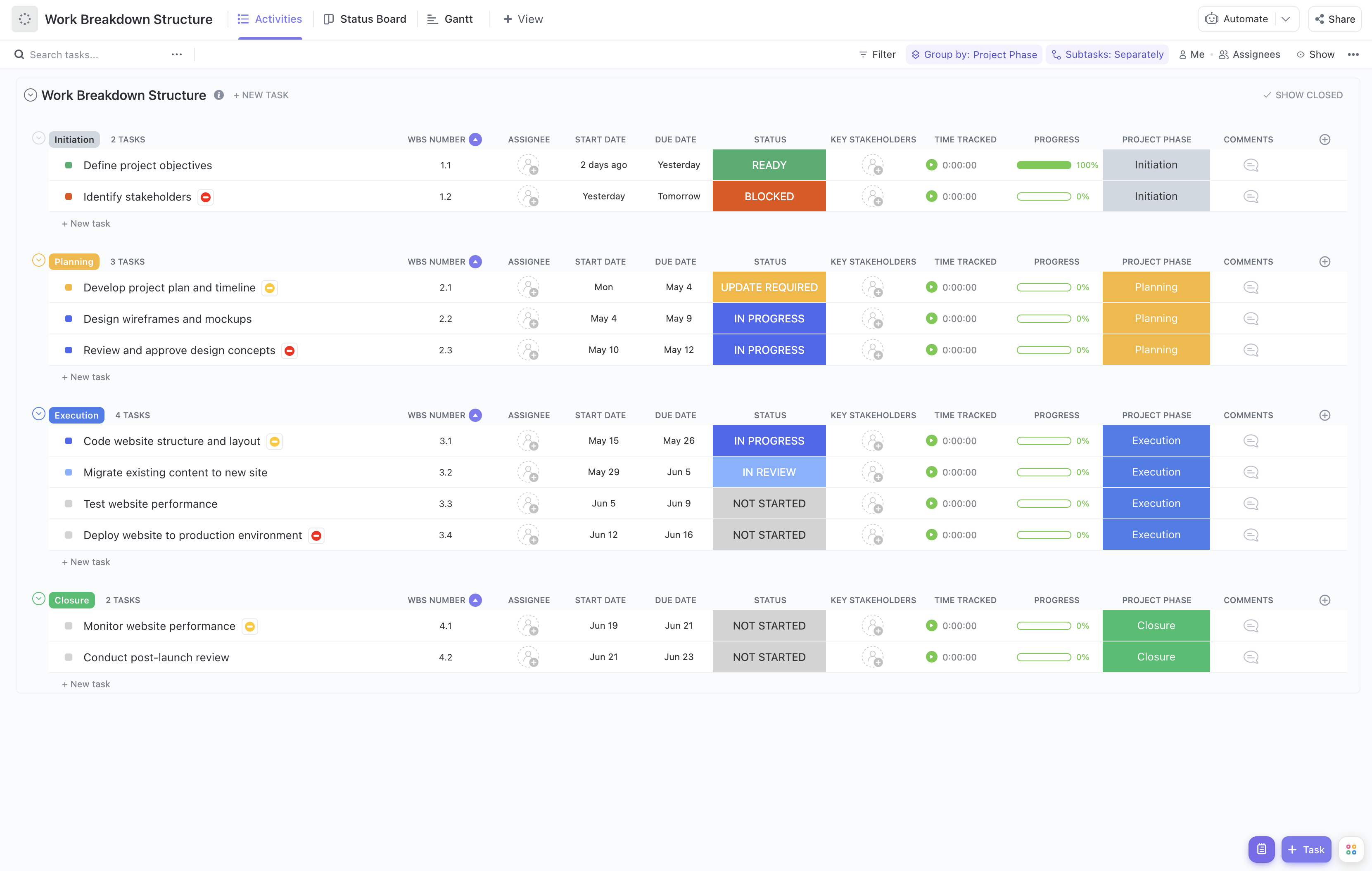
Organizing a sports event involves coordinating numerous activities, teams, and logistics. Managing these complex tasks can be overwhelming without a clear structure. That's where our Sports Event Work Breakdown Structure Template comes in!
This specialized template helps you:
- Segment the entire event planning process into manageable, clearly defined tasks
- Assign specific responsibilities to team members such as logistics, marketing, and athlete coordination
- Monitor real-time progress to keep the event on schedule and within budget
Best of all, no technical expertise is required to use this template. Simply utilize ClickUp to streamline your sports event planning from start to finish!
Benefits of a Sports Event Work Breakdown Structure Template
Utilizing a work breakdown structure tailored for sports events offers numerous advantages. It provides a clear roadmap of all deliverables and milestones, ensuring nothing is overlooked. Key benefits include:
- Defining and organizing all event components such as venue setup, equipment procurement, and volunteer management
- Clarifying roles and responsibilities among event staff, volunteers, and vendors to enhance accountability
- Improving communication between organizers, sponsors, and participants through transparent task tracking
- Increasing overall efficiency by identifying dependencies and potential bottlenecks early in the planning process
Main Elements of the Sports Event Work Breakdown Structure Template
This template is structured to cover all critical phases of sports event planning:
- Event Concept and Objectives:
Define the type of sports event, target audience, and goals.
- Planning and Coordination:
Schedule meetings, secure permits, and coordinate with stakeholders.
- Venue and Logistics:
Arrange venue booking, seating, signage, and equipment setup.
- Marketing and Promotion:
Develop advertising campaigns, social media outreach, and community engagement.
- Registration and Participant Management:
Handle athlete registration, eligibility verification, and communication.
- Operations and Event Day Management:
Oversee scheduling, volunteer coordination, safety protocols, and emergency plans.
- Post-Event Activities:
Conduct debriefs, collect feedback, and manage financial reconciliation.
By following this comprehensive breakdown, your sports event planning will be organized, transparent, and adaptable to changes, leading to a memorable and smoothly executed event.