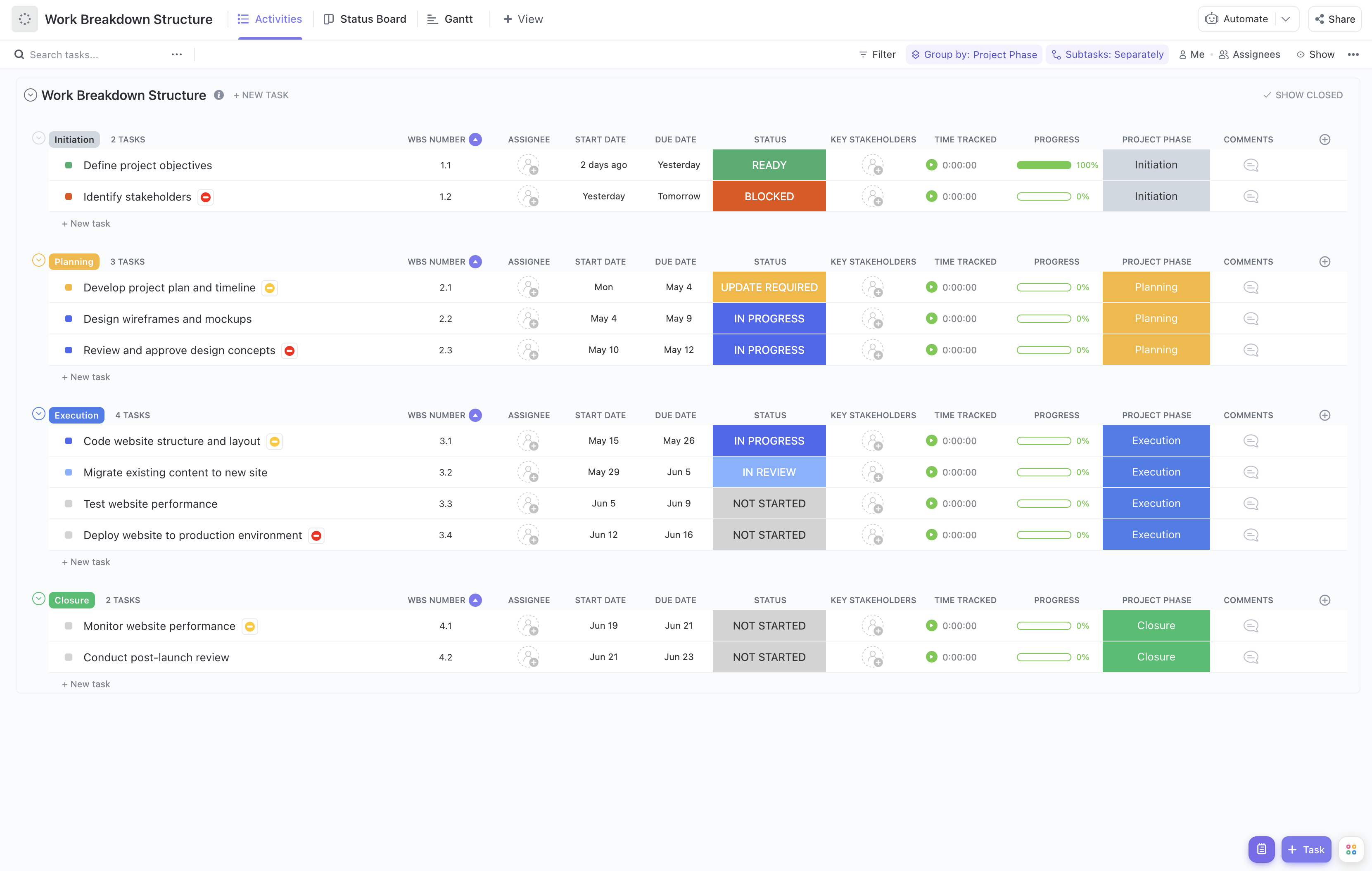
Implementing new software systems can be a complex and multifaceted endeavor involving multiple teams, technical challenges, and strict deadlines. Successfully breaking down this complexity into manageable tasks is essential for smooth execution. Our Software Implementation Work Breakdown Structure Template is crafted to help you navigate these challenges with clarity and control.
This specialized template enables you to:
- Decompose the software implementation lifecycle into detailed phases such as requirements gathering, system design, development, testing, deployment, and user training
- Assign responsibilities to cross-functional teams including developers, QA engineers, business analysts, and support staff
- Monitor progress in real-time with integrated status updates and milestone tracking
Best of all, no advanced technical skills are required to get started—simply use ClickUp to organize and oversee your software implementation project efficiently.
Benefits of a Software Implementation Work Breakdown Structure Template
Using a WBS template tailored for software implementation offers numerous advantages to project managers and teams:
- Clearly defines deliverables such as software modules, documentation, and training materials, ensuring nothing is overlooked
- Clarifies roles and responsibilities across diverse teams, reducing confusion and enhancing accountability
- Facilitates effective communication between stakeholders including IT, business units, and external vendors
- Improves project efficiency by identifying dependencies and enabling proactive risk management
Main Elements of a Software Implementation Work Breakdown Structure Template
This template is structured to reflect the typical phases and components of a software implementation project:
- Project Initiation:
Define scope, objectives, and key stakeholders to set a solid foundation
- Requirements Analysis:
Gather and document functional and technical requirements with input from end-users and business analysts
- System Design:
Architect the software solution, including data models, interfaces, and infrastructure planning
- Development:
Break down coding tasks, module development, and integration activities with assigned developers
- Testing:
Plan and execute unit, system, and user acceptance testing to ensure quality and performance
- Deployment:
Coordinate release management, environment setup, and go-live activities
- Training and Support:
Prepare user manuals, conduct training sessions, and establish support channels
- Project Closure:
Finalize documentation, conduct post-implementation review, and transition to maintenance
By leveraging this template, your software implementation project gains a clear roadmap that promotes transparency, accountability, and successful delivery.