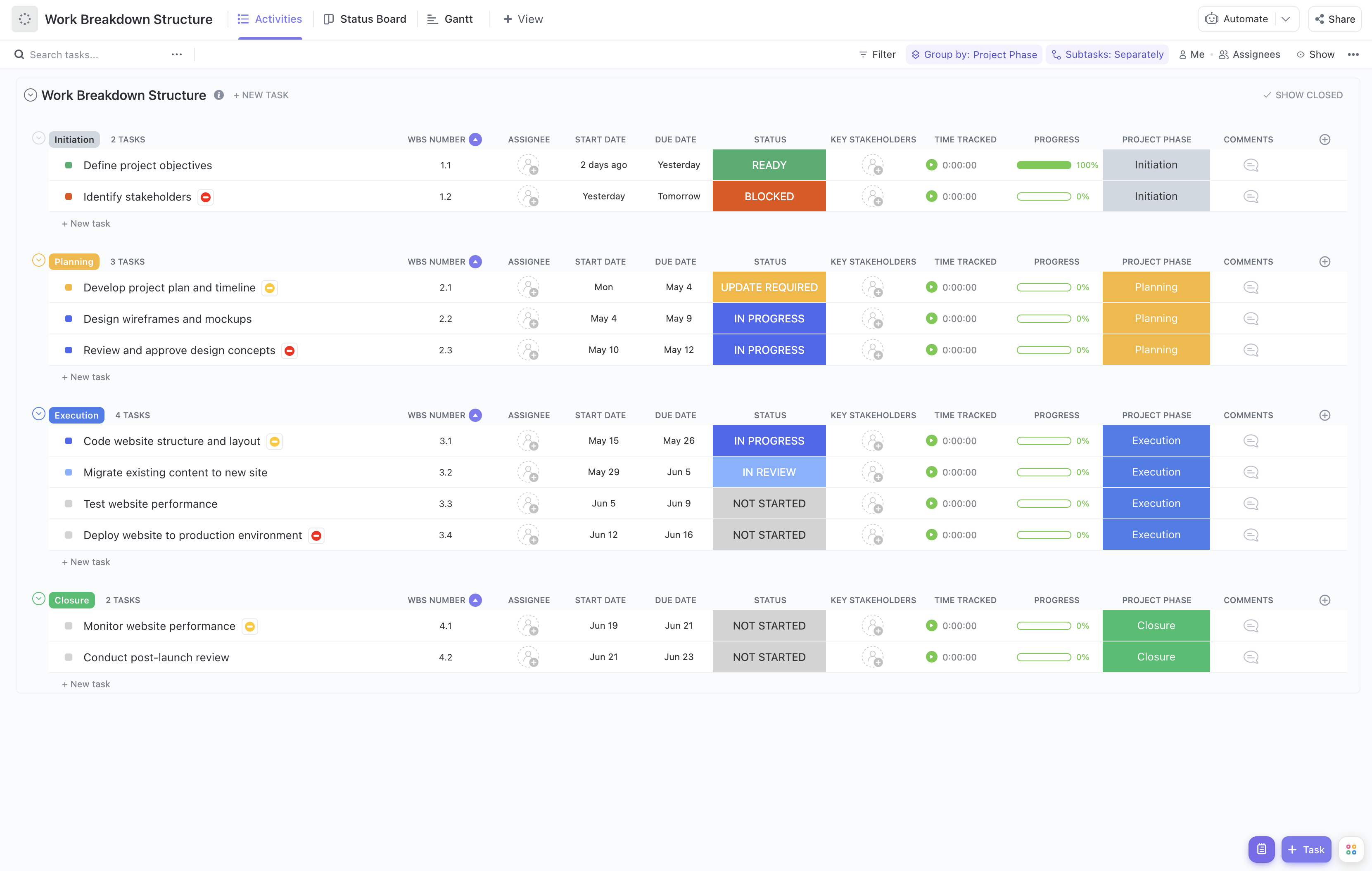
Executing service fulfillment efficiently requires breaking down the delivery process into clear, manageable components. This Service Fulfillment Execution Work Breakdown Structure (WBS) Template is crafted to help service teams organize and oversee every step of the service delivery journey.
With this template, you can:
- Segment service fulfillment tasks into logical, actionable sections for enhanced clarity and control
- Assign responsibilities to service delivery team members swiftly to maintain accountability
- Monitor progress in real-time to identify bottlenecks and ensure on-time fulfillment
Designed for ease of use, this template requires no coding or specialized software—just ClickUp to get started and keep your service fulfillment projects on track.
Benefits of a Service Fulfillment Execution Work Breakdown Structure Template
Utilizing a WBS template tailored for service fulfillment execution empowers your team to:
- Clearly define and organize all service delivery milestones and deliverables, from order receipt to completion
- Clarify roles and responsibilities among service coordinators, field technicians, and support staff, reducing overlaps and gaps
- Enhance communication between service teams, clients, and stakeholders, fostering transparency and trust
- Improve operational efficiency by systematically tracking task dependencies and resource allocation
- Identify risks early and implement mitigation strategies to avoid delays or service disruptions
Main Elements of the Service Fulfillment Execution Work Breakdown Structure Template
This template breaks down service fulfillment into key components such as:
- Service Request Processing:
Capturing client requirements, validating orders, and scheduling fulfillment activities.
- Resource Allocation:
Assigning personnel, equipment, and materials necessary for service delivery.
- Execution and Delivery:
Coordinating field operations, monitoring task completion, and managing quality assurance.
- Post-Service Activities:
Conducting client feedback collection, issue resolution, and service closure documentation.
Each component includes detailed tasks, timelines, and assigned team members, enabling comprehensive oversight and control over the entire service fulfillment process.
By leveraging this structured approach, your service teams can ensure consistent, high-quality delivery that meets client expectations and drives satisfaction.