
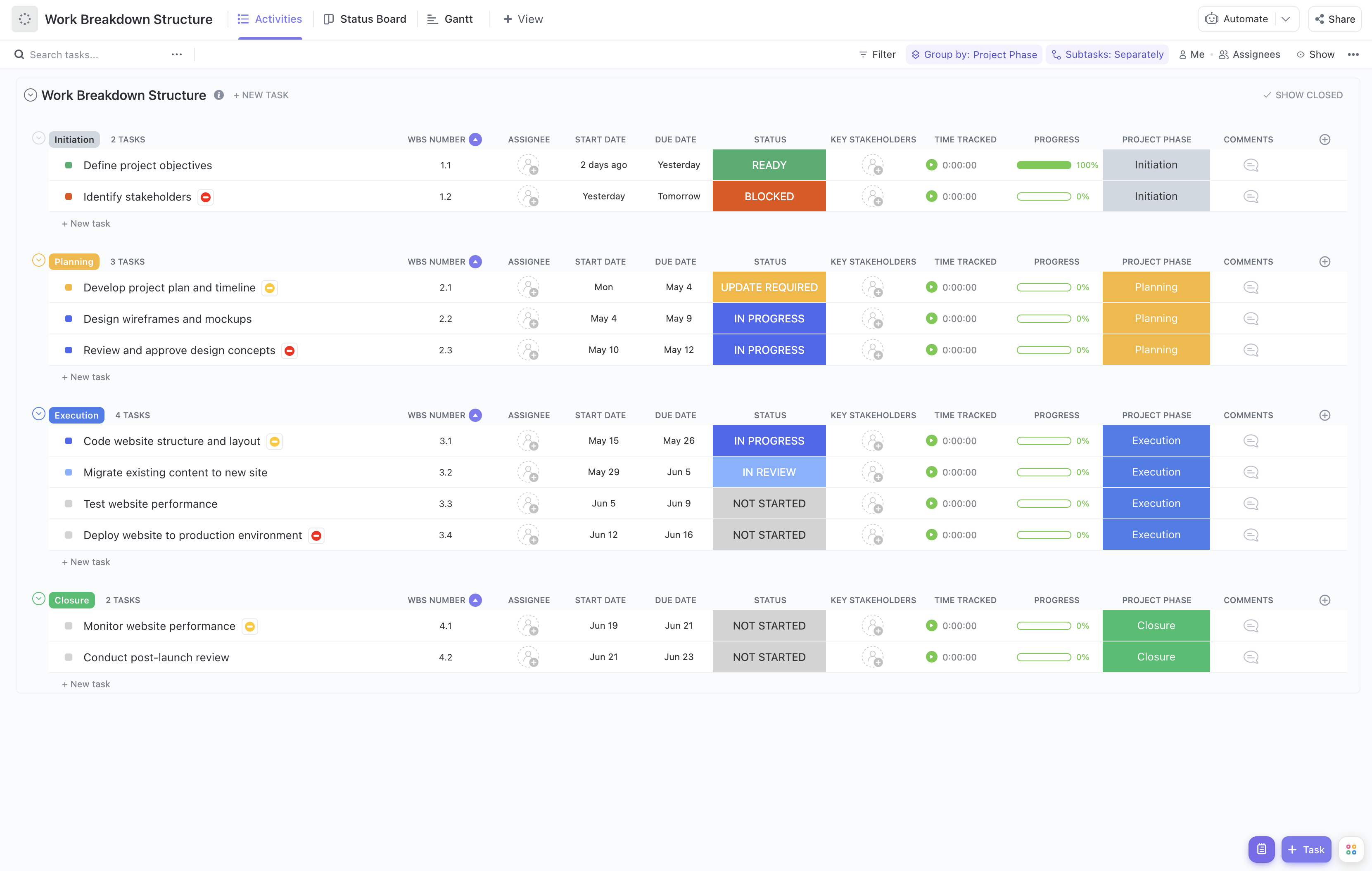


Coordinating relief distribution in emergency situations requires meticulous planning and clear task management. This Relief Distribution Execution Work Breakdown Structure template provides a comprehensive framework to break down the complex process of relief operations into manageable components, enabling teams to execute efficiently under pressure.
With this template, you can:
- Segment relief distribution activities into detailed, actionable tasks for better oversight
- Assign responsibilities to logistics, procurement, field teams, and communication units effectively
- Monitor progress in real-time to adapt quickly to changing conditions on the ground
Designed for ease of use, this template requires no specialized software or coding skills—just ClickUp and your team ready to deliver critical aid where it’s needed most.
Benefits of a Relief Distribution Execution Work Breakdown Structure
Utilizing this WBS template in relief operations offers several key advantages:
- Clarifies the scope and sequence of distribution activities, from needs assessment to final delivery
- Defines roles and responsibilities clearly among diverse teams including logistics, procurement, and field coordinators
- Enhances communication between on-ground teams, headquarters, and stakeholders to ensure alignment and rapid response
- Improves resource allocation and tracking, reducing delays and wastage in critical supply chains
Main Elements of the Relief Distribution Execution Work Breakdown Structure
This template organizes the relief distribution project into key phases and deliverables, including:
- Assessment and Planning:
Conducting needs assessments, identifying target populations, and developing distribution plans
- Procurement and Logistics:
Sourcing relief materials, arranging transportation, and managing warehousing
- Distribution Execution:
Coordinating field teams, scheduling distribution points, and ensuring equitable delivery
- Monitoring and Reporting:
Tracking distribution progress, collecting beneficiary feedback, and reporting to stakeholders
- Closure and Evaluation:
Finalizing documentation, evaluating outcomes, and capturing lessons learned for future operations
Each task within these phases is broken down with clear WBS numbering, assigned stakeholders, and progress tracking fields to maintain transparency and accountability throughout the relief distribution process.
By leveraging this structured approach, relief organizations can enhance operational efficiency, reduce errors, and ultimately ensure that aid reaches those in need promptly and effectively.












