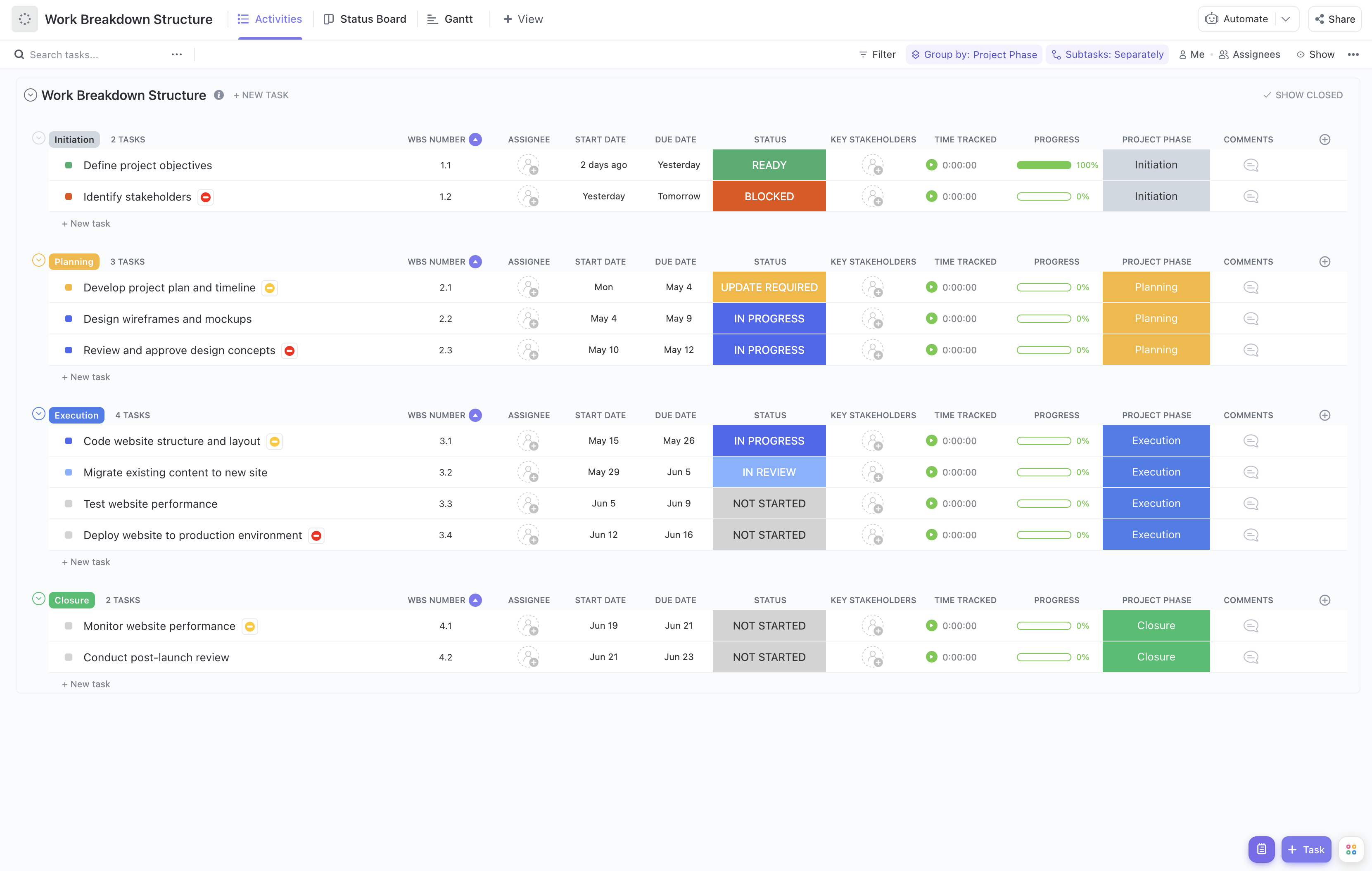
Coordinating a software release rollout involves numerous interdependent tasks across multiple teams, making it essential to have a clear, organized approach. This Release Coordination Rollout Work Breakdown Structure (WBS) template is designed to help you systematically break down the release process into manageable components, ensuring every detail is accounted for and executed on schedule.
With this template, you can:
- Structure release activities into clear phases such as planning, development freeze, testing, deployment, and post-release support
- Assign responsibilities to release managers, QA teams, developers, and operations staff for seamless collaboration
- Monitor progress with real-time updates to quickly identify and address potential blockers
Best of all, no specialized technical skills are required to get started—simply use ClickUp to organize and manage your release rollout efficiently.
Benefits of a Release Coordination Rollout Work Breakdown Structure
Utilizing a WBS tailored for release coordination provides several key advantages:
- Clearly defines all deliverables and milestones involved in the release, from code freeze to production deployment
- Clarifies roles and responsibilities across development, QA, DevOps, and support teams, reducing miscommunication
- Enhances communication between stakeholders by providing a transparent view of the release status and upcoming tasks
- Improves overall efficiency by identifying dependencies and potential risks early in the rollout process
Main Elements of the Release Coordination Rollout Work Breakdown Structure
This WBS template breaks down the release coordination into the following core components:
- Release Planning:
Define scope, schedule, resource allocation, and risk assessment for the release cycle.
- Development Freeze:
Establish code freeze dates, feature finalization, and code review processes to stabilize the release.
- Testing and Validation:
Coordinate unit testing, integration testing, user acceptance testing, and performance testing activities.
- Deployment Preparation:
Prepare deployment scripts, rollback plans, and communication plans for stakeholders and end-users.
- Release Deployment:
Execute the deployment, monitor system health, and manage incident response if necessary.
- Post-Release Support:
Conduct post-deployment reviews, gather feedback, and plan for patches or hotfixes.
By following this structured approach, your release coordination team can ensure a controlled, transparent, and successful rollout process that minimizes downtime and maximizes stakeholder confidence.