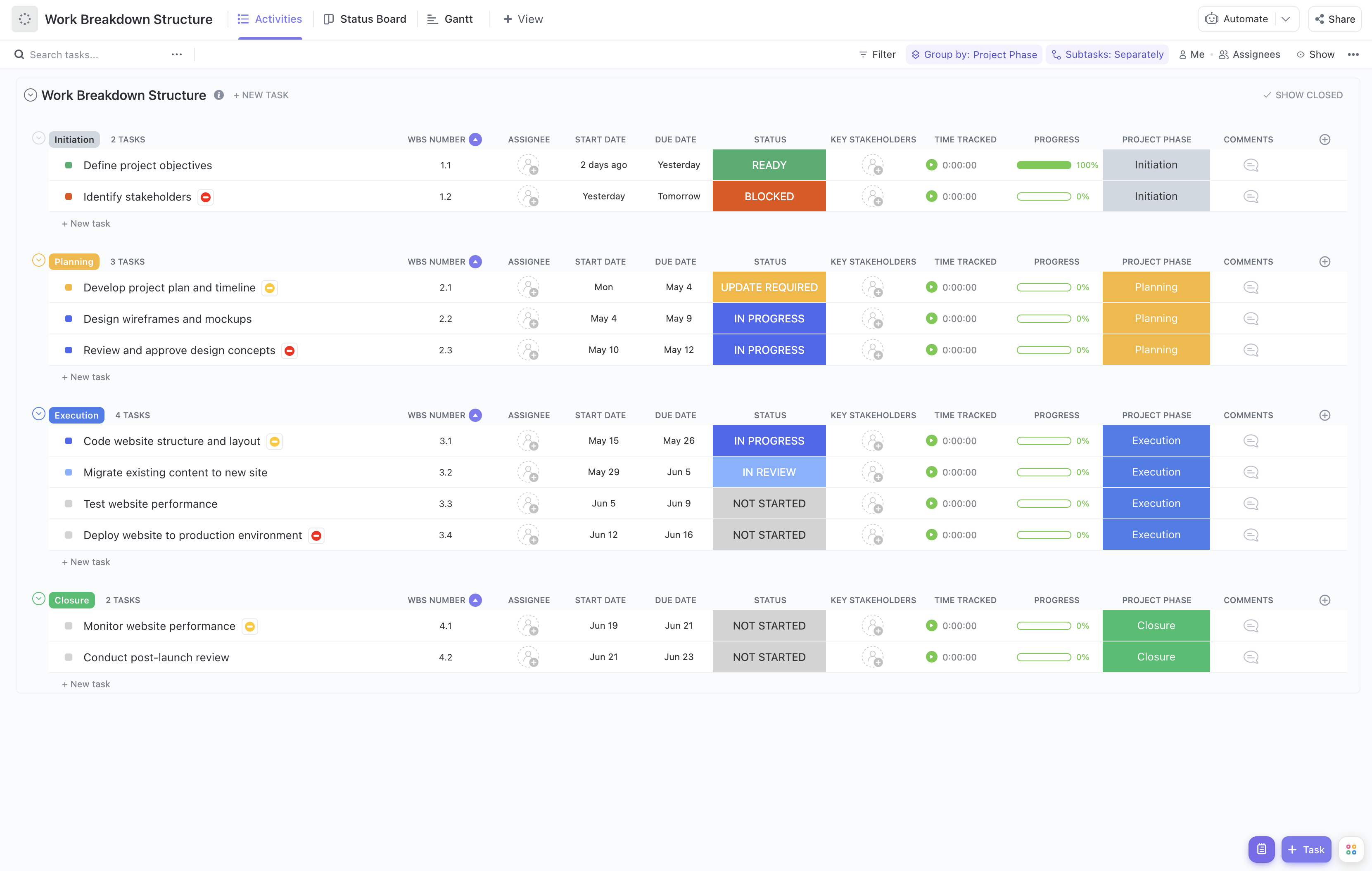
Executing a platform validation project involves numerous detailed tasks that must be carefully coordinated to ensure the platform meets all functional, performance, and compliance requirements. Managing these complex validation activities can be challenging without a clear structure. That's where our Platform Validation Execution Work Breakdown Structure Template comes in!
This comprehensive template helps you:
- Break down validation activities into clear, manageable work packages for enhanced oversight
- Assign responsibilities to validation engineers, QA teams, and stakeholders efficiently
- Monitor validation progress and compliance status in real-time to mitigate risks promptly
Best of all, this template requires no coding or specialized software—just ClickUp to get started and keep your platform validation on track.
Benefits of a Platform Validation Execution Work Breakdown Structure Template
Utilizing this WBS template for platform validation projects offers several advantages:
- Clearly defines and organizes validation deliverables such as test plans, execution reports, and compliance documentation
- Provides transparency on roles and responsibilities across cross-functional teams including developers, testers, and compliance officers
- Enhances communication between project teams and stakeholders, ensuring alignment on validation objectives and timelines
- Improves efficiency by identifying dependencies and sequencing validation tasks to avoid bottlenecks
Main Elements of the Platform Validation Execution Work Breakdown Structure Template
This template is structured to cover all critical phases of platform validation:
- Validation Planning:
Define scope, objectives, acceptance criteria, and resource allocation for validation activities.
- Test Design and Development:
Create detailed test cases, scripts, and validation protocols aligned with platform requirements.
- Test Environment Setup:
Prepare hardware, software, and network configurations necessary for executing validation tests.
- Test Execution:
Conduct functional, performance, security, and compliance tests; document results meticulously.
- Issue Management:
Track defects, non-conformances, and remediation actions with clear ownership and deadlines.
- Validation Reporting:
Compile comprehensive validation reports, including summary of findings and compliance certifications.
- Project Closure:
Finalize documentation, obtain stakeholder approvals, and archive validation artifacts for audit readiness.
By following this structured approach, your platform validation project will be organized, transparent, and aligned with industry best practices, facilitating smooth execution and successful platform launch.