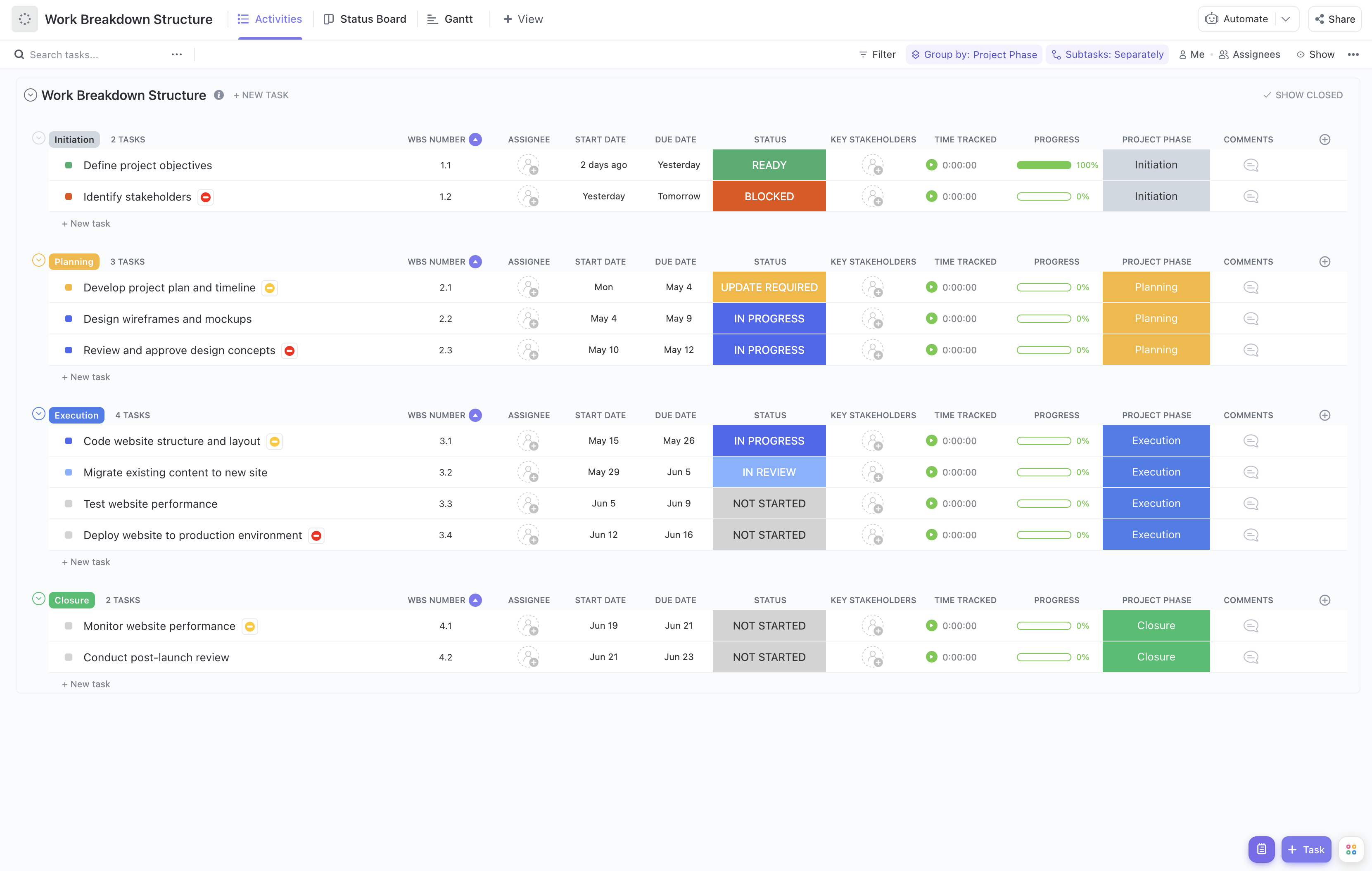
Maintaining platform stability is critical in delivering seamless user experiences and sustaining business operations. However, managing the myriad tasks involved in stability execution can be complex and overwhelming. That's where our Platform Stability Execution Work Breakdown Structure (WBS) Template comes in!
This specialized template helps you:
- Break down platform stability initiatives into clear, manageable tasks for focused execution
- Assign responsibilities to the right engineering and operations teams swiftly and accurately
- Monitor real-time progress on stability improvements, incident responses, and preventive measures
Best of all, you don't need advanced technical skills or additional software—just ClickUp to start organizing your platform stability efforts efficiently.
Benefits of a Platform Stability Execution Work Breakdown Structure Template
Using a WBS tailored for platform stability execution empowers your team to:
- Clearly define and structure all deliverables related to stability, including monitoring, incident management, and infrastructure upgrades
- Clarify roles and responsibilities across cross-functional teams such as DevOps, SREs, and support staff
- Enhance communication and coordination between stakeholders to swiftly address stability issues
- Improve efficiency by providing a transparent roadmap for stability projects, reducing downtime and risk
Main Elements of the Platform Stability Execution Work Breakdown Structure Template
This template organizes your platform stability efforts into key components:
- Monitoring and Alerting:
Tasks related to setting up and refining system monitoring tools, defining alert thresholds, and ensuring timely notifications.
- Incident Response:
Steps for incident detection, triage, resolution, and post-mortem analysis to continuously improve response processes.
- Infrastructure and Code Improvements:
Initiatives to enhance system resilience through infrastructure upgrades, code refactoring, and deployment best practices.
- Preventive Maintenance:
Scheduled tasks for system health checks, capacity planning, and security audits to proactively prevent stability issues.
- Stakeholder Communication:
Defined channels and schedules for reporting stability status and updates to leadership and customers.
By leveraging this structured approach, your platform stability projects become more transparent, manageable, and aligned with business goals, enabling your team to deliver consistent, reliable service.