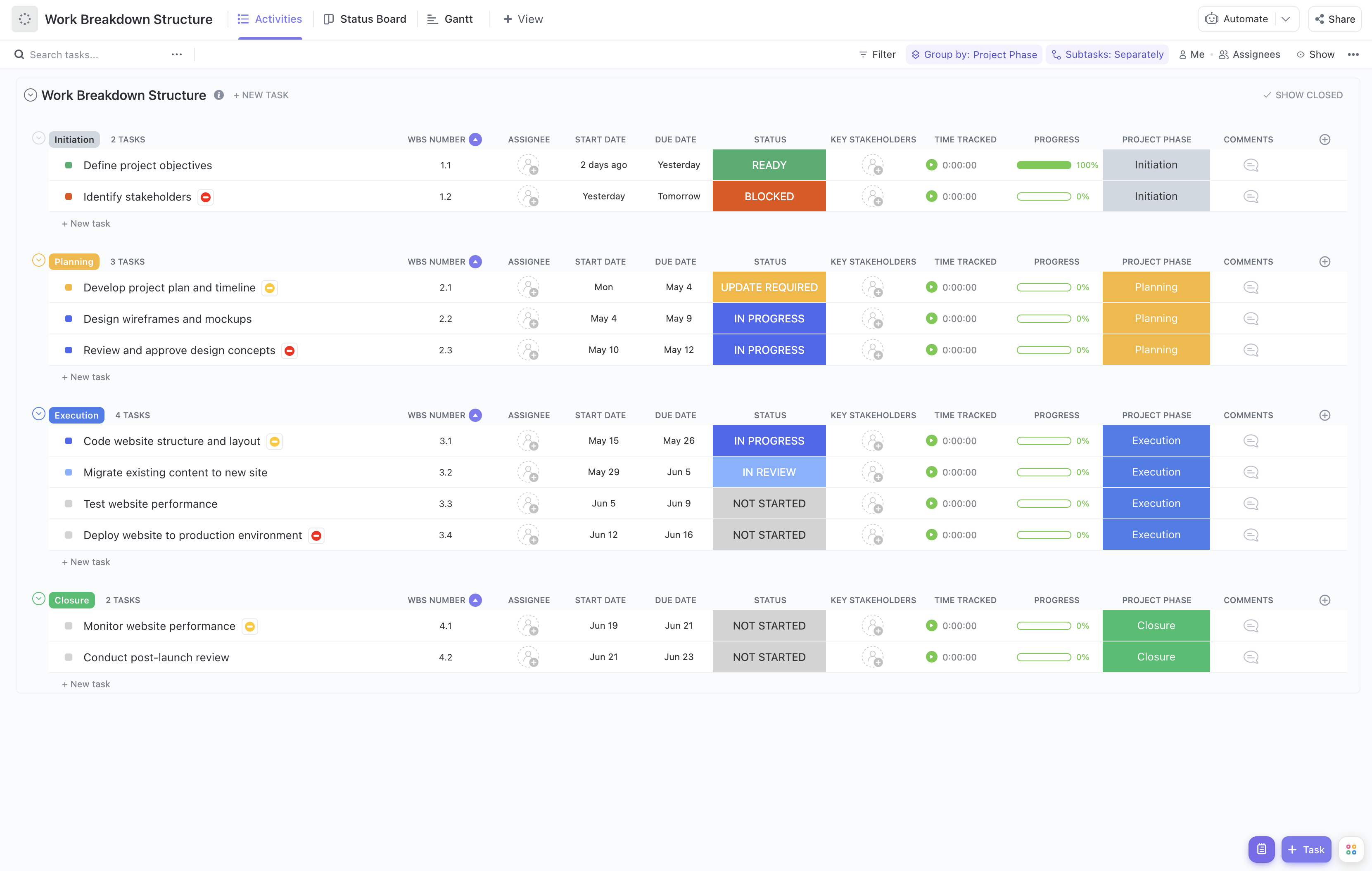
Managing platform availability requires meticulous planning and execution to guarantee continuous uptime and optimal performance. Breaking down this complex initiative into manageable components is essential for success. Our Platform Availability Execution Work Breakdown Structure Template is crafted to help you systematically organize and oversee every aspect of your platform availability projects.
This specialized template helps you:
- Segment platform availability tasks into clear, actionable sections for enhanced oversight
- Assign roles and responsibilities efficiently to ensure accountability across teams
- Monitor real-time progress on critical uptime objectives and incident response activities
Best of all, this template is user-friendly and requires no coding expertise—just your ClickUp workspace to get started on driving platform reliability forward.
Benefits of a Platform Availability Execution Work Breakdown Structure Template
Utilizing a work breakdown structure tailored for platform availability projects empowers your team to:
- Clearly define and organize deliverables such as uptime targets, failover implementations, and monitoring setups
- Clarify team members' roles in incident management, maintenance windows, and system updates
- Enhance communication between DevOps, IT, and stakeholder teams to swiftly address availability risks
- Boost overall project efficiency by tracking dependencies and mitigating potential downtime proactively
Main Elements of the Platform Availability Execution Work Breakdown Structure Template
This template is structured to cover all critical facets of platform availability initiatives, including:
- Project Initiation:
Defining availability goals, scope, and stakeholder engagement plans
- Infrastructure Assessment:
Evaluating current platform components, identifying single points of failure, and capacity planning
- Redundancy and Failover Planning:
Designing and implementing backup systems and disaster recovery strategies
- Monitoring and Alerting Setup:
Establishing real-time monitoring tools and incident alert protocols
- Maintenance and Update Scheduling:
Planning maintenance windows to minimize impact on availability
- Testing and Validation:
Conducting failover drills, load testing, and performance validation
- Deployment and Rollout:
Executing platform updates with rollback plans to ensure stability
- Post-Implementation Review:
Analyzing performance metrics and refining processes for continuous improvement
By following this structured approach, your team can confidently execute platform availability projects that meet stringent uptime requirements and deliver exceptional user experiences.