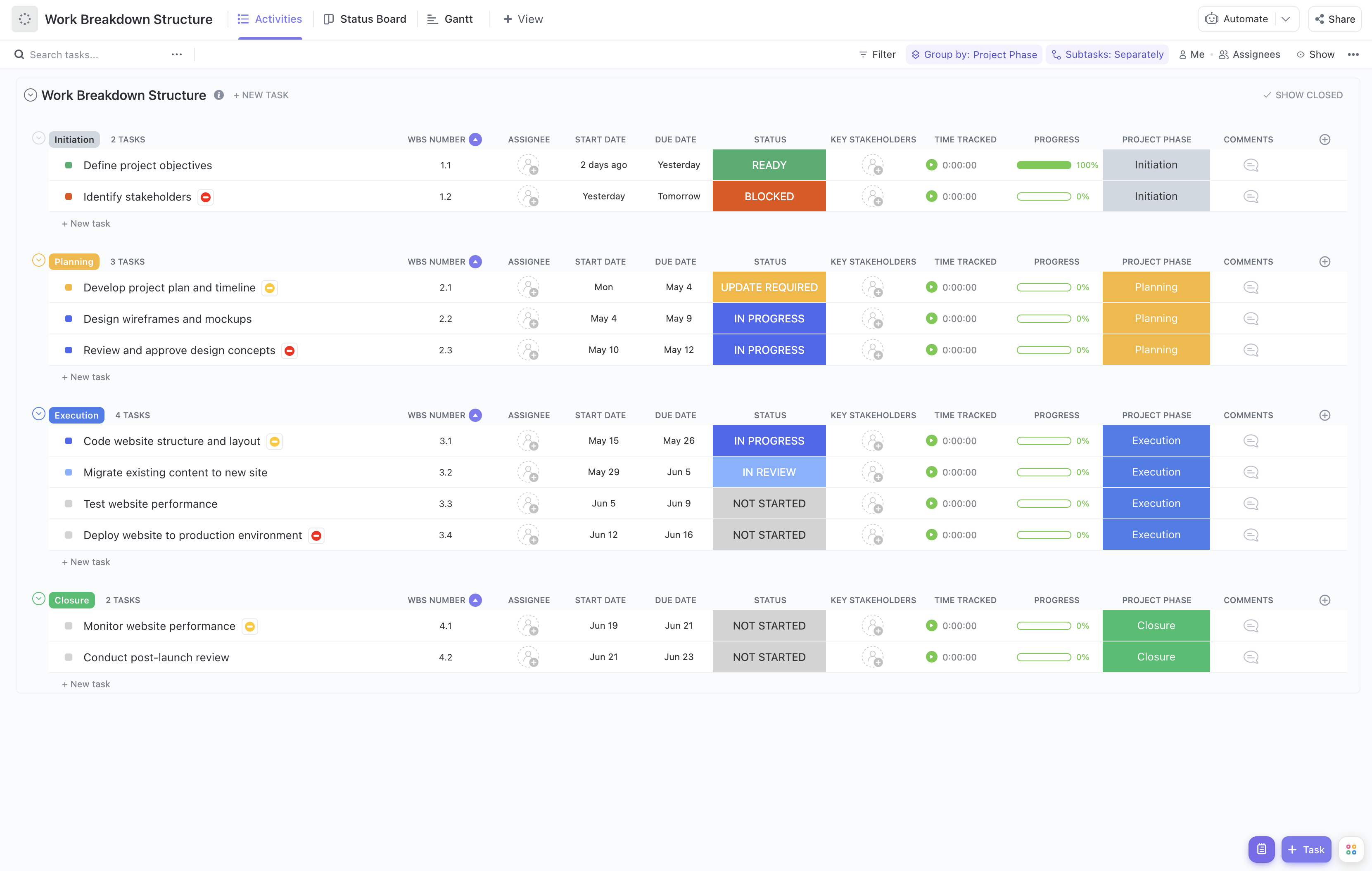
Delivering a comprehensive learning program involves coordinating multiple activities, resources, and stakeholders. Managing these elements can be complex, but with the Learning Delivery Execution Work Breakdown Structure Template, you can streamline the process and ensure every aspect is accounted for.
This tailored template enables you to:
- Decompose the learning delivery process into clear, actionable tasks for better oversight
- Assign roles and responsibilities to instructional designers, facilitators, and support staff efficiently
- Monitor the progress of course development, logistics, and learner engagement in real-time
Best of all, this template is user-friendly and requires no specialized software—just ClickUp to get started organizing your learning delivery projects.
Benefits of a Learning Delivery Execution Work Breakdown Structure Template
Using this WBS template in your learning delivery projects offers several advantages:
- Clearly defines and organizes all deliverables such as course content, assessments, and training materials
- Clarifies team member roles including content creators, trainers, and coordinators to avoid overlap and gaps
- Enhances communication among stakeholders including subject matter experts, learners, and management
- Improves efficiency by tracking milestones like pilot sessions, feedback collection, and final rollout
Main Elements of the Learning Delivery Execution Work Breakdown Structure Template
This template breaks down the learning delivery project into core components such as:
- Instructional Design:
Task groups covering curriculum development, content creation, and review cycles.
- Training Logistics:
Scheduling sessions, booking venues or virtual platforms, and managing learner registrations.
- Facilitation:
Assigning trainers, preparing materials, and conducting training sessions.
- Assessment and Evaluation:
Designing assessments, collecting learner feedback, and analyzing training effectiveness.
- Project Management:
Overseeing timelines, resource allocation, and stakeholder communications.
By organizing your learning delivery efforts using this structured approach, you can ensure a smooth execution from planning through to post-training evaluation, ultimately leading to more impactful learning experiences.