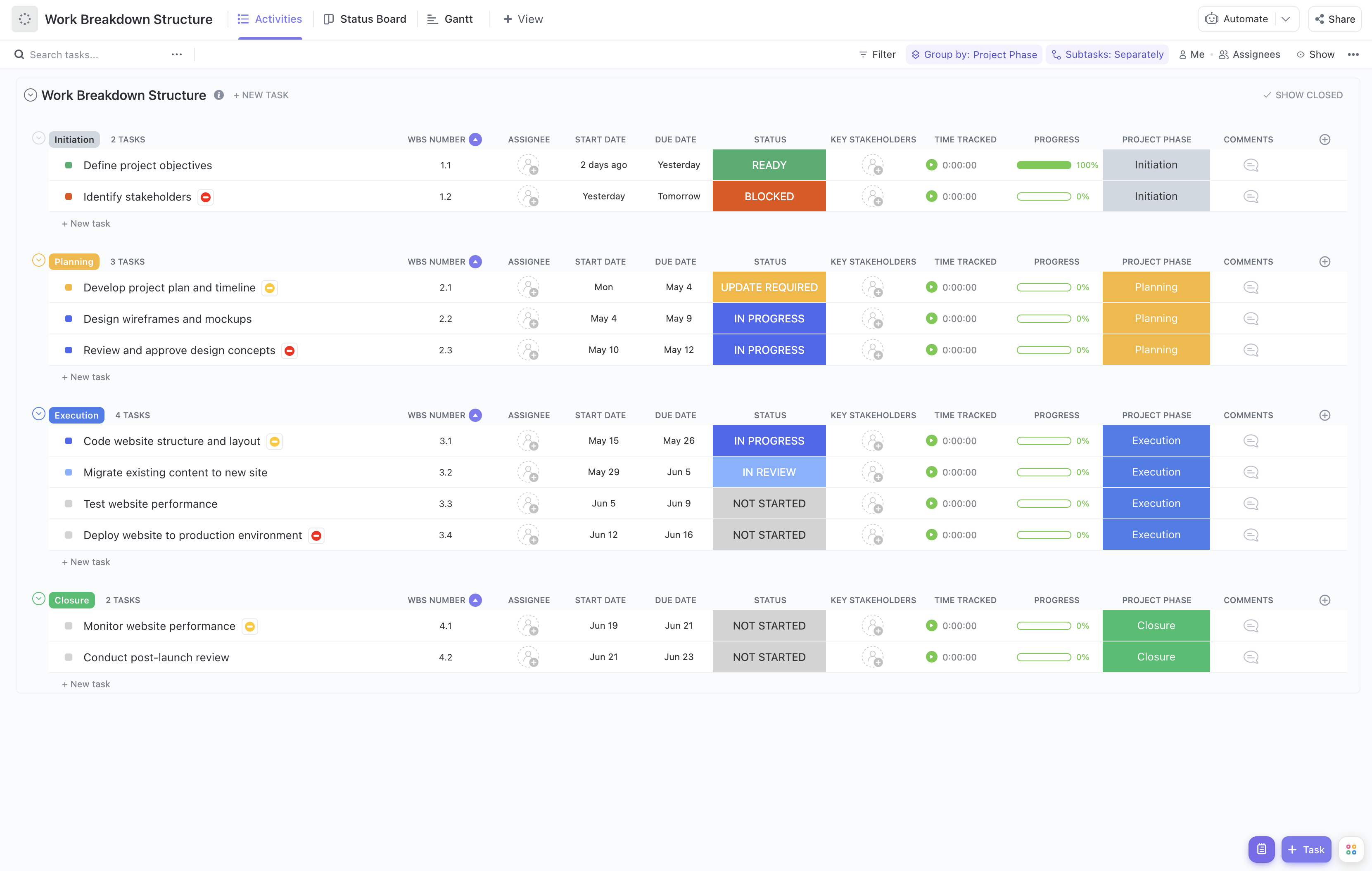
Effectively executing internal controls is critical for maintaining compliance and safeguarding organizational assets. However, managing the various tasks, responsibilities, and timelines involved in internal controls execution can be complex and challenging. That's where ClickUp's Internal Controls Execution Work Breakdown Structure Template comes in!
This tailored template helps you:
- Break down internal controls processes into clear, manageable tasks for better oversight
- Assign control owners and key stakeholders to specific activities efficiently
- Monitor progress of control implementation and testing with real-time updates
Best of all, no specialized software or coding skills are required—just ClickUp to streamline your internal controls execution!
Benefits of an Internal Controls Execution Work Breakdown Structure Template
Using a work breakdown structure for internal controls execution offers numerous advantages for compliance teams and auditors alike. Key benefits include:
- Clearly defines and organizes internal control objectives, activities, and deliverables
- Provides transparency on roles and responsibilities for control owners and reviewers
- Enhances communication between compliance officers, auditors, and operational teams
- Improves efficiency by enabling timely identification and resolution of control gaps
Main Elements of the Internal Controls Execution Work Breakdown Structure Template
This template is structured to guide you through the entire internal controls execution lifecycle, including:
- Control Identification: Cataloging key controls aligned with organizational risks and regulatory requirements.
- Task Breakdown: Decomposing control activities into detailed tasks such as documentation, implementation, testing, and remediation.
- Assignment of Responsibilities: Designating control owners, testers, and approvers with clear accountability.
- Scheduling and Milestones: Setting deadlines for each control activity phase to ensure timely completion.
- Progress Tracking: Utilizing status updates and dashboards to monitor control execution and highlight issues.
- Documentation and Evidence Management: Attaching relevant documents, test results, and audit trails within tasks for compliance verification.
By leveraging this comprehensive template, your team can systematically manage internal controls execution, reduce risks, and demonstrate compliance with regulatory standards effectively.