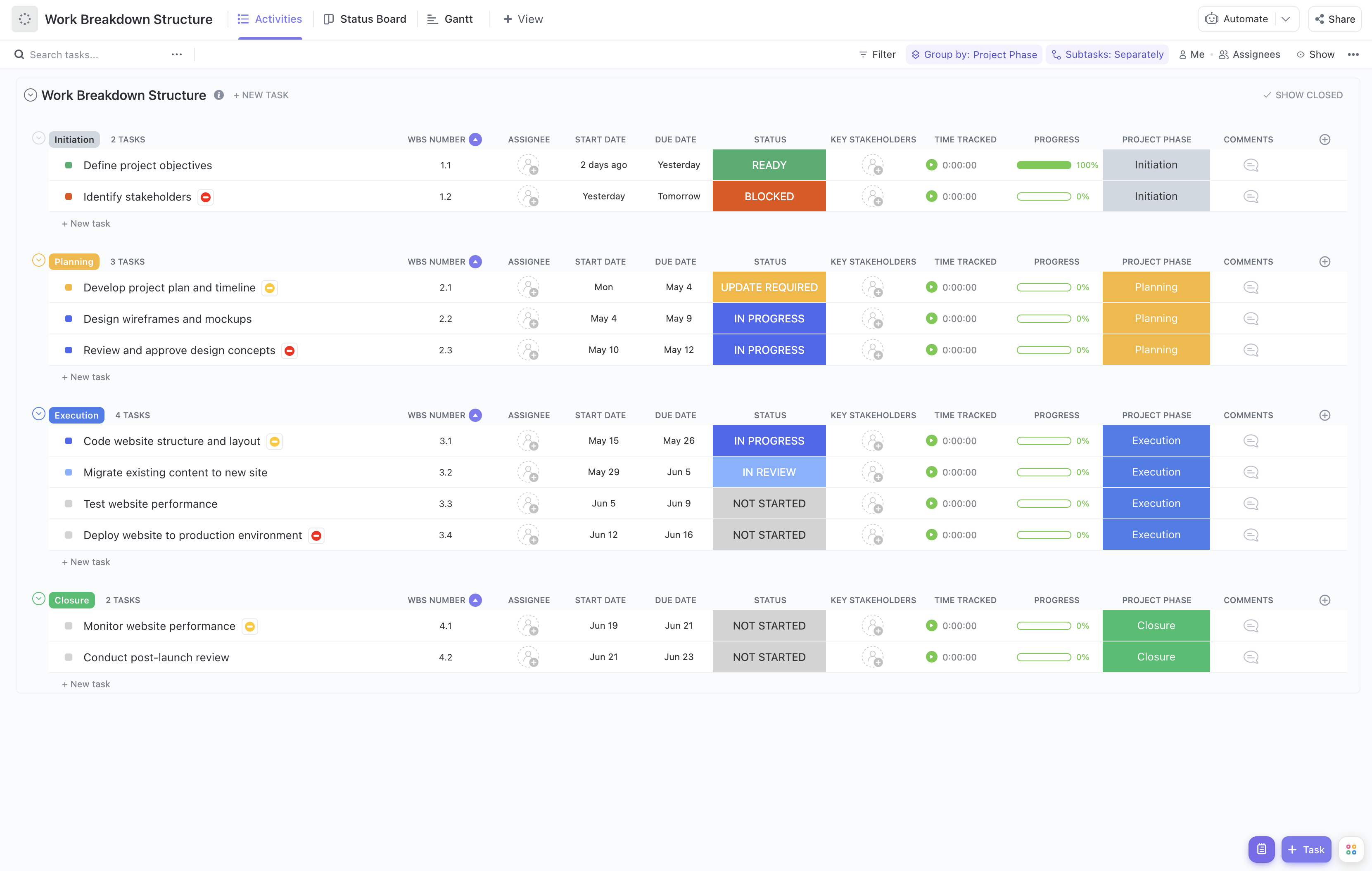
Game development is a multifaceted process involving diverse teams and intricate workflows. Breaking down the entire game creation journey into manageable components is essential for success. This Game Development Work Breakdown Structure Template is crafted to help you navigate the complexities of game projects with clarity and control.
This specialized template enables you to:
- Segment game development into clear phases such as concept design, asset creation, coding, testing, and release management for enhanced visibility
- Assign specific tasks to artists, programmers, designers, QA testers, and producers to streamline collaboration
- Monitor progress in real-time to keep your game development on schedule and within budget
Best of all, this template requires no coding skills or specialized software—just ClickUp and your game development team ready to build the next hit title!
Benefits of a Game Development Work Breakdown Structure Template
Utilizing a WBS tailored for game development offers numerous advantages to project managers and teams alike. It visually maps out the entire game creation process, helping ensure milestones are met and resources are allocated efficiently. Key benefits include:
- Clearly defining and organizing game deliverables such as storyboards, character models, game mechanics, and testing cycles
- Clarifying roles and responsibilities across departments including art, programming, sound design, and quality assurance
- Enhancing communication between developers, designers, producers, and stakeholders to align on project goals
- Improving overall project efficiency by identifying dependencies and potential bottlenecks early
Main Elements of the Game Development Work Breakdown Structure Template
This template breaks down your game project into key components, including:
- Concept & Pre-production:
Story development, game design documentation, prototyping, and technical feasibility studies
- Production:
Asset creation (characters, environments, UI), programming core mechanics, level design, and audio integration
- Testing & Quality Assurance:
Bug tracking, playtesting sessions, performance optimization, and compliance checks
- Deployment & Post-release:
Launch planning, marketing coordination, post-launch support, and updates or DLC management
Each task within these elements can be assigned, tracked, and updated in real-time, providing your team with a comprehensive overview of the game's development lifecycle.
Leverage this template to bring structure and clarity to your game development projects, ensuring your team stays aligned and your game reaches players on time and at the highest quality.