
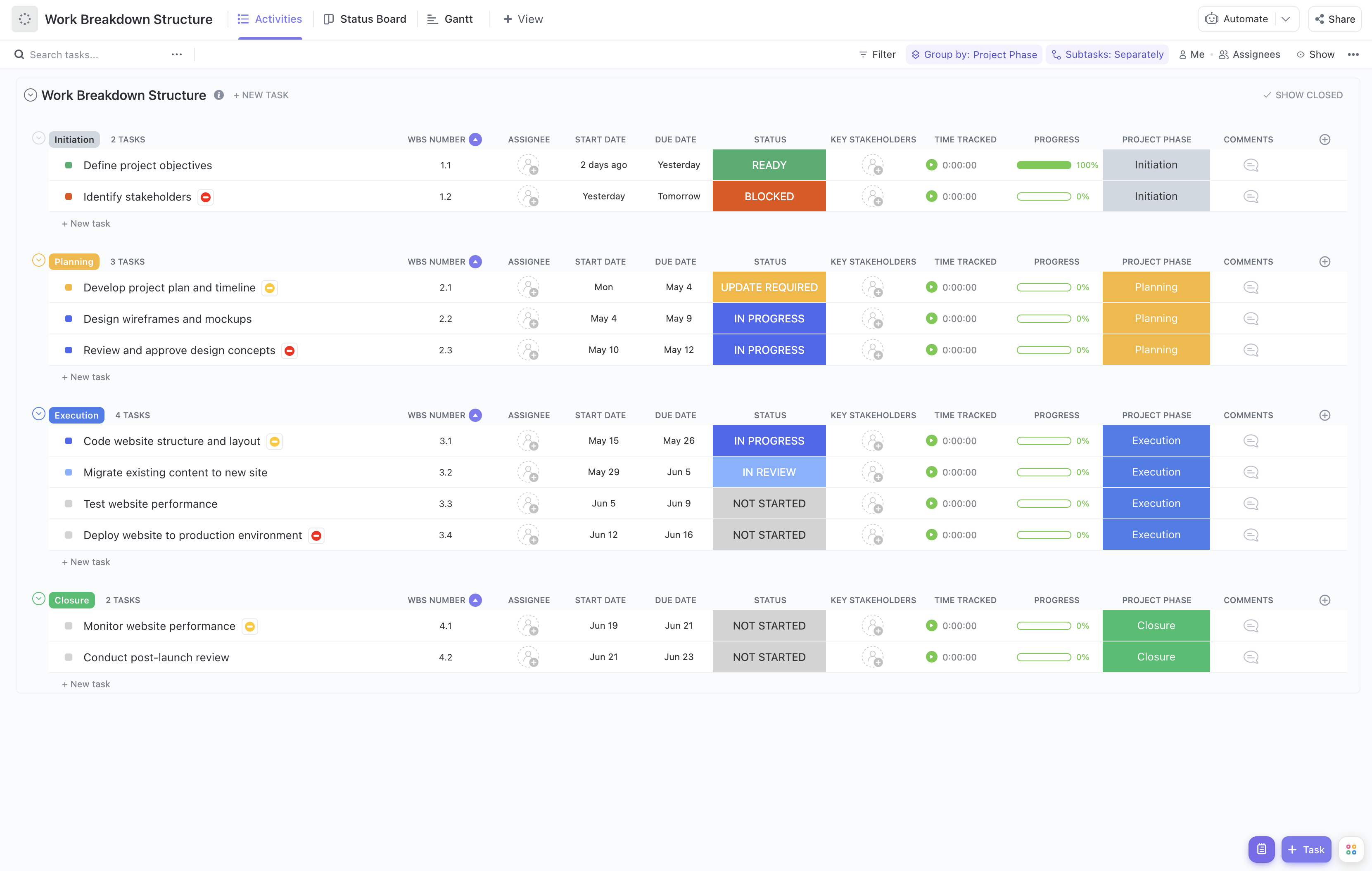


Expanding a fleet involves coordinating multiple moving parts—from vehicle procurement and infrastructure upgrades to staff training and regulatory compliance. Managing these components effectively is crucial for a successful fleet expansion program. This Fleet Expansion Program Work Breakdown Structure Template is designed to help you break down the complexities into manageable tasks, ensuring clarity and control throughout the project lifecycle.
This specialized template empowers you to:
- Segment the fleet expansion project into clear, actionable work packages such as vehicle acquisition, facility upgrades, and driver onboarding
- Assign responsibilities to procurement teams, maintenance staff, and compliance officers efficiently
- Track milestones like delivery schedules, installation of charging stations, and certification completions in real-time
Best of all, no coding or specialized software skills are required—simply use ClickUp to streamline your fleet expansion efforts and drive your project to success.
Benefits of a Fleet Expansion Work Breakdown Structure Template
Utilizing this WBS template tailored for fleet expansion projects offers several advantages:
- Clearly defines and organizes deliverables such as vehicle types, quantities, and supporting infrastructure
- Clarifies roles and responsibilities across departments including procurement, operations, and training
- Enhances communication among stakeholders, ensuring alignment on timelines and compliance requirements
- Improves project efficiency by identifying dependencies and potential bottlenecks early
Main Elements of the Fleet Expansion Work Breakdown Structure Template
This template breaks down your fleet expansion program into critical components, including:
- Project Initiation:
Define objectives, scope, and key stakeholders involved in the expansion
- Vehicle Acquisition:
Research, select, and procure vehicles meeting operational needs and budget
- Infrastructure Development:
Upgrade or build facilities such as maintenance bays and charging stations
- Staff Training and Onboarding:
Prepare drivers and maintenance personnel for new equipment and protocols
- Regulatory Compliance:
Ensure all vehicles and operations meet local and federal regulations
- Deployment and Monitoring:
Schedule vehicle rollouts and establish performance tracking mechanisms
By following this structured approach, your fleet expansion program can proceed with transparency, accountability, and agility, ultimately delivering enhanced operational capacity and business growth.












