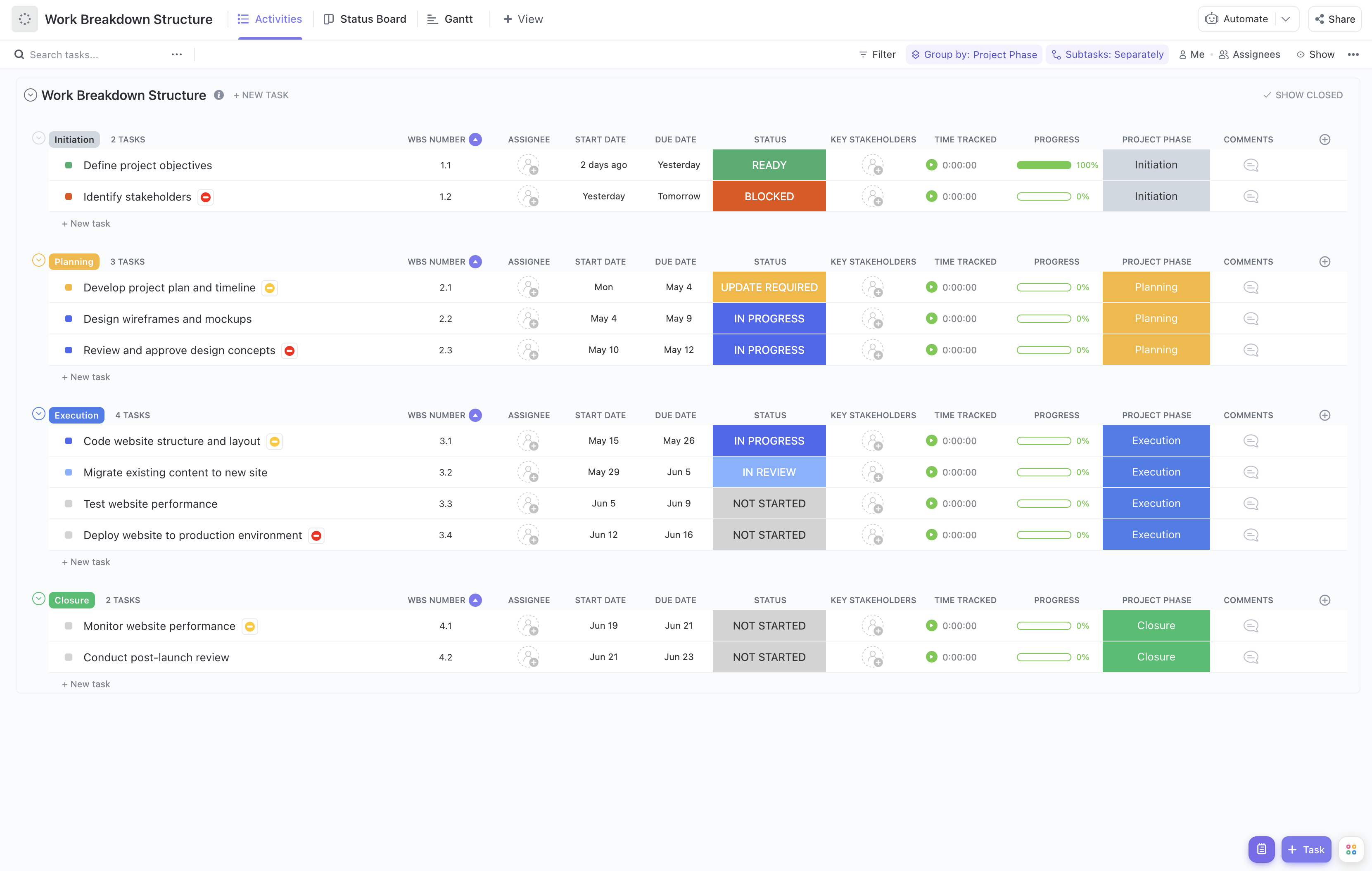
Implementing an education analytics system involves numerous interrelated tasks across data collection, analysis, and reporting. Breaking down this complex initiative into manageable components is essential for success. Our Education Analytics Setup Work Breakdown Structure template is designed to guide education administrators, data analysts, and IT teams through this process efficiently.
This specialized template helps you:
- Organize education analytics tasks into clear, actionable sections such as data sourcing, integration, and dashboard development
- Align team members including educators, data scientists, and IT staff to their specific responsibilities quickly and effectively
- Track progress on milestones like data validation, model deployment, and user training with real-time updates
Best of all, no coding expertise or complex software is needed to get started—just use ClickUp to break down your education analytics project into achievable steps and drive it to completion!
Benefits of an Education Analytics Work Breakdown Structure Template
Using this WBS template tailored for education analytics projects offers several advantages:
- Clearly defines and organizes key deliverables such as data governance policies, analytics models, and reporting tools
- Provides clarity on roles and responsibilities for educators, data engineers, and administrators involved in the project
- Enhances communication between stakeholders by providing a shared visual roadmap of the project’s scope and timeline
- Improves project efficiency by enabling early identification of dependencies and potential bottlenecks in analytics setup
Main Elements of the Education Analytics Work Breakdown Structure Template
This template breaks down the education analytics setup into core components including:
- Project Initiation:
Define objectives, identify key stakeholders such as school leaders and IT teams, and establish project governance.
- Data Collection and Integration:
Inventory existing data sources (student information systems, LMS, assessment tools), plan data extraction, and integrate datasets.
- Data Quality and Validation:
Conduct data cleansing, validation, and ensure compliance with privacy regulations like FERPA.
- Analytics Model Development:
Develop predictive models for student performance, retention, and resource allocation.
- Dashboard and Reporting Setup:
Design user-friendly dashboards tailored for educators and administrators to monitor key metrics.
- User Training and Adoption:
Plan and deliver training sessions to ensure effective use of analytics tools across the institution.
- Project Monitoring and Evaluation:
Track progress, manage risks, and adjust plans based on feedback and performance data.
By following this structured approach, education organizations can efficiently implement analytics systems that empower data-driven decision-making and improve student outcomes.