

Implementing a data warehouse project involves numerous complex tasks, from gathering requirements to deploying the final solution. Managing these tasks effectively is crucial for project success. This Data Warehouse Project Work Breakdown Structure Template is designed to help you organize and oversee every aspect of your data warehousing initiative with clarity and precision.
This specialized template enables you to:
- Decompose the data warehouse project into detailed, manageable sections such as data source analysis, ETL process design, data modeling, testing, and deployment
- Assign responsibilities to team members including data engineers, architects, analysts, and QA specialists, ensuring everyone knows their roles
- Monitor progress in real-time, track milestones like data integration completion, and adjust plans dynamically to meet deadlines
Best of all, this template requires no coding expertise or complex software—just use ClickUp to streamline your data warehouse project management from start to finish.
Benefits of a Data Warehouse Project Work Breakdown Structure Template
Using a WBS template tailored for data warehousing projects offers significant advantages:
- Clearly defines and organizes deliverables such as source system analysis, ETL workflows, data marts, and reporting layers
- Provides transparency for team members on their specific tasks, like developing transformation scripts or validating data quality
- Enhances communication among stakeholders including business analysts, IT teams, and management by providing a shared project roadmap
- Improves project efficiency by identifying dependencies and potential bottlenecks early in the development cycle
Main Elements of the Data Warehouse Project Work Breakdown Structure Template
This template breaks down your data warehouse project into the following key components:
- Project Initiation: Requirements gathering, stakeholder identification, and project charter development
- Data Source Analysis: Inventory of source systems, data profiling, and extraction strategy planning
- ETL Development: Designing, coding, and testing extraction, transformation, and loading processes
- Data Modeling: Creating conceptual, logical, and physical data models tailored to business needs
- Testing and Validation: Data quality checks, performance testing, and user acceptance testing
- Deployment and Maintenance: Production rollout, documentation, training, and ongoing support
By following this structured approach, your team can ensure all critical aspects of the data warehouse project are addressed systematically, reducing risks and enhancing the likelihood of delivering a robust and scalable data solution.
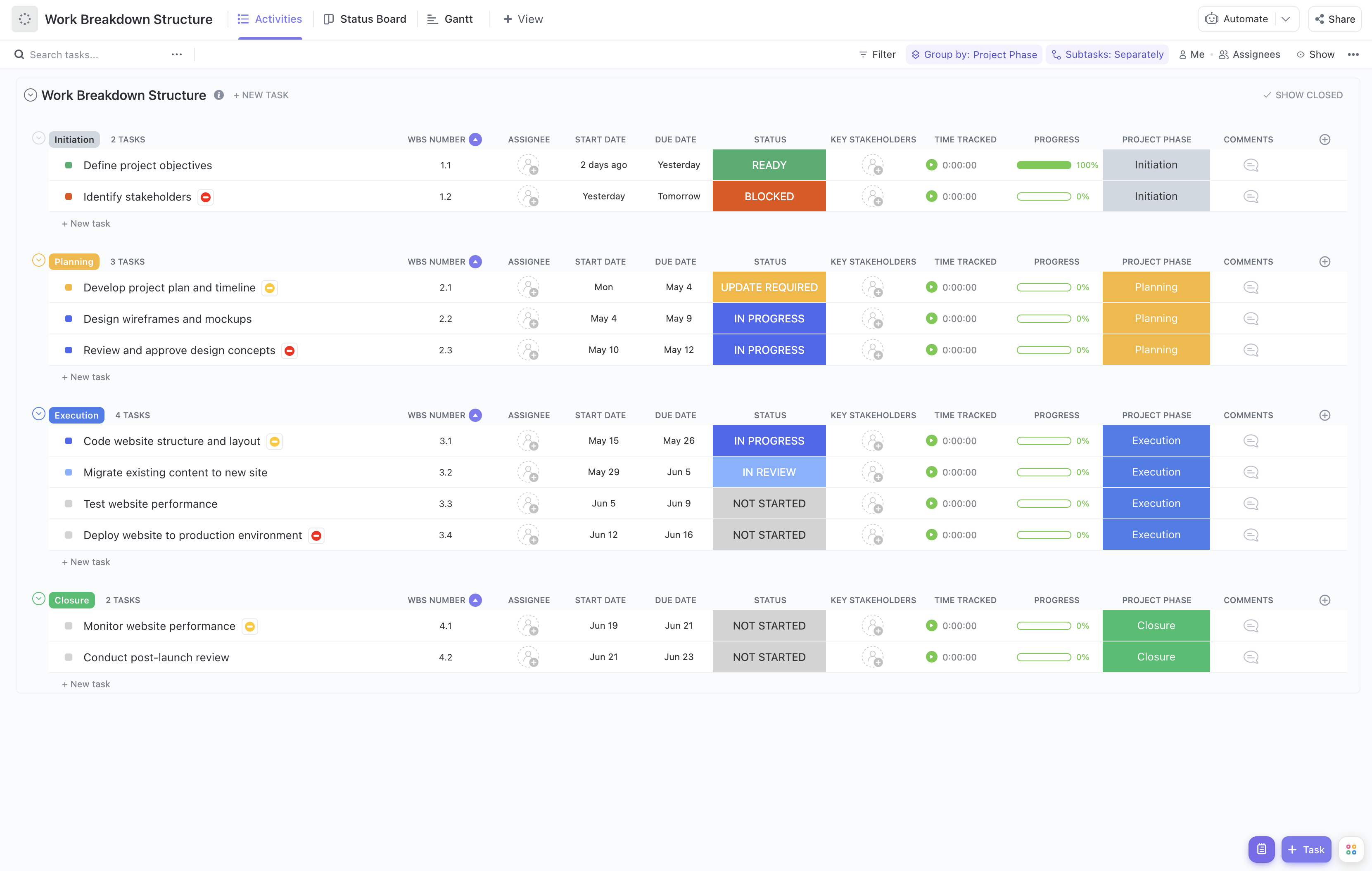


Utilize this template to bring structure, clarity, and efficiency to your data warehouse project management efforts, ensuring timely delivery and alignment with business objectives.










