
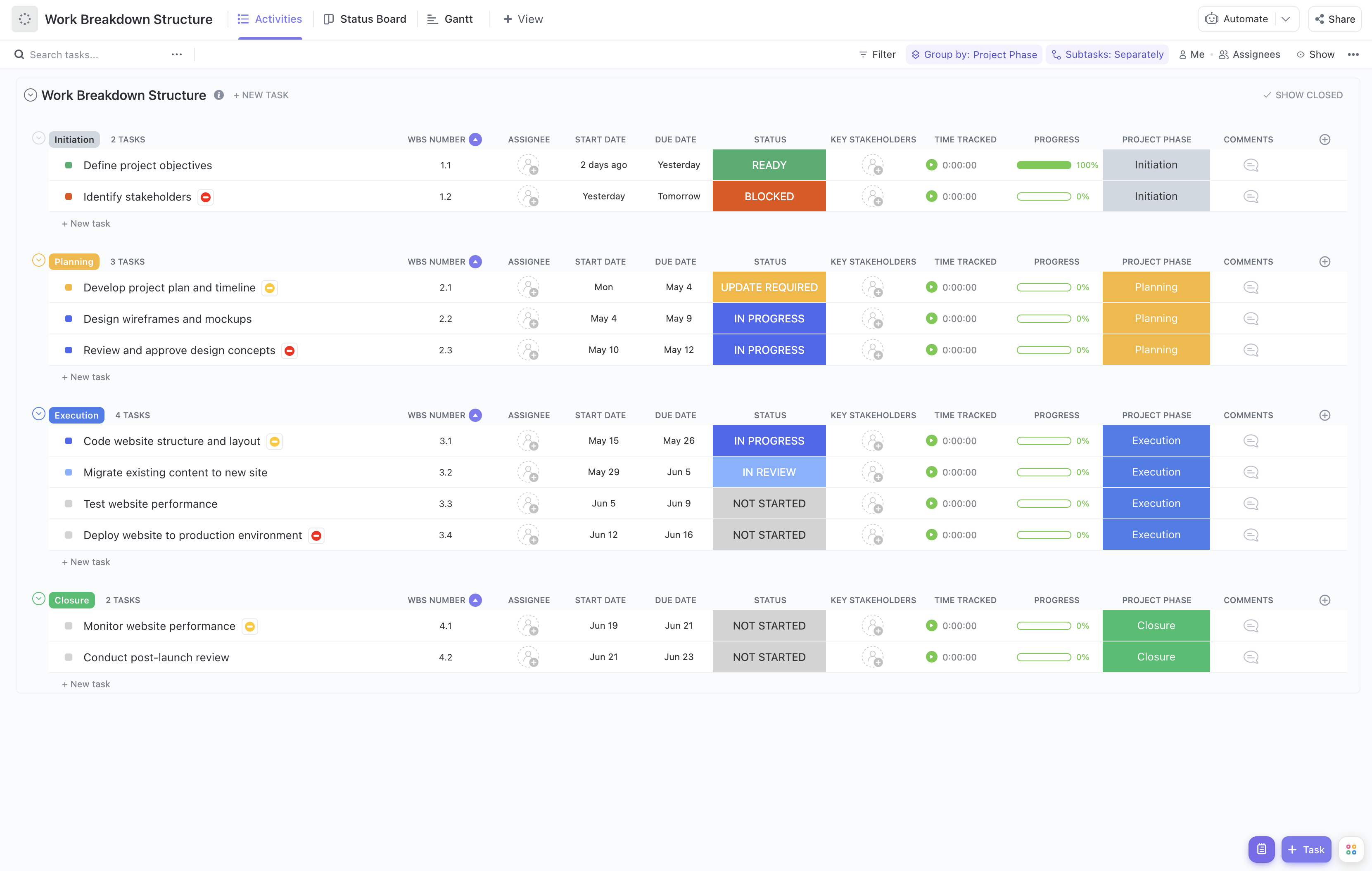


Implementing a comprehensive continuity planning rollout requires meticulous organization and clear visibility into all tasks and responsibilities. This Continuity Planning Rollout Work Breakdown Structure Template is crafted to help your organization navigate this complex process with ease.
With this template, you can:
- Segment the continuity planning rollout into manageable phases and tasks for enhanced oversight
- Assign roles and responsibilities clearly to team members involved in continuity efforts
- Monitor progress in real-time to ensure timely completion of critical continuity milestones
Best of all, this template requires no specialized software or coding skills—simply use ClickUp to start organizing your continuity planning rollout effectively.
Benefits of Using This Continuity Planning Rollout Work Breakdown Structure
Adopting this WBS template for your continuity planning rollout offers several advantages:
- Clarifies Deliverables:
Break down the continuity plan implementation into clear deliverables such as risk assessments, recovery strategies, and communication plans.
- Defines Roles and Responsibilities:
Ensure every team member understands their specific tasks, from IT recovery teams to business unit leaders.
- Enhances Communication:
Facilitate transparent communication among stakeholders, including management, employees, and external partners.
- Improves Efficiency:
Streamline the rollout process by tracking dependencies and progress, reducing delays and resource conflicts.
Main Elements of the Continuity Planning Rollout Work Breakdown Structure
This template organizes your continuity planning rollout into key components:
- Initiation Phase:
Includes project kickoff, stakeholder identification, and initial risk assessment.
- Planning Phase:
Covers development of continuity strategies, resource allocation, and communication planning.
- Execution Phase:
Encompasses training, system implementations, and testing of continuity procedures.
- Monitoring and Control:
Focuses on progress tracking, issue resolution, and plan adjustments based on feedback.
- Closure:
Final evaluations, documentation, and formal handover of the continuity plan.
Each task within these phases can be assigned to specific team members with deadlines and progress indicators, ensuring accountability and transparency throughout the rollout.
By leveraging this structured approach, your organization can confidently manage the complexities of continuity planning rollout, minimizing risks and enhancing preparedness for unforeseen disruptions.












