
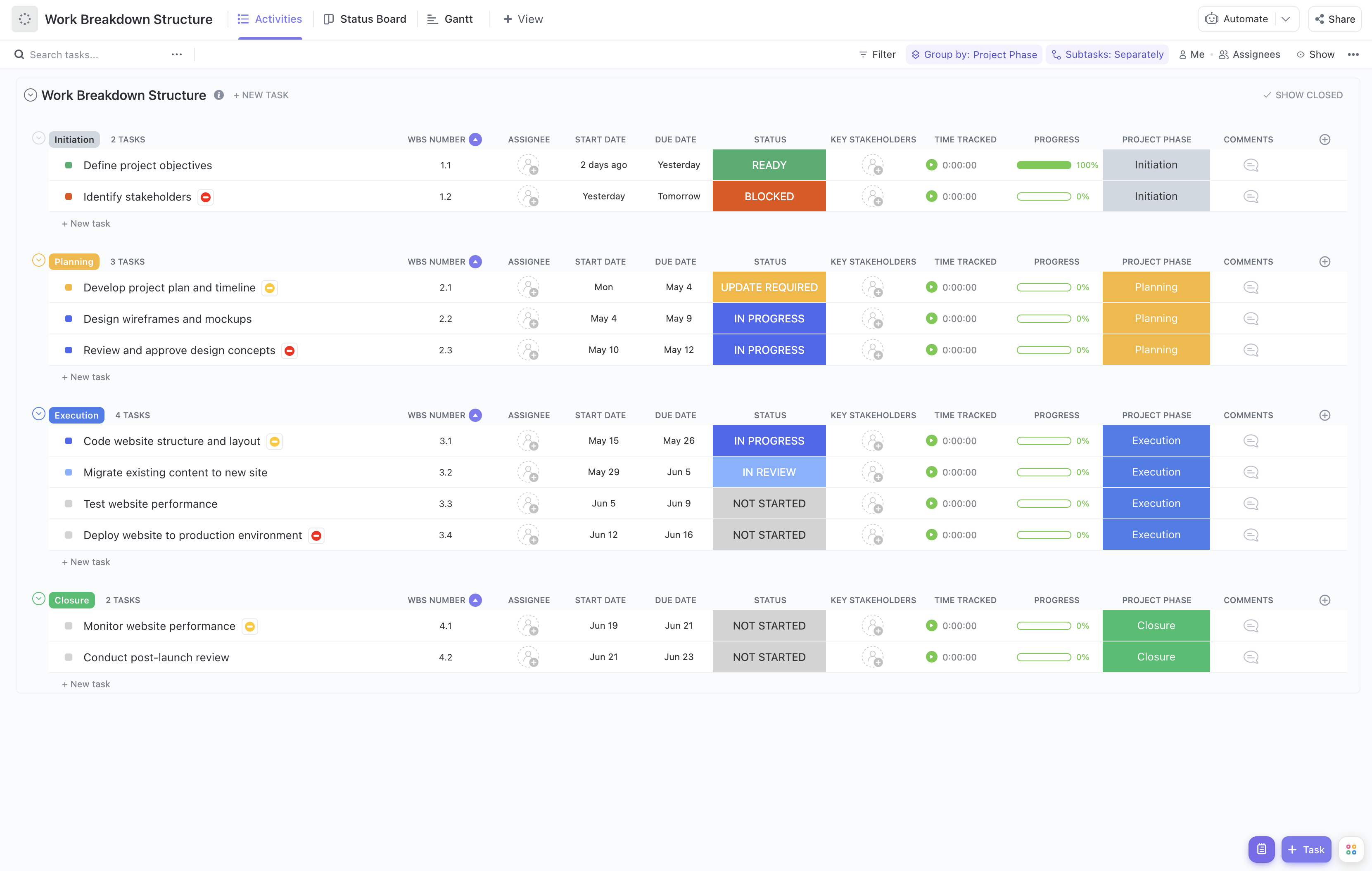


Executing a content migration initiative involves numerous intricate tasks, from auditing existing content to deploying it on new platforms. Managing these complexities requires a clear, structured approach. That's where our Content Migration Work Breakdown Structure Template comes in!
This specialized template helps you:
- Break down the content migration project into manageable phases such as content audit, mapping, extraction, transformation, and deployment
- Assign responsibilities to content owners, IT teams, and migration specialists swiftly and clearly
- Monitor migration progress with real-time updates to quickly identify and resolve bottlenecks
Best of all, no coding or specialized software skills are necessary—just use ClickUp to streamline your migration workflow!
Benefits of a Content Migration Work Breakdown Structure Template
Utilizing a work breakdown structure tailored for content migration provides significant advantages:
- Clearly defines each migration deliverable, from content inventory to post-migration validation
- Clarifies roles and responsibilities across content strategists, developers, and QA teams to avoid overlaps or gaps
- Enhances communication between stakeholders, ensuring everyone stays informed about migration status and issues
- Improves efficiency by identifying dependencies and sequencing tasks to minimize downtime and data loss
Main Elements of the Content Migration Work Breakdown Structure Template
This template organizes your migration project into key components:
- Project Initiation:
Define scope, objectives, and key stakeholders involved in the migration
- Content Audit & Analysis:
Inventory existing content, assess quality, and identify migration priorities
- Mapping & Planning:
Establish content mappings, migration rules, and timelines
- Extraction & Transformation:
Extract content from legacy systems and transform it to fit new platform requirements
- Migration Execution:
Deploy content to the new environment, ensuring integrity and accessibility
- Testing & Validation:
Conduct thorough checks to verify content accuracy and functionality post-migration
- Training & Support:
Prepare end-users and provide ongoing support during transition
- Project Closure:
Document lessons learned and formally close the migration project
By following this structured approach, your content migration initiative will be organized, transparent, and aligned with your business goals, reducing risks and ensuring a successful transition.












